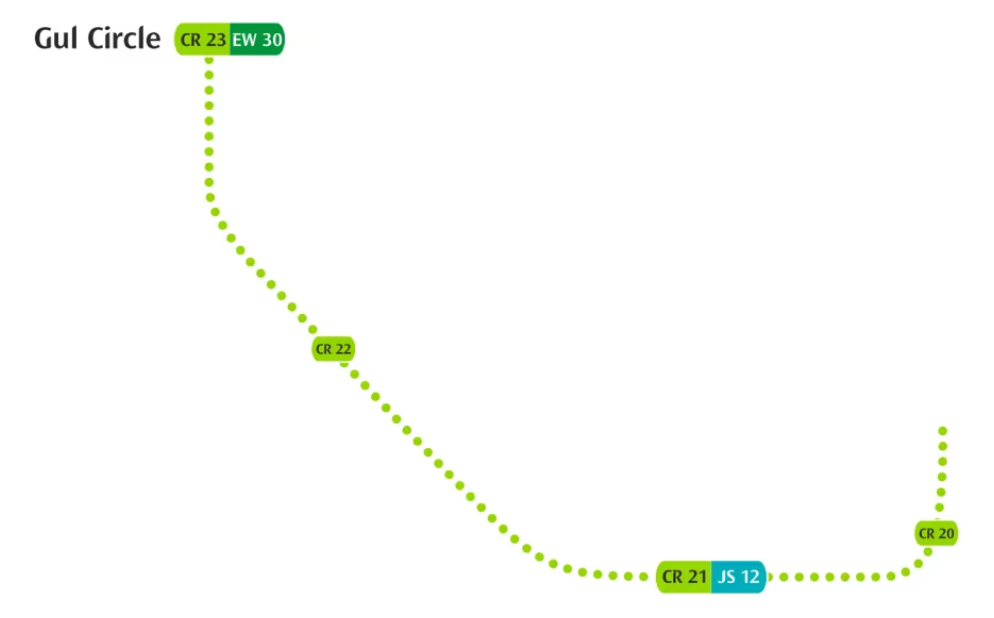
Singapore’s western rail network is set to expand further, with four new stations planned under Phase 3 of the Cross Island Line.
Announced on 31 July 2026, the Cross Island Line Phase 3, or CRL3, will extend the line by about 10km from the future Jurong Lake District station to Gul Circle. It will serve residents in Taman Jurong while providing workers with better access to the industrial areas around Jalan Buroh, Benoi and Gul.
Construction is expected to begin in 2027, while the stations are targeted to open by the late 2030s. Although the full benefits remain more than a decade away, the confirmed route provides a clearer picture of how homes and workplaces in the west will eventually be connected.
Table of contents
- CRL3 will complete the western end of the Cross Island Line
- CR20 will bring a new rail connection closer to Taman Jurong
- Jurong Lake District will become the gateway to the wider line
- CR21 will connect the Cross Island and Jurong Region lines
- CR22 will serve the Benoi and Gul areas
- Gul Circle will provide another East-West Line interchange
- Travel times could be reduced by up to 50 minutes
- How CRL3 fits into the wider Cross Island Line
- Finding a rental home that fits your daily journey
CRL3 will complete the western end of the Cross Island Line
CRL3 will extend westwards from CR19 Jurong Lake District station, which will form part of Phase 2 of the Cross Island Line.
From there, the line will pass through four underground stations before reaching Gul Circle. Three of the stations are currently identified by their station codes, CR20, CR21 and CR22, as their official names have not yet been announced. CR21 will interchange with JS12 Jurong Pier station on the Jurong Region Line, while the fourth station will connect with the existing Gul Circle station on the East-West Line.
Together, these connections will make it easier to transfer between the Cross Island, Jurong Region and East-West lines. As a result, commuters will gain more direct travel options between residential neighbourhoods and employment areas across the west, while reducing the need to pass through Jurong East or rely on the often-busy East-West Line for certain journeys.
CR20 will bring a new rail connection closer to Taman Jurong
Among the four stations, CR20 is expected to have the clearest direct impact on a residential neighbourhood.
The station will be located along Jalan Terusan, beside the Ayer Rajah Expressway and near Jurong Lake Gardens. It will serve homes around Taman Jurong Skyline and Yung Ho Spring I, as well as St Andrew’s Nursing Home. A future connection to Superbowl Jurong may also be considered.
This will bring rail access closer to a part of Taman Jurong that does not currently have an MRT station within the neighbourhood itself. Once CR20 opens, residents will be able to travel towards Jurong Lake District before continuing along the Cross Island Line.
Therefore, journeys towards areas such as Clementi, King Albert Park, Bright Hill, Ang Mo Kio, Hougang and Pasir Ris could become more direct. Residents may no longer need to depend as heavily on routes that first take them towards existing East-West Line stations.
The station may also improve access to Jurong Lake Gardens and the surrounding recreational area. However, the actual convenience will depend on the eventual station entrances, walking paths, cycling links and bus connections.
Homes closest to the entrances are likely to gain the most direct access. Meanwhile, residents living farther inside Taman Jurong may still require a short bus ride or walk to reach the station.
Jurong Lake District will become the gateway to the wider line
CR20 will be one stop away from the future Jurong Lake District station, placing Taman Jurong closer to the planned business and mixed-use hub.
More importantly, Jurong Lake District will connect the new CRL3 section with Phase 2 of the Cross Island Line. This section will run through West Coast, Clementi, Maju, King Albert Park and Turf City before joining the earlier part of the line.
As a result, the station will not only provide a connection between Taman Jurong and Jurong East. It will also serve as the starting point for longer journeys across the central, northern, north-eastern and eastern parts of Singapore.
This could become increasingly useful as Jurong Lake District develops. Future residents, workers and visitors will have another way to enter and leave the district, while existing Taman Jurong residents will gain a more direct route to its jobs and amenities.
CR21 will connect the Cross Island and Jurong Region lines
CR21 will be located along Jalan Buroh, near the Jurong Island Checkpoint.
The station will not be located on Jurong Island itself. Instead, it will serve the Jalan Buroh area and provide a rail connection close to the checkpoint used by people travelling towards the island.
CR21 will also be an interchange with JS12 Jurong Pier station on the Jurong Region Line. This will connect CRL3 with a separate rail network serving areas such as Boon Lay, Jurong West, Nanyang Technological University and the Jurong Innovation District.
The interchange could be particularly useful for NTU students who commute from home. Those living near future Cross Island Line stations in the north and north-east, including areas such as Ang Mo Kio, Hougang and Serangoon North, could travel across the island before transferring to the Jurong Region Line at Jurong Pier. This may provide a more direct alternative to routes that currently require several rail and bus connections.
Meanwhile, commuters travelling from Jurong West or the NTU area will be able to transfer at Jurong Pier to reach Taman Jurong, Clementi and other neighbourhoods along the Cross Island Line.
In the other direction, workers travelling from homes along the Cross Island Line could use CR21 to reach workplaces around Jalan Buroh and Jurong Pier more easily. Many workers in the western industrial areas currently depend on company-operated shuttle buses for part of their journey. The new rail connection could reduce some of that reliance and make these workplaces accessible from a wider range of neighbourhoods.
CR22 will serve the Benoi and Gul areas
CR22 will be located at the eastern end of Gul Circle. Unlike CR20, the surrounding area here is mainly industrial rather than residential. Therefore, CR22 is expected to benefit workers and businesses more directly than nearby homeowners.
The station will serve existing and future developments in the Benoi and Gul areas, which contain a range of industrial, manufacturing and logistics facilities. For workers, this could shorten the final part of the daily journey. Instead of changing to a company shuttle or taking a longer bus route from an existing MRT station, some commuters may eventually be able to travel closer to their workplaces by train.
The station could also affect where workers choose to rent or buy. Once the full Cross Island Line is open, people working around Benoi and Gul may be able to consider homes farther from the traditional East-West Line corridor.
Gul Circle will provide another East-West Line interchange
At the western end of CRL3, the line will connect with the existing Gul Circle station on the East-West Line.
The interchange will serve existing and future industrial areas, while providing another transfer point for commuters travelling towards Joo Koon, Tuas and other parts of the far west.
For example, a commuter arriving from the Cross Island Line could transfer at Gul Circle before continuing towards Tuas. Meanwhile, someone travelling from the western end of the East-West Line could switch to the Cross Island Line to reach Jurong Lake District and areas farther east. This means some journeys may no longer need to pass through Jurong East. In turn, commuters will have more options when choosing between rail routes.
The interchange could also strengthen the wider network during service disruptions. Once the Cross Island Line is completed, 11 of its 26 stations will be interchanges, providing alternative ways for passengers to continue their journeys without leaving the MRT system.
Travel times could be reduced by up to 50 minutes
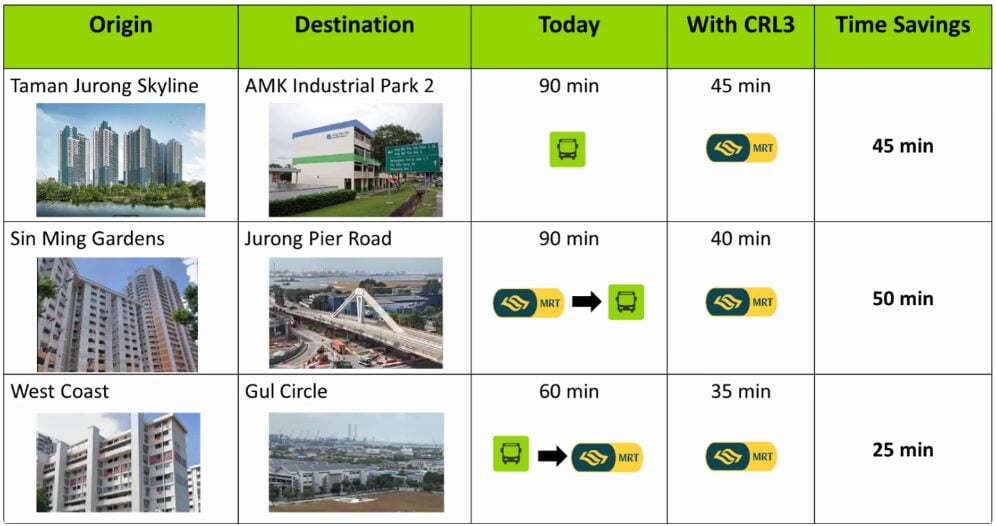
According to the Land Transport Authority, commuters travelling to and from western Singapore through CRL3 could save up to 50 minutes on some journeys. For instance, a journey from Sin Ming Gardens to the Jurong Pier area could be shortened by around 50 minutes once the new line is operating.
The saving comes partly from the Cross Island Line’s more direct east-to-west route. At present, some commuters must travel south towards the city or use several bus and rail connections before reaching the western industrial areas.
CRL3 will instead connect these employment zones with neighbourhoods along the wider Cross Island Line. Therefore, the project is not only about improving travel within Jurong. It will also bring western workplaces closer to homes in the central, northern, north-eastern and eastern regions.
How CRL3 fits into the wider Cross Island Line
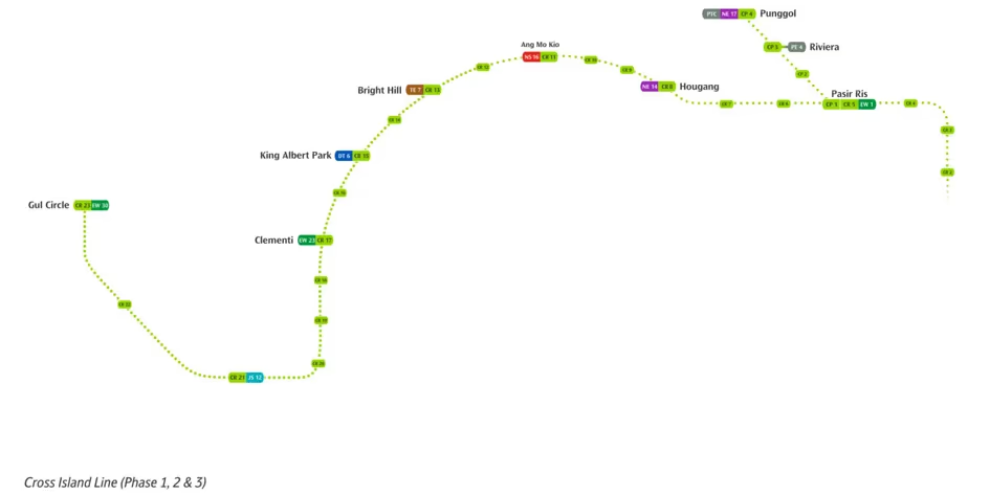
When the entire Cross Island Line is completed, it will stretch for about 67km and become Singapore’s eighth and longest fully underground MRT line.
The line will connect existing and future developments in the east, north-east and west, including Changi, Punggol Digital District, Jurong Lake District and Tuas. It is expected to serve at least 600,000 passenger journeys a day during its initial years, with daily ridership potentially reaching one million over the longer term.
Phase 1 will cover about 29km and 12 stations, with completion targeted for 2030. It will serve areas such as Pasir Ris, Tampines North, Hougang and Ang Mo Kio. Phase 2 will add another six stations across approximately 15km and is expected to open in 2032. The Cross Island Line–Punggol Extension, which contains four stations, is also targeted for completion in 2032.
Meanwhile, work is underway on an extension between the Changi end of the Cross Island Line and the future Changi Terminal 5 station. Once CRL3 is completed in the late 2030s, these different sections will form a continuous connection between major residential, commercial and industrial areas across Singapore.
Finding a rental home that fits your daily journey
Although CRL3 will only open in the late 2030s, renters can use the confirmed route to understand how connectivity in the west may change over time. However, those searching for a home now should still prioritise their current budget, travel time, preferred home size and access to everyday amenities.
Rather than searching for rental listings only by town or MRT station, renters can use 99.co’s Home Finder to explore homes around destinations that matter to their daily routine, such as a workplace, school or family member’s home. They can set their monthly rental budget, preferred property type and bedroom requirements before comparing suitable projects on a map.
Home Finder also shows estimated commute times to a selected destination, allowing renters to narrow their search to homes within their preferred travel-time limit. This can be useful for people working in the west, as well as students looking for rental options with a manageable journey to their school or university.
Renters can also view project-level rental information, including developments that may not have an available listing at the time of their search. Once they identify a suitable project, they can set an alert and be notified when a new rental listing becomes available.
This makes it easier to plan ahead before a current lease ends or an upcoming move. As CRL3 and the wider Cross Island Line take shape, renters can repeat their search to see whether new transport connections have made other neighbourhoods more practical for their daily journeys.

About Sophiyanah David

Sophi, a seasoned copywriter specialising in Singaporean real estate and property, is one of the minds behind 99.co's informative articles. Like her colleagues at 99.co, Sophi is dedicated to keeping you informed about the ever-changing world of real estate so you can find your forever home. When off the clock, you can find her giggling and kicking her feet as she reads her romance novels, watching anime - if FMBA is not your fave, she might fight you (but you'll probably win) and looking up latest skincare trends.

Looking to sell your property?
Whether your HDB apartment is reaching the end of its Minimum Occupation Period (MOP) or your condo has crossed its Seller Stamp Duty (SSD) window, it is always good to know how much you can potentially gain if you were to list and sell your property. Not only that, you’ll also need to know whether your gains would allow you to right-size to the dream home in the neighbourhood you and your family have been eyeing.
One easy way is to send us a request for a credible and trusted property consultant to reach out to you.
Alternatively, you can jump onto 99.co’s Property Value Tool to get an estimate for free.
If you’re looking for your dream home, be it as a first-time or seasoned homebuyer or seller – say, to upgrade or right-size – you will find it on Singapore’s fastest-growing property portal 99.co.
Meanwhile, if you have an interesting property-related story to share with us, drop us a message here — and we’ll review it and get back to you.
Join our social media communities!
Facebook | Instagram | TikTok | Telegram | YouTube | Twitter




Leave a comment