
A property purchase may begin with a question about what to buy, but for Ernest Liew, the conversation should not simply end there. Instead, he believes every decision should be considered as part of a longer journey that takes into account a client’s finances, family needs and plans for the next five to 10 years.
Having spent more than eight years in the real estate industry, Ernest focuses on helping clients improve their property position over time. This may involve guiding a first-time buyer away from an unsuitable purchase, helping a growing family move into a larger home or showing an existing owner how the funds tied up in a property could be used more effectively.
“My goal is to help people make a plan that can eventually lead to a stronger property portfolio,” Ernest shared. “By the time they retire, my hope is that they have more options and can enjoy a more comfortable retirement.”
Table of contents
A career shaped by change and resilience

Before entering real estate, Ernest spent several years in the corporate world, including a long period in the telecommunications industry. Working in channel sales management, he built relationships with business partners, developed new sales channels and helped drive business growth.
The role also required him to work with people from different backgrounds, understand what they needed and find practical ways to support their goals. Although he now works in a very different industry, those skills continue to shape the way he advises property clients. “The experience taught me how to understand what people need and work towards the outcome they are looking for,” Ernest said.
His career took a different turn in 2013, when he was made redundant. It didn’t come as a surprise as the whole industry was heavily consolidating. He didn’t see much future staying on and having long wanted to build something of his own, he decided to use the opportunity to explore entrepreneurship.
One of the first ventures he tried was an F&B franchise. It lasted only a year. Despite going through a financially and physically challenging time, it strengthened his resilience and changed the way he approached responsibility.
“When you are an employee, it can be easy to say that something did not work because of another person or another department,” Ernest reflected. “However, when you are running a business, the responsibility ends with you.”
That mindset later became especially important when he entered real estate. As an agent, Ernest believes every setback should be treated as a chance to examine what could have been done better. “The buck ends with you,” Ernest said. “If you do not sell the property or the buyer does not stay with you, you have to look at what you could have done better and how you could have added more value.”
Turning an early interest in property into a career

Ernest’s interest in property began long before he became an agent. While living in Kuala Lumpur, he bought and sold at least four properties during a period of market growth, recording profits of more than 100% across the homes he sold.
Those early experiences encouraged him to pay closer attention to factors such as location, entry price, market cycles and exit strategy. However, when he moved to Singapore in 2009, he soon realised that the methods could not be applied in exactly the same way.
Like many buyers who are more familiar with another property market, Ernest initially relied on the principles that had worked for him in Malaysia. In particular, he placed considerable importance on freehold tenure and nearly bought a property based on assumptions that he would later question.
“Singapore property was not as straightforward as property in other markets,” Ernest said. “There were many other factors that had to be considered beyond whether a property was freehold.”
He eventually bought a home that went on to perform well. Nevertheless, he remains open about the fact that the decision was not based on the level of market knowledge he has today. “I was fortunate because the property I chose performed better than some of the homes I initially thought were good investments,” he said. “However, if I had gone ahead with one of those other choices, the outcome could have been very different.”
Today, that lesson shapes the way he works with clients, especially first time buyers and those who may be relying on investment methods passed down by an earlier generation. “I do not want people to rely only on intuition or old ways of evaluating property,” he said. “Buyers need to understand how the current market works, which is why education is such an important part of what I do.”
Why every purchase needs a wider plan

That experience is one reason Ernest believes a property should not be assessed only by how attractive it looks today. Just as important is whether the purchase can support the buyer’s needs, finances and future options in the years ahead.
After all, buying and selling a home involves more than the purchase price. Stamp duties, legal fees, financing costs, renovation expenses and other transaction costs can add up quickly. Depending on the property, owners may also need to wait several years before selling without facing additional restrictions or costs.
This means that a poor decision can affect more than a buyer’s finances. It can also delay the next stage of their property journey. “When you make a wrong move in property, it can cost you both money and time,” Ernest said. “If you’re stuck for five years, that is five years of your property journey that may be affected.”
For this reason, he encourages clients to look beyond the immediate question of what they should buy. Before recommending a property, Ernest takes time to understand their current finances, family plans, lifestyle needs and longer-term goals.
From there, he helps them map out a possible five- to 10-year direction, so that the next purchase is considered in the context of where they eventually hope to be. The property chosen must then be able to support that wider plan.
Helping a couple move from a S$1.8 million property to a S$3 million home
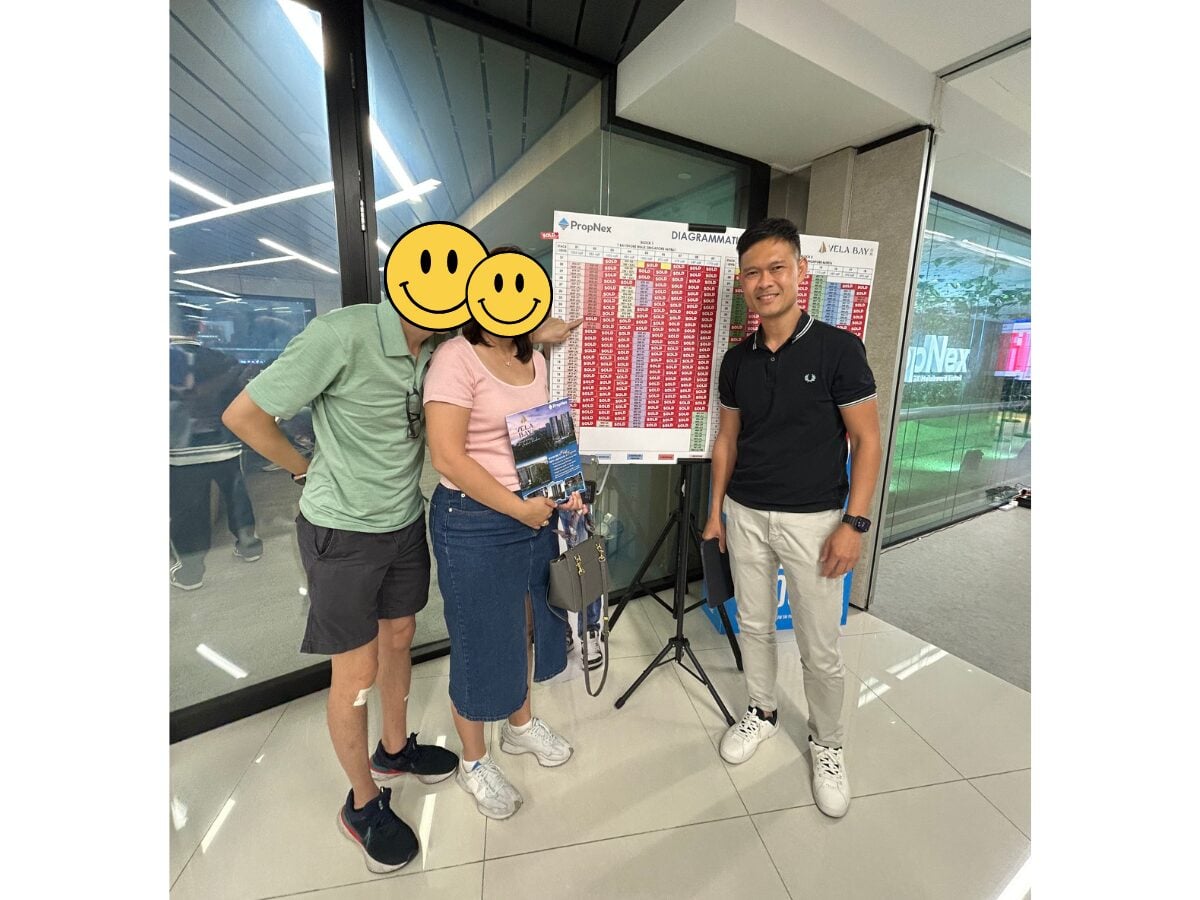
One case that reflects Ernest’s long-term planning approach involved a couple who entered the new launch market in 2020, during the early stages of the COVID-19 pandemic.
The couple had one available name for property investment and a budget of slightly below S$2 million. At the time, they were weighing two possible strategies: buying a property that could generate rental income or choosing one with the potential to be sold for a profit later.
After reviewing their goals and available options, Ernest encouraged them to consider selected new launch projects in the west. They eventually purchased a property for around S$1.8 million.
The decision was made during a period of considerable uncertainty. Many buyers were concerned that property prices might fall, while construction delays added further doubt to the market. However, those same conditions later worked in the couple’s favour.
Because construction progressed more slowly, their payments remained relatively limited during the earlier stages of the progressive payment schedule. At the same time, several competing developments had yet to obtain their Temporary Occupation Permit by the time the couple became eligible to sell.
By 2023, after collecting their keys, they sold the property for a profit of slightly below S$600,000. The proceeds gave the couple additional capital, which they then used to purchase a higher-value home for their own stay at around S$3 million.
Coordinating a family’s move into a larger home

Another case involved a family whose 2-bedroom home had started to feel cramped as their son and daughter grew older. The parents wanted each child to have a separate bedroom, but upgrading required careful planning around their budget, sale proceeds and moving timeline.
They approached Ernest after the pandemic, when resale prices were rising. Although 2-bedroom units do not always achieve large gains, he believed the market had created a suitable window for them to move.
“If the price of their 2-bedroom unit was rising, the price of a suitable 3-bedroom home could also be rising,” he explained. “Waiting could mean that the gap between the two properties would become wider.”
The family proceeded with the sale and achieved a stronger-than-usual result. Ernest then helped them find the largest 3-bedroom home they could reasonably afford.
The main challenge, however, was cash flow. As the family had two children and a helper, they wanted to avoid moving into temporary accommodation. The sale proceeds therefore had to arrive at the right stage to support the next purchase and renovation.
Ernest mapped out the transaction in a spreadsheet, listing each payment, deadline and expected cash movement. He also negotiated flexible terms with both the buyer of the family’s existing home and the seller of the property they were purchasing. Without those adjustments, he estimated that the family could have faced a cash-flow gap of almost S$100,000.
“It required a lot of planning and discussion with the different parties,” Ernest said. “However, everything came together, and they were able to move into a well-renovated home.”
Based on a later assessment, Ernest believes the property has since increased in value by around S$80,000 to S$100,000. More importantly, the family was able to move into a home that better suited their needs without placing unnecessary strain on their finances.
Giving a new launch buyer confidence through data

Not every challenge happens before a purchase. In some cases, buyers begin to question their decision only after the paperwork has been completed.
One of Ernest’s clients experienced this after buying a high-floor, 4-bedroom unit at a new launch in eastern Singapore. When she noticed that few similar units had been sold, she began to worry that she had entered the project too early and that the developer might later lower its prices.
Rather than offering simple reassurance, Ernest walked her through the factors shaping the project’s pricing.
The wider market was still rising, while the supply of larger units in the east was gradually being absorbed. At the same time, the developer had purchased the land at a price that left relatively little room for a major discount.
“I asked her to look at the situation from the developer’s point of view,” Ernest said. “If the market was rising, stock was becoming limited and margins were already thin, would the developer be more likely to reduce prices or increase them?”
True enough, within the next three to six months, more large units were sold and prices began to rise. A unit two floors below hers was eventually purchased at a higher price. Ernest continued to review the project’s transactions with her, and as more units in the same stack were sold at similar or higher prices, she became more confident in her decision.
Understanding developer behaviour across market cycles
Ernest’s understanding of developer pricing has been shaped by years of observing how projects perform over time.
During the 2018 market cycle, he followed how developers adjusted their prices as projects progressed and unsold stock declined. That experience now helps him assess how pricing may change as supply becomes more limited in the current cycle.
However, Ernest does not rely on past experience alone. He regularly studies transaction records, price trends, charts and current market movements to ensure his advice remains grounded in data. “I enjoy studying numbers because they give us something solid to support our views,” he said. “Clients should not be expected to believe a statement without evidence.”
Ernest’s advice on making better property decisions
Look beyond market hype

Although new launches form part of Ernest’s work, he does not believe buyers should choose a property simply because it is popular.
Instead, he helps clients look beyond the excitement surrounding a project and assess whether it genuinely supports their goals. “I do not want clients to chase hype without understanding whether the property fits their objective,” he said.
Depending on the situation, this may involve looking for a unit priced below the project average, comparing it with other options in the same budget or assessing whether its layout is likely to remain attractive to future buyers. “My role is to help clients see the choices available,” Ernest said. “The final decision is theirs, but they should understand what they are buying and why.”
Old property rules may no longer be enough
Despite having access to more information than ever, buyers can still fall back on overly simple or outdated ways of evaluating property.
For example, some may assume that a home is automatically a good purchase because it is near an MRT station or shopping mall. While these features matter, Ernest believes they should form only part of a wider assessment. “Property can appear straightforward from the outside,” he said. “However, it takes market experience to determine whether a particular home can deliver the outcome a buyer wants.”
Others may rely on strategies that worked in another country or market cycle. Overseas buyers may apply lessons from their home markets, while local buyers may follow methods used successfully by their parents.
However, buyer preferences continue to change. Younger buyers may place greater value on efficient layouts, usable spaces and well-maintained developments, while also studying transaction data and online content before making a decision. “You may like the property today, but you also need to ask whether future buyers will still want it,” Ernest said. “At some point, you may need to sell.”
He therefore encourages clients to consider how the property may be viewed by the next buyer, rather than focusing only on their own preferences.
Success measured through clients’ progress
Although sales remain part of the business, Ernest does not measure success only by the number or value of transactions completed.
For him, the greater reward comes from helping clients move from one stage of life to another. This may mean building enough capital for a larger home, helping a family find more space or giving a buyer greater confidence in their decision.
“Success is being able to bring a client from point A to point B with as few problems as possible,” he said. “It is fulfilling when their situation improves and they are happy with the outcome.”
Many of these professional relationships have also grown into friendships. According to Ernest, around 99% of the clients who have transacted with him remain personally connected to him. “You can aim for all the sales you want, but I would not be satisfied if the client ended up making the wrong decision,” he said. “I want the work to genuinely benefit them.”
Ernest Liew

A property decision can affect far more than where you live today. It can shape your cash flow, future upgrading options and the financial flexibility available to you in the years ahead. Ernest Liew understands that every move carries long-term consequences, which is why he focuses on helping clients look beyond the immediate purchase and build a clearer property plan.
Whether you are buying your first home, considering an upgrade or reviewing the next step in your property portfolio, Ernest can help you assess the options with greater clarity. By combining detailed financial planning, market data and practical transaction experience, he aims to make each decision easier to understand and better aligned with your wider goals.
Reach out to Ernest today to start planning your next property move at +65 8846 9118.

About Sophiyanah David

Sophi, a seasoned copywriter specialising in Singaporean real estate and property, is one of the minds behind 99.co's informative articles. Like her colleagues at 99.co, Sophi is dedicated to keeping you informed about the ever-changing world of real estate so you can find your forever home. When off the clock, you can find her giggling and kicking her feet as she reads her romance novels, watching anime - if FMBA is not your fave, she might fight you (but you'll probably win) and looking up latest skincare trends.

Looking to sell your property?
Whether your HDB apartment is reaching the end of its Minimum Occupation Period (MOP) or your condo has crossed its Seller Stamp Duty (SSD) window, it is always good to know how much you can potentially gain if you were to list and sell your property. Not only that, you’ll also need to know whether your gains would allow you to right-size to the dream home in the neighbourhood you and your family have been eyeing.
One easy way is to send us a request for a credible and trusted property consultant to reach out to you.
Alternatively, you can jump onto 99.co’s Property Value Tool to get an estimate for free.
If you’re looking for your dream home, be it as a first-time or seasoned homebuyer or seller – say, to upgrade or right-size – you will find it on Singapore’s fastest-growing property portal 99.co.
Meanwhile, if you have an interesting property-related story to share with us, drop us a message here — and we’ll review it and get back to you.
Join our social media communities!
Facebook | Instagram | TikTok | Telegram | YouTube | Twitter





Leave a comment