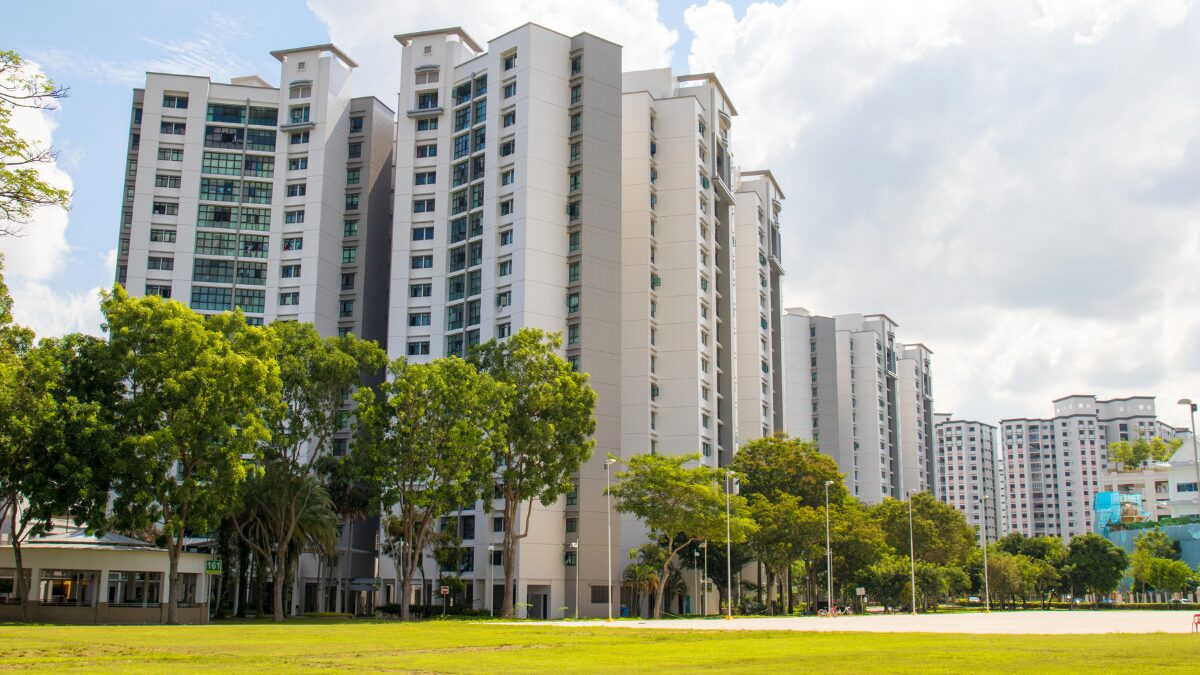
Older private residential developments in Singapore could find it easier to pursue an en bloc sale under proposed changes introduced in Parliament on 4 August 2026.
Under the Land Titles (Strata) (Amendment) Bill 2026, developments aged between 40 and 59 years would need 70% consent for a collective sale, down from the current 80%. Meanwhile, developments aged 60 years and above would need 65% consent.
The existing thresholds for newer properties would remain unchanged. Developments below 10 years old would still require 90% consent, while those aged between 10 and 39 years would continue to require 80%.
However, these changes have not taken effect. As of 5 August 2026, the Bill has only been introduced for its First Reading and will be debated at a future Parliament sitting.
Table of contents
- Proposed en bloc consent thresholds
- What is an en bloc sale?
- Why is Singapore reviewing its collective sale rules?
- Older developments could find it easier to reach the target
- The process would be harder to start without clear support
- Sale committees would have less time to collect signatures
- Failed attempts would face a longer restriction period
- More sale proceeds could be available for objecting owners
- Some non-strata developments could also benefit
- More estates may test the market, but a new en bloc boom is unlikely
- What buyers of older condos should keep in mind
- What happens next?
Proposed en bloc consent thresholds
| Age of development | Current threshold | Proposed threshold |
| Less than 10 years | 90% | 90% |
| 10 to 39 years | 80% | 80% |
| 40 to 59 years | 80% | 70% |
| 60 years and above | 80% | 65% |
The lower thresholds are intended to give ageing developments a more practical path towards redevelopment when a clear majority of owners supports a sale. At the same time, several new safeguards have been proposed for owners who do not wish to sell.
Other proposed changes include:
- Requiring at least 35% initial support before a general meeting can be called to form a collective sale committee.
- Shortening the signature collection period from 12 months to six months.
- Extending the restriction period after a failed en bloc attempt from two years to three years.
- Raising the cap on court-ordered additional proceeds for objecting owners from 0.25% to 0.5% of the sale proceeds, while retaining the S$2,000 minimum.
- Extending majority-consent collective sales to certain non-strata developments with shorter flat leases.
What is an en bloc sale?
An en bloc sale, which is also known as a collective sale, takes place when an entire private development is sold to a single buyer. The buyer is often a property developer that plans to demolish the existing buildings and redevelop the land.
Unlike an ordinary property transaction, every owner does not necessarily have to agree to the sale. An en bloc exercise may proceed once the development reaches the consent threshold set under the Land Titles (Strata) Act and meets the other legal requirements.
For developments that are at least 10 years old, the current threshold is 80%. Consent is measured using both the owners’ share value and the strata area they own. Younger developments require a higher 90% threshold.
The proposed changes would create two additional age groups instead of applying the same 80% requirement to every development aged 10 years or older.
Why is Singapore reviewing its collective sale rules?
Singapore’s current majority-consent thresholds were introduced in 1999. Since then, many private developments have become considerably older, while the cost of maintaining them has also risen.
Ageing buildings may require major repairs, replacement of older equipment and improvements to common facilities. Over time, these works can place pressure on maintenance funds and lead to higher contributions from owners.
The Ministry of Law said the proposed framework would provide another option for owners of ageing properties when there is broad support for redevelopment. It could also help Singapore use its limited land more efficiently by allowing older, lower-density developments to be rebuilt.
Official government records show that more than 360,000 private non-landed homes are currently located in developments below 40 years old. In comparison, around 20,000 units are in developments aged above 40 years.
Although the older group is relatively small today, its size will gradually grow as more of Singapore’s private housing stock ages.
Older developments could find it easier to reach the target
Reaching 80% consent can be difficult, especially in large estates with hundreds of owners. Different households may have very different financial needs, family plans and views about moving.
Therefore, an en bloc attempt can fail even when most owners support it. A reduction from 80% to 70%, or even 65%, could make a meaningful difference for developments that repeatedly fall just short of the existing requirement.
Property analysts note that securing the final few percentage points of support can be particularly difficult in older or larger estates. As a result, the proposed thresholds could encourage some developments that narrowly missed the target in earlier attempts to reconsider a collective sale.
Nevertheless, the lower threshold would not mean that every older condo can or will be sold en bloc. Owners must still agree on important matters such as the reserve price and method of dividing the proceeds. Moreover, a developer must be willing to purchase the site at a price that owners will accept.
The process would be harder to start without clear support
Although the final consent threshold would be lowered for older developments, the Bill would raise the level of support needed before an en bloc exercise can begin.
Currently, a general meeting to form a collective sale committee can be requested with support from at least 20% of owners by share value, or 25% based on the number of units.
Under the proposed rules, at least 35% of owners would need to support the request. This 35% requirement could be met through either share value or the number of units.
Consequently, a relatively small group of owners would find it harder to begin an en bloc attempt when there is little interest across the wider development. This could reduce the number of exercises that are started but have a low chance of reaching the required consent.
Sale committees would have less time to collect signatures
Another proposed change would reduce the period for collecting signatures for the collective sale agreement from 12 months to six months.
The shorter period is intended to limit how long owners are placed under pressure during a collective sale exercise. In some developments, en bloc discussions can divide neighbours and create uncertainty for households that do not wish to move.
However, the shorter signing period could also create challenges for large estates. Collective sale committees would need to explain the proposal, answer owners’ questions and collect sufficient signatures within half the current time.
Some property observers have noted that this could increase the intensity of an en bloc campaign, particularly as committees approach the deadline. Therefore, the higher starting threshold may reduce poorly supported attempts, but the shorter collection period could still lead to tension between owners.
Failed attempts would face a longer restriction period
The Government is also proposing a longer restriction period after an unsuccessful collective sale attempt.
Under the current framework, stricter requirements apply to attempts made within two years of a failed exercise. The Bill would extend this period to three years.
During that time, a development would need stronger support before another general meeting could be called to form a new collective sale committee. The change is meant to prevent repeated en bloc attempts when the required owner support is clearly not present.
For owners who oppose a sale, the longer restriction could provide a greater period of certainty after an exercise fails. On the other hand, owners who support redevelopment may need to wait longer before trying again.
More sale proceeds could be available for objecting owners
The Bill also proposes increasing the limit on court-ordered additions to the proceeds paid to owners who object to a collective sale.
The current limit is 0.25% of the sale proceeds for each property, or S$2,000, whichever is higher. Under the proposed rules, the percentage limit would rise to 0.5%, while the minimum amount of S$2,000 would remain.
This would create a larger pool that could be used to address certain objections relating to the financial outcome received by a non-consenting owner. However, it would not mean that every owner who opposes a sale automatically receives an additional payment.
Some non-strata developments could also benefit
The proposed amendments would also widen the collective sale framework to cover certain non-strata-titled private residential developments.
In these properties, residents may own long leases over their individual homes without owning the land underneath the development. At present, developments in this category may require unanimous agreement between the flat owners and the landowner before the property can be sold.
Majority-consent sales are currently available in limited cases where the flat leases run for at least 850 years. The proposed framework would extend this option to developments with shorter flat leases, while introducing safeguards for the underlying landowner.
Neptune Court in Marine Parade is one example of a development where individual residents own their units while the underlying land and common areas are held separately. Other older developments with similar ownership structures may also be affected by the proposed change.
More estates may test the market, but a new en bloc boom is unlikely
Singapore’s collective sale market has remained relatively quiet since its previous peak. The proposed thresholds may encourage more sale committees to explore the market. However, a larger number of attempts will not necessarily lead to a similar rise in completed deals.
Developers will continue to assess the full cost and risk of each site. Besides the purchase price, an en bloc redevelopment may involve demolition costs, development charges, lease top-up premiums and complex planning or construction requirements.
Developers can also choose between collective sale sites and land released through the Government Land Sales programme. Therefore, an en bloc site must offer suitable redevelopment potential at a competitive price.
Developments with large land areas, relatively low existing plot ratios and strong locations may receive more interest. Older freehold projects could also be attractive, although well-located leasehold properties may remain viable when their redevelopment potential supports the asking price.
Still, reserve prices will be important. Even if an estate reaches its owner consent threshold, the sale may fail if developers believe the price is too high.
Replacement home costs could remain a major concern
For many owners, deciding whether to support an en bloc sale will depend on whether the proceeds are enough to purchase a suitable replacement home.
Older private developments often have larger units than newer projects. As a result, a family may struggle to find a new home with the same floor area or number of bedrooms at a similar price.
Owners may also need to account for stamp duties, renovation costs, temporary accommodation and moving expenses. Meanwhile, foreign owners and investors may face different tax or replacement-property costs from Singaporean owner-occupiers.
Consequently, some residents may seek a higher reserve price before they are willing to sell. However, raising the reserve price could make the site less attractive to developers and reduce the likelihood of a successful tender.
Longer ABSD timelines could support larger redevelopments
The proposed collective sale changes follow a separate adjustment to the Additional Buyer’s Stamp Duty rules for housing developers.
Licensed developers generally pay a 40% ABSD when purchasing residential land. This consists of a 5% non-remittable portion and a 35% portion that may be refunded when the required development and sales deadlines are met.
For qualifying en bloc sites acquired from 29 July 2026, projects that produce between 700 and 1,399 homes may receive six years to complete the development and sell the units. Meanwhile, projects with at least 1,400 homes may receive seven years, compared with the previous 5.5-year timeline for qualifying large sites.
Developers of the largest projects must sell at least half of their units by the end of the sixth year.
Together, the two sets of changes could address different obstacles in the en bloc market. The new consent thresholds would make it easier for some owners to bring ageing developments to market, while the longer ABSD timelines could reduce part of the risk faced by developers taking on large sites.
Even so, developers would still need to judge whether demand is strong enough to support hundreds or thousands of new homes.
What buyers of older condos should keep in mind
The proposed changes may draw more attention to the en bloc potential of older private properties. However, buyers should avoid treating a future collective sale as certain.
A development may take several attempts to reach the consent threshold. Even after reaching it, the site may not attract an acceptable bid. Furthermore, the Bill has not yet been passed, and its final provisions could change during the parliamentary process.
Instead, buyers should assess whether the property suits their housing and financial needs even without a collective sale. Factors such as the remaining lease, maintenance condition, monthly fees, unit layout, location and resale demand should continue to be considered.
Possible en bloc potential may be an added factor, but it should not be the only reason for purchasing an ageing property.
What happens next?
The Land Titles (Strata) (Amendment) Bill will be presented for its Second Reading at the next available Parliament sitting. Members of Parliament will then debate the proposals before the Bill proceeds to a vote.
If it is passed and receives presidential assent, the amendments will take effect on a later commencement date announced by the Government.
For ongoing en bloc exercises, the applicable rules will generally depend on whether the first signature to the collective sale agreement was collected before the new law begins.
Where the first signature was already obtained, the existing framework would continue to apply. However, committees that are still collecting signatures may be allowed to end their current agreement and begin a new exercise under the revised rules. They would then receive seven months from the commencement date to reach the new threshold.

About Sophiyanah David

Sophi, a seasoned copywriter specialising in Singaporean real estate and property, is one of the minds behind 99.co's informative articles. Like her colleagues at 99.co, Sophi is dedicated to keeping you informed about the ever-changing world of real estate so you can find your forever home. When off the clock, you can find her giggling and kicking her feet as she reads her romance novels, watching anime - if FMBA is not your fave, she might fight you (but you'll probably win) and looking up latest skincare trends.

Looking to sell your property?
Whether your HDB apartment is reaching the end of its Minimum Occupation Period (MOP) or your condo has crossed its Seller Stamp Duty (SSD) window, it is always good to know how much you can potentially gain if you were to list and sell your property. Not only that, you’ll also need to know whether your gains would allow you to right-size to the dream home in the neighbourhood you and your family have been eyeing.
One easy way is to send us a request for a credible and trusted property consultant to reach out to you.
Alternatively, you can jump onto 99.co’s Property Value Tool to get an estimate for free.
If you’re looking for your dream home, be it as a first-time or seasoned homebuyer or seller – say, to upgrade or right-size – you will find it on Singapore’s fastest-growing property portal 99.co.
Meanwhile, if you have an interesting property-related story to share with us, drop us a message here — and we’ll review it and get back to you.
Join our social media communities!
Facebook | Instagram | TikTok | Telegram | YouTube | Twitter



Leave a comment