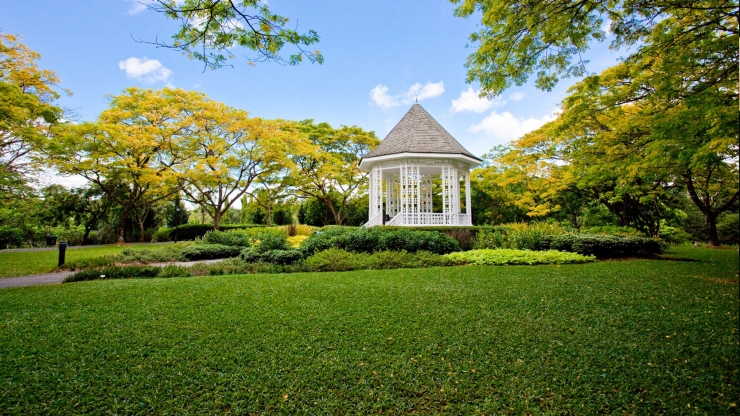
Parks have long been a point of contention between property investors. The main question is: Does having parks near properties nearby improve the value of your house? The conventional answer is yes, because we assume everyone enjoys having this facility. But while many studies of this type have been conducted overseas, there have been few or none in Singapore. So can we safely say that having parks near properties is applicable to the local context?
Urban parks: do they impact property value at all?
There’s no denying that particularly famous, established parks raise property value. The best known example of this is Central Park in New York City, where blocks closer to the park exhibit a whopping 20 percent price difference from surrounding properties.
In almost any city you visit, the “famous parks” are no different from famous landmarks. They all contribute positively to surrounding properties. In Singapore, we have our own versions of this.
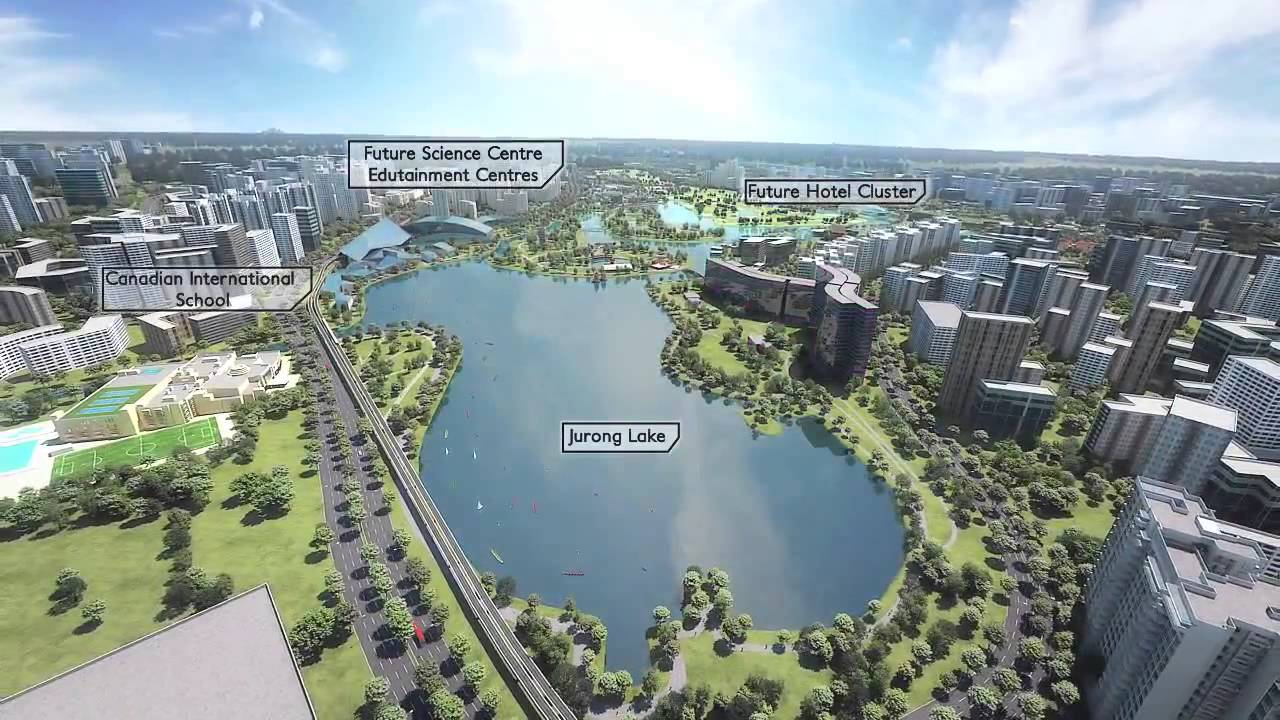
Consider, for example, the Jurong Lake District. Back in 2014, we saw median prices of around $870 per square foot in this area. Today, it’s more common to see median prices of around $1,160 per square foot. One of the key features of the Jurong Lake District is the planned integration between the famous Chinese and Japanese Gardens by 2020, into the Jurong Lake Gardens.
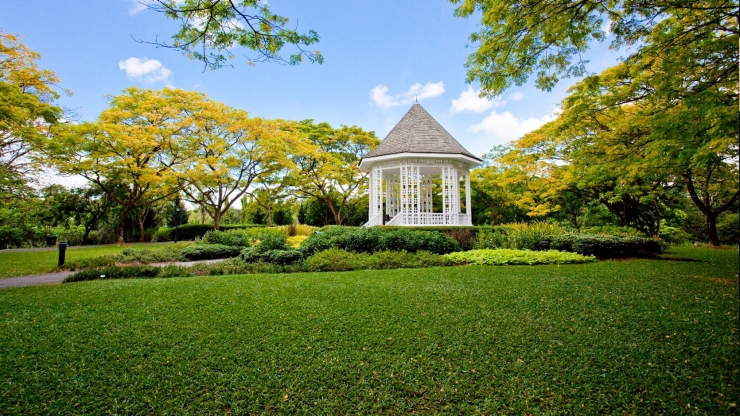
Or, consider residences near the famed Singapore Botanic Gardens. It’s in Bukit Timah, a notably high rent area (notice that famous parks and high rent areas go hand-in-hand, in almost any city in the world). Cluny Park Residence condos (99 year leasehold), which are near the gardens, go for over $2.3 million (approx. $2,700 per square foot).
But move further from the gardens toward Lewis Road, and we see Signature@Lewis (freehold), and units at $1.4 million are more common (approx. $1,450 per square foot).
Now Signature@Lewis and Cluny Park Residences are not so far apart, or so vastly different in amenities (minus the park), that the price difference should be that huge. But the fact that one overlooks the Botanic Gardens, and that residents can just walk across, clearly matters in terms of price.
Property developers are not unaware of this: look in any number of brochures (particularly those for upcoming developments in Paya Lebar), and you will see constant mention of the new park connectors, so there must be some logic behind the effect parks near properties can have.
But why does it work for some parks, and not others?
Any number of condos boast landscaped parks as features. And there are plenty of urban parks in Singapore that – however well cultivated – do not seem to do much for nearby properties. Why? The reasons are hard to pinpoint, but it has interested urban space planners for many years.
(Those who are deeply interested may want to look up a major work on this, Jane Jacobs’ The Life and Death of Great American Cities. While it’s not local, and it dates all the way back to 1961, it’s still considered a classic on urban space).
Parks that have the potential to raise property value share the following features:
- They are bustling and in use
- They are near constituencies with different age ranges and professions
- They are near facilities that operate at different times
- They provide event space
- They are bustling and in use
A park needs to “hum” with life if it’s to contribute to its surrounding. Marina Bay Sands, Chinese and Japanese Gardens, Singapore Botanical Gardens, etc. all have this quality, being key attractions. But if you look at your own neighbourhood parks, you will see the same is true: for a park to be attractive to prospective buyers or tenants, it has to be occupied and in use.
In fact,parks near properties that lack bustle may even contribute negatively to property value. Deserted parks tend to attract unwanted elements – Singapore is safe, but in many other countries deserted parks are the place of choice for criminals, the destitute, and addicts. Nonetheless, a quiet, seemingly abandoned park does not resonate with a sense of safety.
One example of such a fallen park is Katong Park. This is a small patch of greenery along Tanjong Rhu Road.
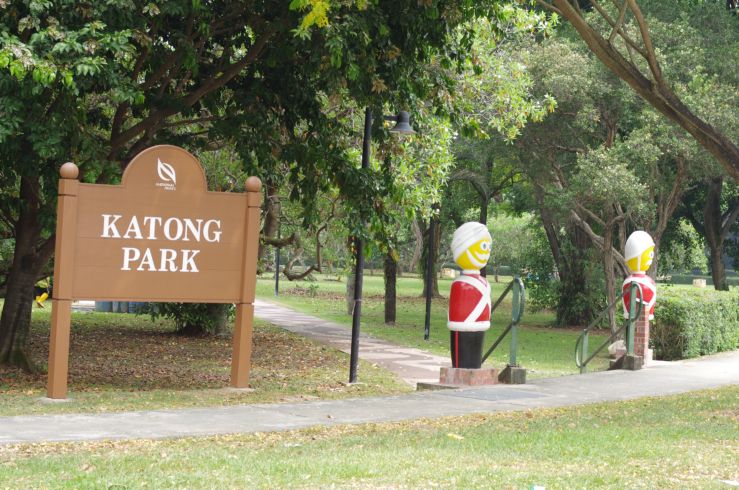
There was time in postwar Singapore when Katong Park would have rivalled the Chinese Garden in popularity. Before land reclamation, the park faced the sea and was a major attraction. So major, in fact, that during the undeclared war with Indonesia (Konfrontasi), bombs were placed in two key locations: MacDonald House and Katong Park.
The fact that Katong Park was important enough to justify bombing suggests how busy it used to be. Today, it’s so empty that any bomb planted there would surprise us by managing to hit a stray pigeon.
Katong Park does not contribute extensively to property values in the anymore, because it’s lost its buzz (something that NParks is probably working to restore).
- They are near constituencies with different age ranges and professions
Besides a constant flow of tourist, what makes parks near properties “work” is a varied constituency. The more diverse the better. For example, the more races and religions there are in the constituency, the more events the park becomes home to.
Different age ranges and professions help, because they all use the park at different times. For example, the elderly are there in the morning doing Tai-Chi. Stay at home mums and dads may frequent the park during lunch hours, while their spouses are at work. Students come in after school, probably to catch Pokemon. Working adults drop in for an evening stroll after 6.30 pm.
This diversity ensures there is always someone in the park, and using the park. This in turn makes the park a convenient place to meet, to network, and to organise activities. The park then becomes popular, and in turn contributes to surrounding property values.
If you visit estates without diverse constituencies (e.g. Tiong Bahru before it became a hipster enclave, and was just an unofficial “retirement village”), you will see their parks are less active. There’s often long periods during the day when the park will be underused.
- They are near facilities that operate at different times
What is the problem with Raffles Place Park? Why is that, outside of its central location, it will never quite be a famous hotspot?
The answer relates to point 2: different people use the park at different times.
Raffles Place Park is surrounded by offices. When the offices close up at night, or for the weekend, the entire park suddenly “dies”. It’s only got bustle during a specific time, and that’s lunch time, or right before or after work.
By contrast, Fort Canning, does a lot better. While Fort Canning Park also does not have many residences nearby, it’s a hotspot because of variety. It has cafes, bars, some offices nearby, retail malls, events, etc. That keeps the park busy most hours of the day (if you’re wondering who visits in the morning, the answer is tourists and botanists).
So if you want to see whether your neighbourhood park will be famous, it’s not just about how central it is. Look at the variety of facilities surrounding it.
- They provide event space
This one is a no-brainer. The more events (concerts, yoga, theatre) occur in a park, the more of a hotspot it becomes. In fact, one event packed park can turn an entire neighbourhood into a hotspot – watch as cafes and shops rush to open in response to the foot traffic.
Check the events board of the nearby park, if you’re buying property in the area. Not only does it reflect on the potential for development, it will give you a hint as to the area’s demographics (a park that features Chinese chess and songbird contests probably has an older crowd, whereas a paintball contest and marathons suggest the opposite).
Beware the park with no events. It probably does nothing for you, or your property.
If you want to browse the best parks near properties, the easiest way is with a map. Check out 99.co‘s map based system for finding the right place.

About Ryan Ong


Looking to sell your property?
Whether your HDB apartment is reaching the end of its Minimum Occupation Period (MOP) or your condo has crossed its Seller Stamp Duty (SSD) window, it is always good to know how much you can potentially gain if you were to list and sell your property. Not only that, you’ll also need to know whether your gains would allow you to right-size to the dream home in the neighbourhood you and your family have been eyeing.
One easy way is to send us a request for a credible and trusted property consultant to reach out to you.
Alternatively, you can jump onto 99.co’s Property Value Tool to get an estimate for free.
If you’re looking for your dream home, be it as a first-time or seasoned homebuyer or seller – say, to upgrade or right-size – you will find it on Singapore’s fastest-growing property portal 99.co.
Meanwhile, if you have an interesting property-related story to share with us, drop us a message here — and we’ll review it and get back to you.
Join our social media communities!
Facebook | Instagram | TikTok | Telegram | YouTube | Twitter




Leave a comment