
Because real Singaporeans don’t go to Orchard Road as much as they used to, we’re all pretty dependent on the neighbourhood mall. So when said mall doesn’t permit the joy of turning up in shorts to buy groceries and greasy food-court takeaway, our soul shrivels a little. That’s why, before your decide a neighbourhood mall is an amenity, you need to walk inside and check for these danger signs.
(Some of you will know which malls we’re referring to as the worst. We’re not going to mention any names. You know and we know, can already.)
Malls as amenities
To be honest, the days of malls as amenities are beginning to fade. More Singaporeans shop online every year, and the tenant mix at malls is also telling. Whereas once a mix of 80 percent retail and 20 percent food was common, some malls are now reaching the point where it’s almost 50-50.
Entertainment and cramming our faces (there’s only an academic difference there) is the main reason we go to a neighbourhood mall these days, with supermarkets coming a close second. Even then, the existence of online grocers could snatch a lot of business from the mall supermarket.
All this suggests that, in the next decade or two, the neighbourhood mall will still be an amenity; but malls that focus on affordable dining, entertainment, and low cost supermarkets will be the most desired ones.
The malls that don’t do well:
-
Don’t have an anchor tenant
The anchor tenant is the leading tenant of a neighbourhood mall, who are often begged to move in by the management. The anchor is typically an established brand, one that’s expected to bring in a lot of customers.
Other businesses often choose to set up in a mall because of the anchor tenant: if H&M is setting up in one mall, and some nameless boutique is setting up in another, you’d want your business in the mall with H&M. Even if your business isn’t relevant to theirs, you can feed off the foot traffic they generate.
So it’s like gravity: when one major brand appears in a mall, other desirable brands move in as well. You seldom see, say, Starbucks or a cinema in a no-buzz mall, with shop names no one knows.
Now if you want a neighbourhood mall that most people would consider an amenity (especially if you’re a landlord who wants tenants), the safest bet is to spot a supermarket as an anchor tenant.
Parkway Parade has thrived on having Cold Storage (and now Giant as well) as an anchor tenant for decades. Tampines 1 gained a lot more value to residents after Uniqlo first decided to open there instead of Orchard Road; and it’s a lot busier now than it used to be.
By contrast, the worst neighbourhood malls don’t have anchor tenants at all. These are the ones that have maybe one florist, one aquarium shop, and about 10 stores selling alternative health products like oxygen machines or ostrich intestine pills or whatever. It’s almost meaningless to most residents.
-
Allow the neighbourhood mall to become over-specialised
Everyone loves a theme, we get that. Queensway Shopping Centre, which is slightly more ancient than the Mayan Pyramids at this point, has long been identified as the sports mall; and a lot of residents still like it, because it doesn’t go overboard.
But some malls let things get out of hand, as some businesses tend to attract more of the same. For example, have you noticed how tuition and enrichment centres seem to draw more of their own kind? There is probably some kind of “tuition tipping point”, where the desperation of struggling students attains enough gravity to suck in all the mock exam papers in a 10 kilometre range. Give it a few months, and all the mall facilities will be reduced to tuition and McDonald’s.
The same thing tends to happen with maid agencies, electronics*, and audio-visual systems.
Again, we’re not saying it’s a bad thing to have a themed mall. We’re saying it’s a bad thing for a neighbourhood mall, which is supposed to cater to daily needs of residents, to become so specialised it’s effectively useless to most residents.
*Please don’t bring up the old Funan and Sim Lim. Those aren’t neighbourhood malls. Also, the IT mall as a concept is deader than an endangered animal at a Chinese medicine conference.
-
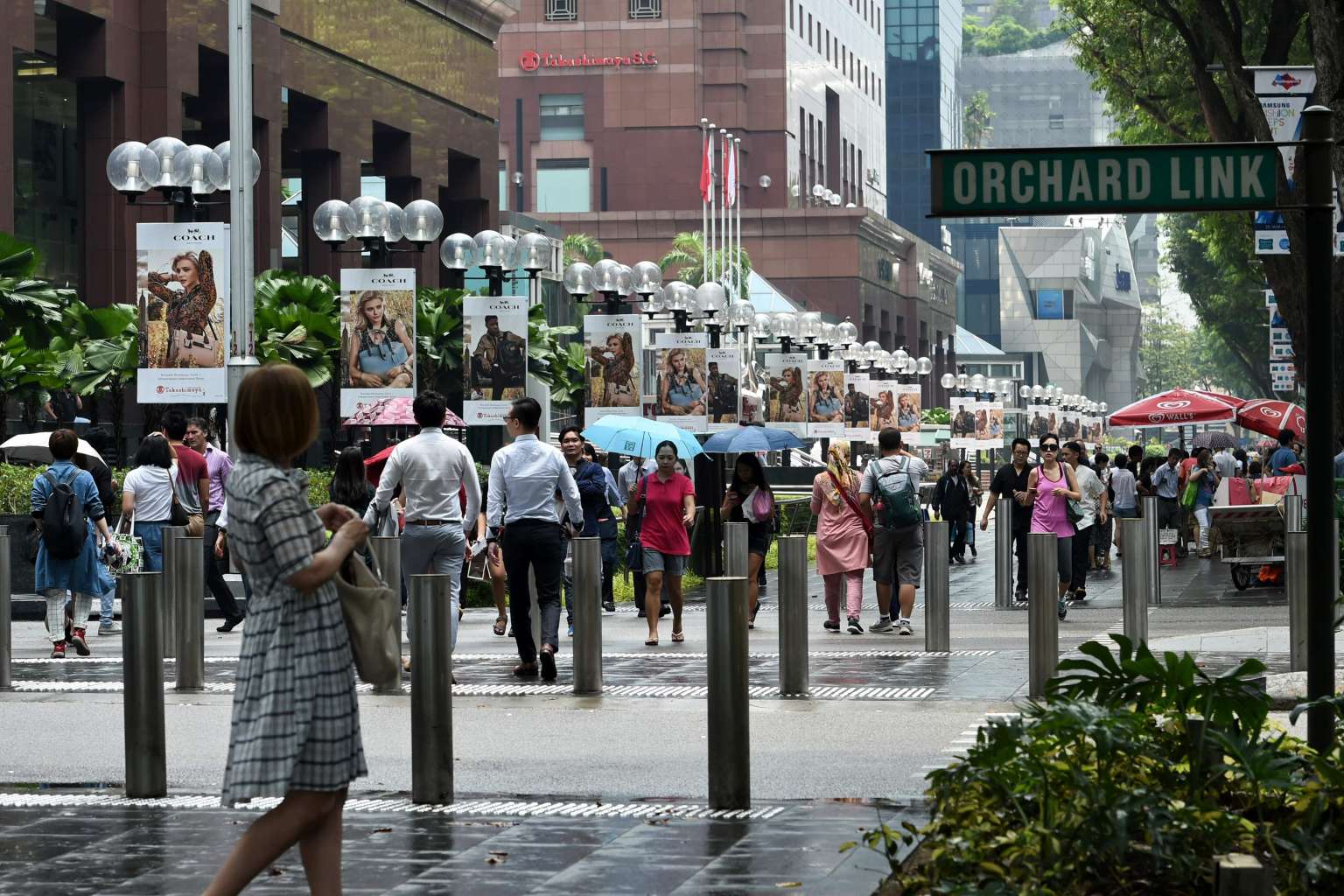
Try to turn the mall into something that belongs on Orchard Road
It’s okay to have some brand names in a neighbourhood mall. But when a mall starts to include only upmarket brands and $50 per head restaurants, the amenity value starts to plummet.
The best neighbourhood malls are the ones you can drop in every day for a bite, and not get bored. There’s a range of eateries that, while they can be more expensive than the hawker centre, won’t break you if you eat out all the time (landlords, remember that some tenants have to do this).
Also, going for high priced luxury brands means less space for the most important sort of retail. You know what that is in a neighbourhood mall? Low cost providers of essential items.
Sheng Siong or Giant. A home appliances store where the lamps and speakers don’t cost upward of $4,000. Mass market apparel stores, where people can get their officer wear on a $50 shopping trip. That’s the kind of retail a neighbourhood mall needs.
-
Remove all the utilities except the toilets
By utilities, we mean things like banks, AXS machines, ATM machines, money changers…all the services we routinely need. One of the worst problems with older, strata-titled malls (old school malls where the individual shops all own their spaces) is that they’re often devoid of these things.
For most residents, the mall is a valued utility because they can also go there to open and close bank accounts. They can change money there before a trip, or pay their credit card bills while buying Bread Talk on the way home. It’s also good for the mall in general, because these things bring foot traffic.
-
Build the taxi stand in a place where no taxi, or most human beings, would ever feel compelled to go
The best neighbourhood malls are accessible, and that means easy transport to and from the mall. When you have to watch three children and are carrying seven grocery bags, you may not care that the bus and MRT station are nearby. Sometimes, you need a cab.
Only the worst sort of sadist will build the cab stand far off the main road, where a taxi driver would have to turn in, navigate a series of twists that would give the Minotaur a migraine, and then risk finding no customers.
When a mall builds cab stands like these, cab drivers don’t show up; not unless you get lucky and they are dropping someone off. And if you call Grab or Uber, there’s a high chance you’ll wait longer than usual, while the driver gets a degree in advanced cartography to find you.
Taxi stands matter, and the best malls have these in places that are along the main road, or are highly visible from it.
About Ryan Ong


Looking to sell your property?
Whether your HDB apartment is reaching the end of its Minimum Occupation Period (MOP) or your condo has crossed its Seller Stamp Duty (SSD) window, it is always good to know how much you can potentially gain if you were to list and sell your property. Not only that, you’ll also need to know whether your gains would allow you to right-size to the dream home in the neighbourhood you and your family have been eyeing.
One easy way is to send us a request for a credible and trusted property consultant to reach out to you.
Alternatively, you can jump onto 99.co’s Property Value Tool to get an estimate for free.
If you’re looking for your dream home, be it as a first-time or seasoned homebuyer or seller – say, to upgrade or right-size – you will find it on Singapore’s fastest-growing property portal 99.co.
Meanwhile, if you have an interesting property-related story to share with us, drop us a message here — and we’ll review it and get back to you.
Join our social media communities!
Facebook | Instagram | TikTok | Telegram | YouTube | Twitter



Leave a comment