If you have ever done HDB viewings, you would’ve encountered flats where the homeowners made the HDB corridor and common area their own.
Their interior decor spills out from their house onto the exterior of their flat, where they personalise it with many things from photo frames, plant racks or hanging planters, other quaint decor items or even a weightlifting area (I guess you don’t need to go to the community centre gym anymore).
Others treat it as extra space to store their gardening and cleaning supplies, umbrellas, and other bits and bobs they do not want in their house.
Here’s the thing: All that extra space? It does not belong to you.
Riling up the neighbours
It is not uncommon. Many complaints have been lodged over the years about inconsiderate neighbours using the HDB corridor as personal storage.
One notable occurrence was this Simei resident who did not want to pay for storage space, so she lined the corridor with seven fridges.
Another homeowner redefined “urban jungle” when she had up to 80 potted plants overflowing outside her flat, resulting in the local town council ordering the removal of most of the plants.
While it might not bother some people, cluttering the area outside your HDB will affect the elderly or those who rely on a wheelchair, who need the extra space to navigate the already cramped corridors.
So let us break down what is allowed and what is not for your HDB riser, corridor, and common areas.
HDB riser
What is an HDB riser? The riser is the compartment usually found right beside your main entrance door, which houses the breaching inlet, fire alarm panel and fire hose reel.
Most of us use it as a convenient storage area for odds and ends, such as brooms or umbrellas. Others use it as a personal mailbox for delivery personnel to leave parcels in if no one’s home to receive it or for friends to drop off items.
I have used mine to store leftover tiles and painting supplies from my renovation.
It is also been used for more nefarious purposes, such as the storage of dead bodies and weapons.
However, filling your riser up with items may obstruct access with a fire emergency. Imagine the fire department playing reverse Tetris while a fire rages on nearby.
Various town councils have put up notices to inform residents not to use their risers as personal storage.
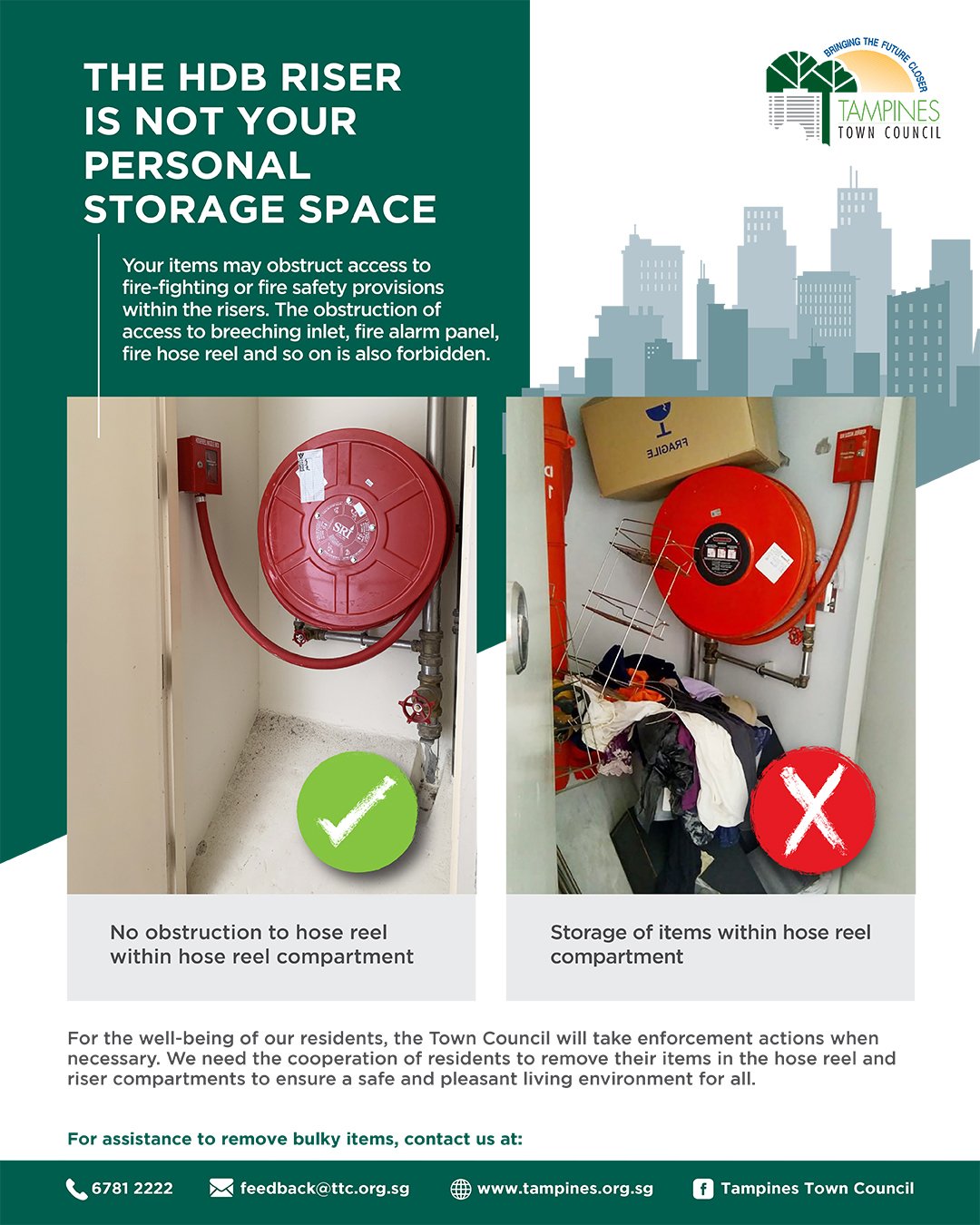
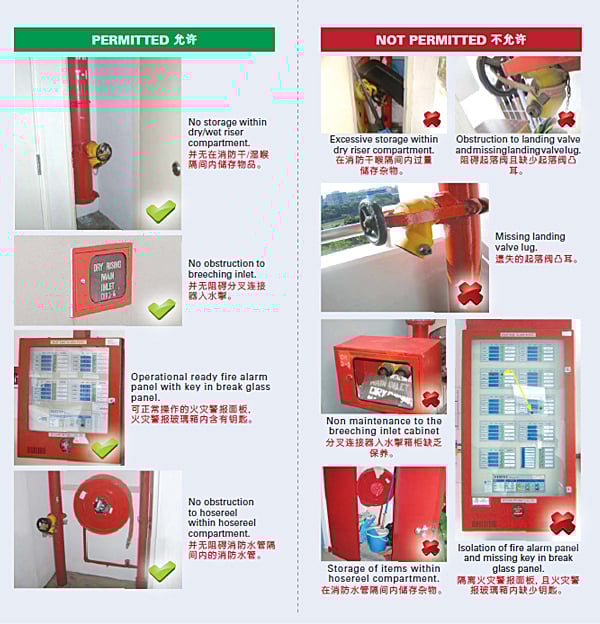
The Singapore Civil Defence Force also states that access to fire safety and fire fighting provisions are not to be impeded at all times, so anything obstructing the dry riser compartment must be cleared out.
HDB corridor
Ah yes, the quintessential HDB corridor – a permanent fixture that we HDB dwellers take for granted in our urban landscape.
We traverse it every day but never stop to take note of the surroundings until something inconveniences us.
People use their corridors for many activities, including turning it into a makeshift outdoor cafe of sorts.
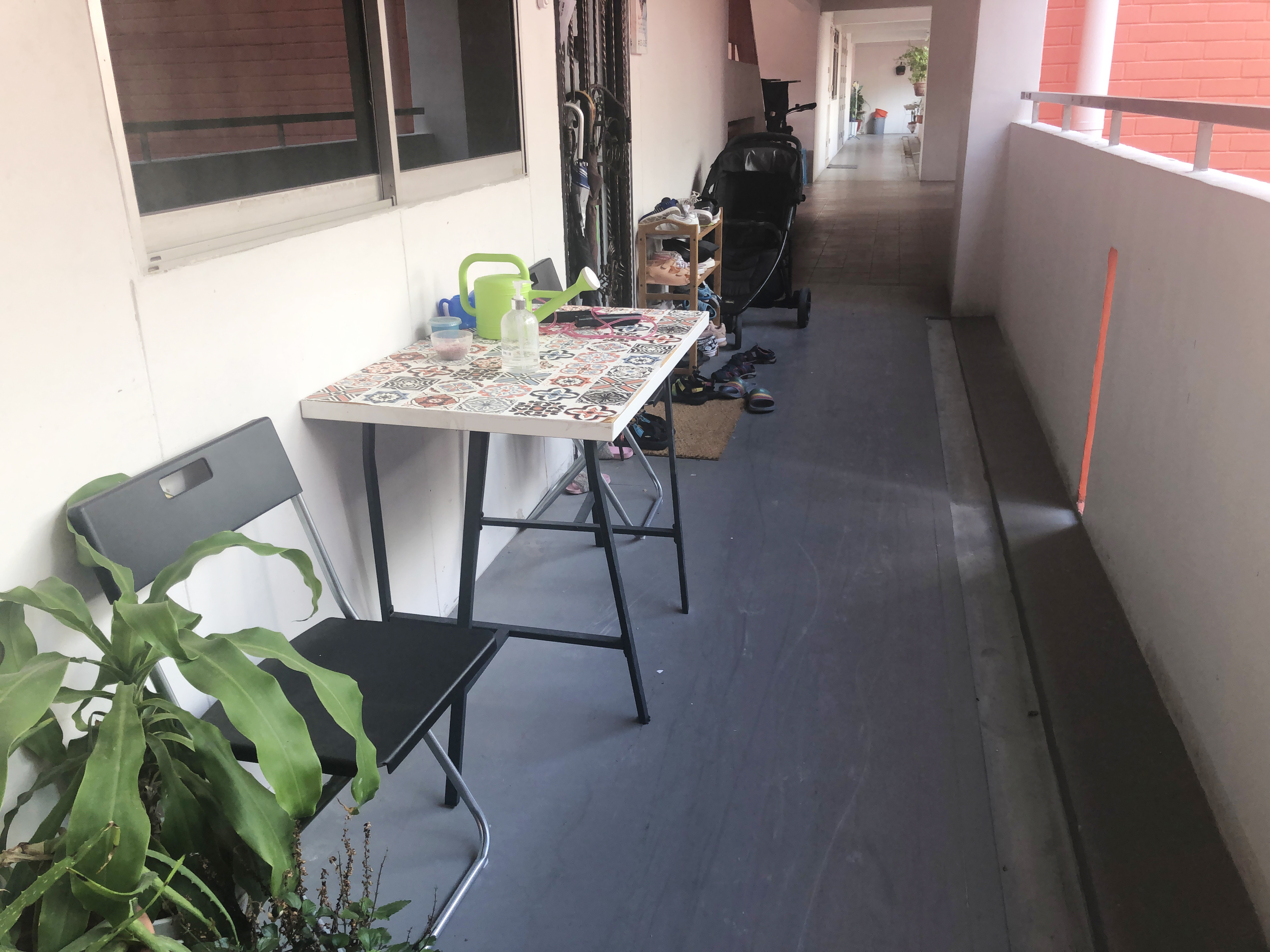
According to the SCDF, storing combustible materials along the HDB common corridor is not permitted. Such items include cardboard boxes and newspapers.
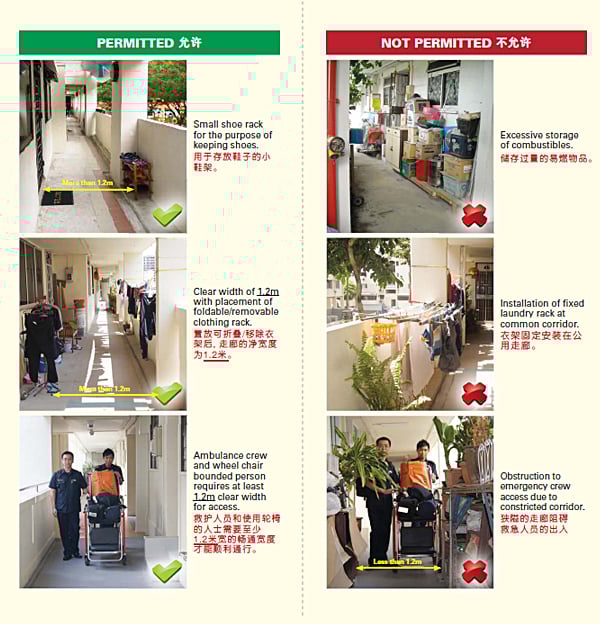
Suppose you want your clothes to bask in the glaring afternoon sun. In that case, you may do so, as long as there is a width of 1.2 metres, so that the corridor remains easily accessible in medical emergencies where stretchers or wheelchairs are required.
The same goes for shoe racks. None of those huge Ikea storage cabinets in the corridor, thanks.
HDB staircases and landings
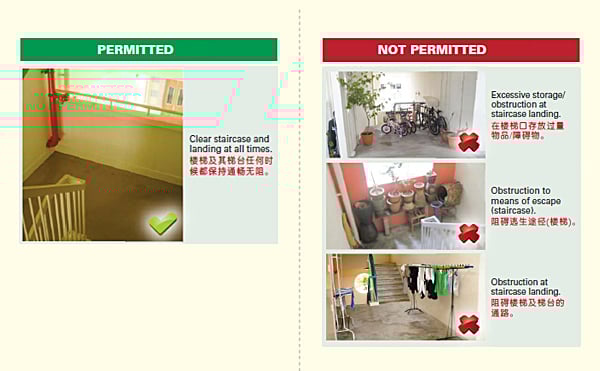
Some HDB blocks have larger landings and staircase areas, especially older blocks. But this does not mean you have more storage space for your bicycles, or so you can cultivate a green thumb.
My neighbour even has a full dining set (complete with lazy Susan) right outside the lift – they enjoy the fresh air?
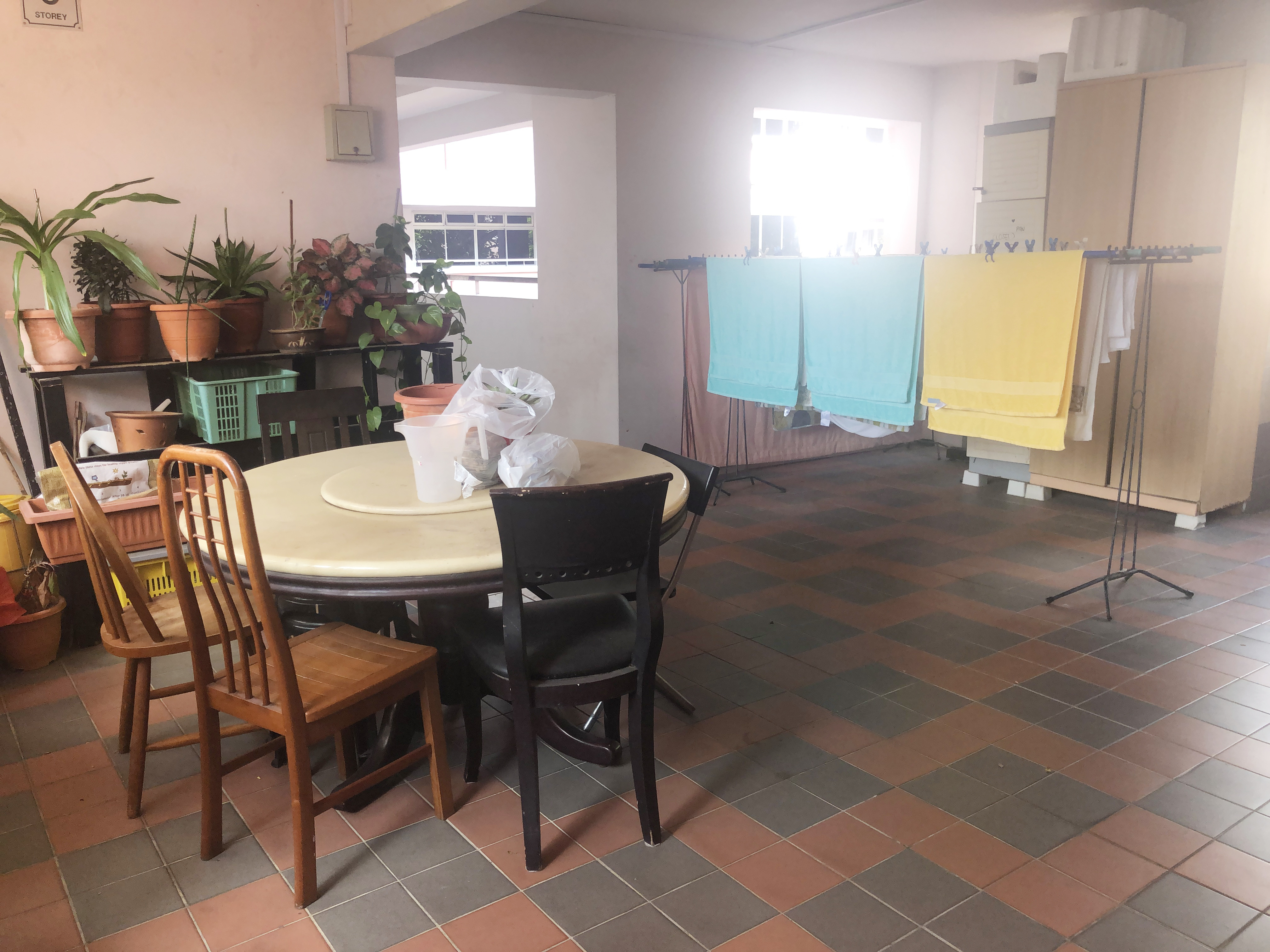
Keeping anything at those places is strictly off-limits, as it is usually where the landing valves and hose reels are located.
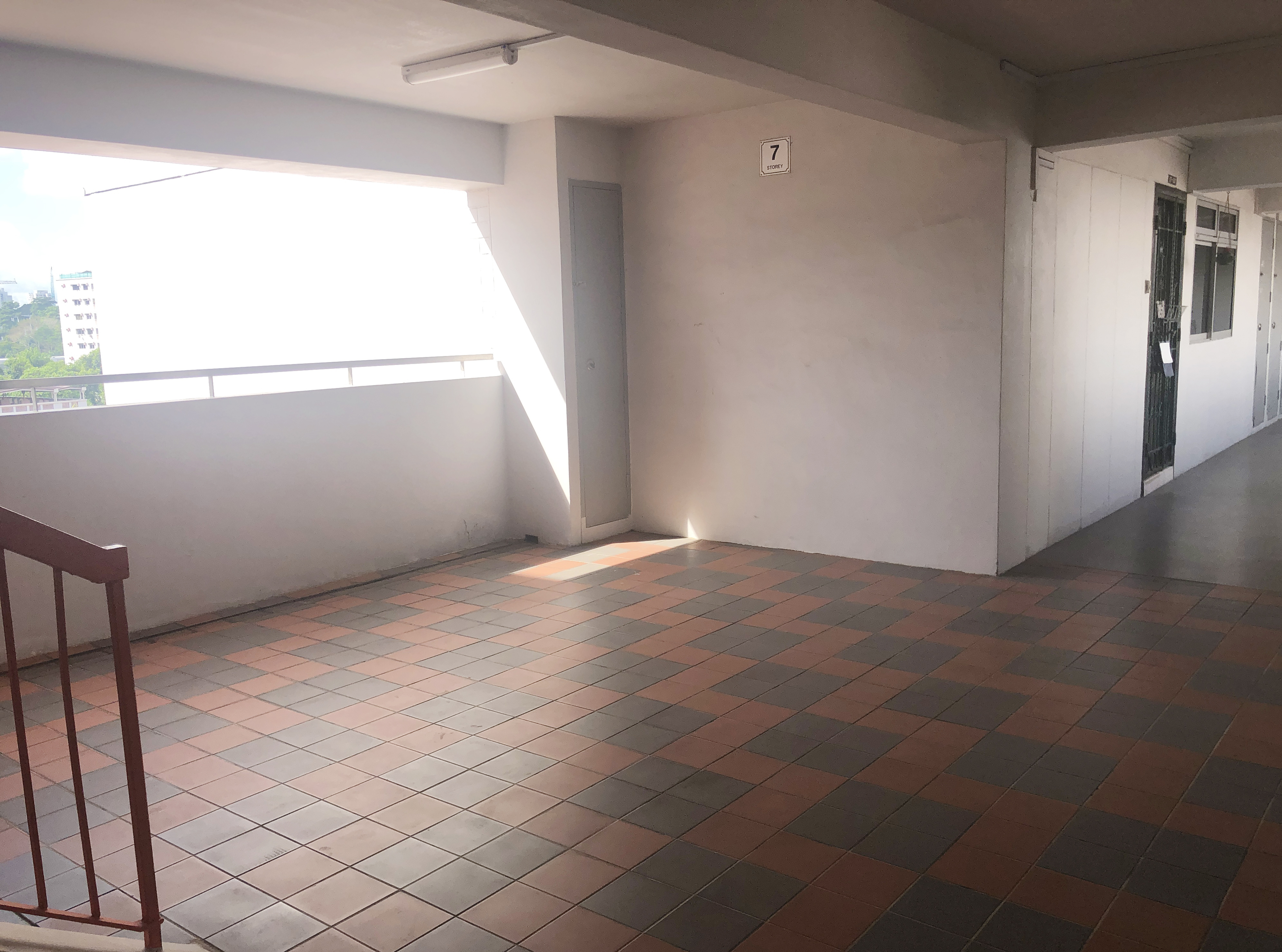
Evacuation from a fire also means taking the staircase as an emergency route. Any obstruction could mean the difference between life or death.
What if I am in a super high-rise building?
HDBs with over 40 storeys are classified as super high-rise residential buildings (here’s looking at you, Pinnacle@Duxton).
If a fire breaks out on the higher floors, the first floor may take too long to get to. That is where a refuge floor comes in.
Refuge floors are designated floors made of fire-resistant materials that serve as a safe holding area. It can be easily identified by a sign “Fire Emergency Holding Area” displayed on both the wall inside and outside the staircase.
Following the Fire Code*, there is one refuge floor for every 20 floors.
*The Fire Code was created in 1974 after the Robinsons Department Store fire that year, which killed nine people.
SCDF firefighters can also use these special floors to carry out search, rescue and fire-fighting operations, which are well-ventilated for efficient smoke dispersal.
At least 50% of the gross floor area must be able to hold occupants temporarily; it can be used as an exercise area as long as the equipment is not flammable.
I still want to store stuff in front of my unit
Well, good news, you can! With HDB’s Sale of Recess Area Scheme, you may buy the space in front of your flat.
Here are the conditions:
- The space in front of your unit meets technical requirements relating to design, access, fire safety, and ventilation
- There are no service ducts, such as gas pipes, water meters, and electrical ducts in the space
You may not buy the space if:
- Your flat is built after 1996
- Your flat is under a Design, Build, and Sell Scheme (DBSS) project
- Your flat is next to a corner unit
- Your flat is next to the opening that leads to the canopy of the protruding access balcony
- Your flat is in a point block where it is the only unit on the floor which has the recess area
- The space does not comply with the Fire Safety Code
- The space contains electrical risers
So… how much is it?
Homeowners can purchase the recess area using CPF or straight-up cash. Here are the costs:
- Purchase price (the S$ per sqm is reviewed every three months)
- Stamp and registration fees*
- Conveyancing fees*
- Survey fees*
*Different fees will apply depending on who you appoint to act for your purchase (HDB or a private solicitor). If your current housing mortgage is with a bank, you need to engage your own solicitor.
To give you an example, if you appoint HDB to help you purchase the recess area outside your unit, you will incur the following costs:
| Purchase price | S$6,800 |
| Stamp & registration fee | S$221.20 |
| Conveyancing fee | S$115.60 |
| Survey fee | S$160.50 |
| Total | S$7,297.30 |
Do note that this does not account for the relocation of service ducts and fittings/fixtures, as well as renovation works. Pay for these costs out of pocket.
To apply, you can go to MyHDBPage and log in with your NRIC or SingPass. Once you have logged in, follow these steps:
- Click on “Add e-Services to Favourites”
- Followed by “Residential” and “Living in an HDB Flat”
- Look for “Application to Purchase Recess Area”
You can also call the HDB Branch Service Line at 1800-225-5432 (toll-free) for help.
After submitting your application, HDB will send out a surveyor to perform a site inspection and technical assessment to determine whether your unit’s recess is eligible for purchase.
If you need to move the services, fittings, or fixtures, you will need to do so before the completion date.
Once your purchase goes through, you can get approval by HDB for renovation works to begin via an HDB-registered contractor.
Interested in buying the area in front of your unit? Let us know in the comments section below.
If you found this article helpful, 99.co recommends 9 storage space solutions for Singaporean homes and Getting rid of clutter at home.
About Jamie Wong


Looking to sell your property?
Whether your HDB apartment is reaching the end of its Minimum Occupation Period (MOP) or your condo has crossed its Seller Stamp Duty (SSD) window, it is always good to know how much you can potentially gain if you were to list and sell your property. Not only that, you’ll also need to know whether your gains would allow you to right-size to the dream home in the neighbourhood you and your family have been eyeing.
One easy way is to send us a request for a credible and trusted property consultant to reach out to you.
Alternatively, you can jump onto 99.co’s Property Value Tool to get an estimate for free.
If you’re looking for your dream home, be it as a first-time or seasoned homebuyer or seller – say, to upgrade or right-size – you will find it on Singapore’s fastest-growing property portal 99.co.
Meanwhile, if you have an interesting property-related story to share with us, drop us a message here — and we’ll review it and get back to you.
Join our social media communities!
Facebook | Instagram | TikTok | Telegram | YouTube | Twitter


This is regarding the “HDB Gas & Water Risers within the “common corridor” and is just beside the Unit main entrance. Is this corridor classified “Fire Hazard” zone? Can the existing “unit owner” fence up this short corridor leading to the main door entrance? Also the owner had an alter for praying, burning joss sticks and even smoking actively. Wondering if the Town Council Officer doing periodic inspections not even aware of it. We are victims of “second hand smokers” meet MP session, as to date it seem “no action” taken. Desperate to find HELP. whoever had experienced this type of situation, need your help.