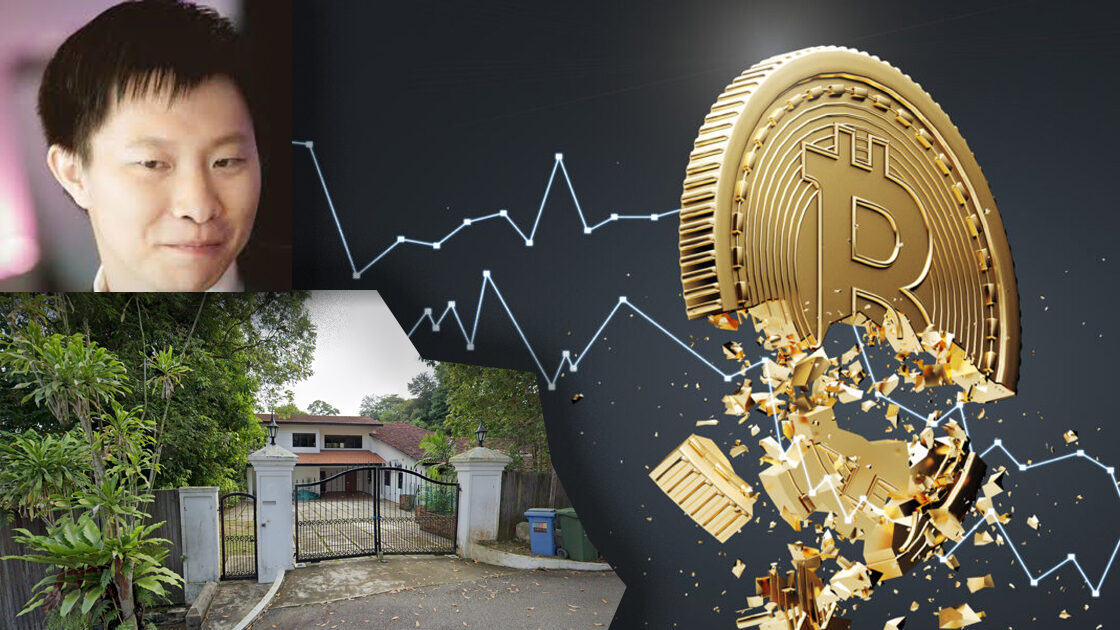
Following the sharp sell-off in the crypto world that wiped billions of dollars from the market, Zhu Su’s hedge fund Three Arrows Capital appears to have run into a host of liquidity problems.
3AC was slapped with a default notice on a loan amounting to around S$940 million (based on Bitcoin’s price) on 27 June after defaulting on a loan from New York-based digital asset brokerage Voyager Digital.
On top of that, the Monetary Authority of Singapore (MAS) reprimanded 3AC for breaching regulations by providing false information and managing more assets than legally allowed under Singapore rules.
The troubled crypto hedge fund is currently undergoing liquidation, which begs the question: What will happen to Zhu Su’s properties?
Zhu Su’s real estate portfolio
He currently owns at least two Good Class Bungalows (GCBs) in Dalvey Road and Yarwood Avenue, while residing in a strata landed home in the Balmoral Road area.
The 35-year-old crypto billionaire and his wife made news when he was granted an option to buy a 999-year GCB in Yarwood Avenue in Kilburn Estate Area for S$48.8 million (S$1,532 psf) back in December 2021 in trust under his three-year-old child.
The purchase was completed in March this year.
3AC’s financial problems triggered speculation that the collapse of Zhu Su’s company will result in him letting go of at least one of his luxury properties.
12% Seller’s Stamp Duty (ouch)
Selling any property in Singapore within three years of purchase means paying a Seller’s Stamp Duty of 12%.
This penalty was imposed to prevent people from gaming the property market by buying and flipping houses.
If Zhu Su is selling his Yarwood GCB, he’ll be subject to paying a hefty stamp duty of almost S$6 million.
Irrevocable trust?
Since Zhu Su purchased the GCB under trust, it may have been to protect his assets from creditors. However, it is not known whether he bought it under a revocable or irrevocable trust.
What’s the difference, you may ask.

A revocable trust allows the settlor (person who created the trust) to either change or terminate the terms of the trust. It also allows the court to demand that the trust arrangements be unwound to be split in divorce cases, or in Zhu Su’s case, to repay creditors.
An irrevocable trust, on the other hand, is exactly what it’s name suggests. Once the settlor has signed off on the trust, he surrenders his legal rights over the assets. This means that the trust cannot be terminated, nor its terms altered.
However, to protect the irrevocable trust’s assets from creditors, it needs to have been set up five years before bankruptcy is declared.
Even if the Yarwood GCB was put under irrevocable trust, the trust offers no protection as the transaction was only completed this year. Creditors are able to seize the property and liquidate it to cover any outstanding debts.
Debt recovery
Should 3AC have the financial resources to repay its loan, Zhu Su won’t need to liquidate his personal assets. However, if the company is unable to cover the outstanding loan, the courts might start a debt recovery proceeding.
A debt recovery proceeding evaluates the debtor’s (person who owes money) assets and net worth to determine whether they possess enough assets to pay the amount back.
To deal with the massive fall-out from the crypto market, Zhu Su might decide to sell a property or two to free up some financial resources to stay in the green.
Would you buy a property under your child’s name? Let us know in the comments section.
If you found this article interesting, 99.co recommends Buying property under your child’s name: Is it a good idea? and Ultra-high-net-worth individuals who bought or sold bungalows or entire property blocks in Singapore recently.
About Jamie Wong


Looking to sell your property?
Whether your HDB apartment is reaching the end of its Minimum Occupation Period (MOP) or your condo has crossed its Seller Stamp Duty (SSD) window, it is always good to know how much you can potentially gain if you were to list and sell your property. Not only that, you’ll also need to know whether your gains would allow you to right-size to the dream home in the neighbourhood you and your family have been eyeing.
One easy way is to send us a request for a credible and trusted property consultant to reach out to you.
Alternatively, you can jump onto 99.co’s Property Value Tool to get an estimate for free.
If you’re looking for your dream home, be it as a first-time or seasoned homebuyer or seller – say, to upgrade or right-size – you will find it on Singapore’s fastest-growing property portal 99.co.
Meanwhile, if you have an interesting property-related story to share with us, drop us a message here — and we’ll review it and get back to you.
Join our social media communities!
Facebook | Instagram | TikTok | Telegram | YouTube | Twitter




Leave a comment