Some people purchase properties to live in, while others buy them as investment pieces. For the latter, they usually have to contend with taxes and duties such as Additional Buyer’s Stamp Duty (ABSD).
In mid-December 2021, the government announced a slew of cooling measures intended to dampen the exuberance in the property market.
Measures include ABSD increases for those looking to buy a second or subsequent property. ABSD is now levied at 17% for second homes and 25% for third and subsequent properties. First-time home buyers are not affected by the increase.
| Types of Buyers | Rates from 6 July 2018 to 15 December 2021 | Rates on or after 16 December 2021 | |
| Singapore Citizens | First residential property | 0% | 0% (unchanged) |
| Second residential property | 12% | 17% (+5%) | |
| Third and subsequent residential property | 15% | 25% (+10%) | |
| Permanent Residents | First residential property | 5% | 5% (unchanged) |
| Second residential property | 15% | 25% (+10%) | |
| Third and subsequent residential property | 20% | 30% (+10%) | |
| Foreigners | Any residential property | 20% | 30% (+10%) |
| Entities | Any residential property | 25% | 35% (Plus additional 5% for housing developers (non-remittable)) (+15%) |
In Singapore, any individual below 21 years of age does not have the legal capacity to own private property in their own name. However, parents may use their child’s name to acquire another property under a trust. The parents will remain legal owners of the property, while the child becomes the beneficiary.
What is a trust?
A trust is an arrangement that allows one person (trustee) to hold assets on behalf of another (beneficiary). It can comprise a variety of assets, including cash, stocks, family businesses and, with this article, property.
There are 3 parties involved in a trust.
- Settlor. The person or entity who created the trust and usually the one who owns the assets.
- Trustee. This is often a lawyer who is entrusted with the legal title to the property and administers the trust. The settlor can also be the trustee.
- Beneficiary/Trustor. The person is entitled to the proceeds from the trust.
Does it make sense to buy properties under a trust to avoid ABSD?
Sometimes current property owners seeking to avoid the hefty ABSD fees purchase properties under a trust. Do note, however, that the Inland Revenue Authority of Singapore (IRAS) will evaluate the beneficiary of the trust. ABSD rules will still apply if the beneficiary owns more than one property.

Let’s look at an example of a family doing so: Here’s the Lee family, which comprises Mr and Mrs Koh and their 5-year-old daughter, Holly.
Mr and Mrs Koh decide to purchase a private condo in Queenstown, with Holly as the beneficiary. This is young Holly’s first property; thus, no ABSD is payable.
Holly’s parents will handle all legal responsibilities and liabilities. When Holly turns 21, the property immediately belongs wholly to her, and she has to assume those responsibilities. Should she decide to purchase another property with her spouse, she will need to pay ABSD as it will be considered her second property.
We’ve covered some pros and cons if property buyers are doing so with similar intent.
Local crypto billionaire buying GCB under trust
Recently, local crypto billionaire Zhu Su bought a S$48.8 million GCB in the Kilburn Estate Area with his 3-year-old child as the beneficiary.
How much ABSD he would’ve had to pay if he bought it under his name as a second (or third) property? Let’s break it down.
| Types of Buyers | Additional ABSD in SGD | |
| Singapore Citizens | First residential property | S$0 |
| Second residential property | S$8,296,000 | |
| Third and subsequent residential property | S$12,200,000 | |
| Permanent Residents | First residential property | S$0 |
| Second residential property | S$14,640,000 | |
| Third and subsequent residential property | S$14,640,000 | |
| Foreigners | Any residential property | S$17,080,000 |
Assuming it was his second property, he saved an eye-watering S$8.2 million as a Singapore citizen. If that estate were his third property, he would have saved more than S$12.2 million. That’s a lot of money saved.
To find out how much ABSD you have to pay if you decide to buy a second property, you can use 99.co’s affordability calculator.
Main motivations behind setting up trusts
The most common motivation behind creating a trust is to give the beneficiary a pillar of financial support.
There are other reasons, such as:
Estate preservation and financial planning. Geared toward the wealthy and super-wealthy class such as Zhu Su, establishing a trust protects the assets in the trust from being taken out of one’s control. This might happen during events such as forced heirship laws, where the state determines inheritance instead of one’s will.
Protection of assets. Under an irrevocable trust, creditors cannot seize the property if the settlor undergoes a divorce or declares bankruptcy. Personal creditors of the settlor are not entitled to claim the trust property to satisfy, and debts owed to them.
An irrevocable trust must have been set up for over five years prior to bankruptcy to protect the property. This is because the terms of the trust cannot be changed, unlike that of a revocable trust. If the trust is revocable, a court might demand that the settlor end the trust to repay creditors.
When will the trustee attain the legal title?
Once the beneficiary is 21 years old, the trust will be ended, and the legal title passed to the child.
Once the trust ends, the beneficiary is the complete owner of the property and must assume full responsibility for all taxes and mortgages. Parents can also specify in the trust deed for their child to inherit their property at a later time, such as a specific age or occasion.
How much does it cost to set up a trust?
There are many types of trusts. Establishing a trust can range from a few thousand dollars to S$20,000 or more. This is highly dependent on the law firm and the complexity of the arrangements. There may also be annual maintenance fees.
What properties can be trust properties?
Both HDB and private properties can be trust properties. HDB flats will require prior written approval from HDB before a settlor can create the trust.
Properties purchased to be held on trust will need to be fully paid for in cash. It will also be near impossible to secure a bank loan. However, since taking this route is usually taken by the wealthy, it will hardly be an issue for them.
Legal implications
Property fees. Parents manage the trust property. This means handling all the legal responsibilities and liabilities, such as paying the relevant taxes and duties.
Income taxable. If the property earns income, such as through rent, the income is considered the parents’ statutory income. This income is subject to income tax at a flat rate of 17%.
Future homes will incur ABSD. Children whose parents purchased a property under their name will incur ABSD for any future property purchases. If they wish to avoid ABSD, they will need to sell their current property.
Conclusion
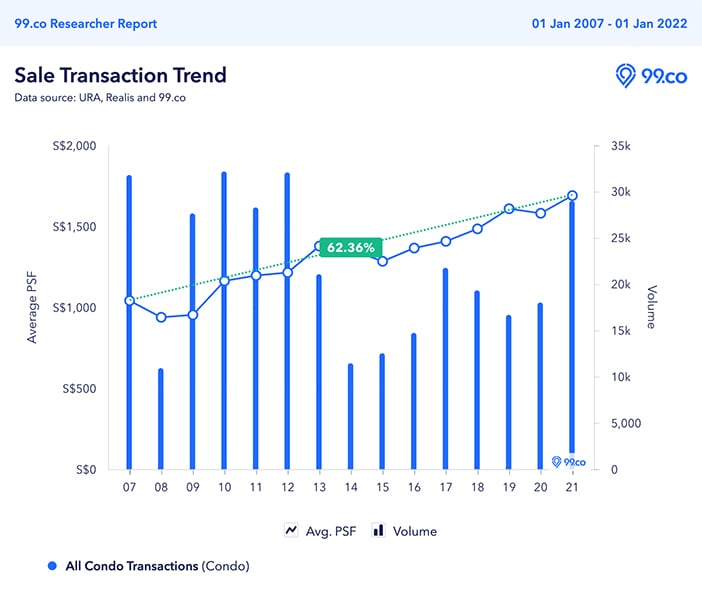
If you intend to buy the property as a gift for your child and can cover all related costs, there won’t be a problem stow it under a trust. It’s a great gift, seeing as property prices are always on a consistent uptrend, and there’s no doubt it’ll be quite the nest egg once your child is of legal age to take over the property.
However, if you’re planning on using the trust to skirt around paying ABSD, you run the risk of being found guilty under Section 33A of the Stamp Duties Act (SDA). Under this act, the Commissioner of Stamp Duties will slap you with a hefty fine on top of paying back the ABSD.
Thinking of buying a property under your child’s name? Let us know in the comments section below or on our Facebook post.
If you found this article helpful, check out Buying property under your child’s name: Is it a good idea? and Why you shouldn’t put properties in your child’s name.
Looking for a property? Find the home of your dreams today on Singapore’s fastest-growing property portal 99.co! If you would like to estimate the potential value of your property, check out 99.co’s Property Value Tool for free. Also, don’t forget to join our Facebook community page! Meanwhile, if you have an interesting property-related story to share with us, drop us a message here — and we’ll review it and get back to you.
Frequently Asked Questions (FAQ)
What is a trust and how does it work in the context of property ownership?
A trust is a legal arrangement where a trustee holds assets, including properties, on behalf of a beneficiary. In property ownership, it allows someone to manage the property for the benefit of another person, such as a minor child, until a specified age.
Who can set up a trust for a property in Singapore?
Individuals and entities are eligible to set up trusts for properties in Singapore. Parents, for example, can use their child’s name to acquire a property under a trust arrangement.
Can any type of property be held under a trust?
Yes, both HDB flats and private properties can be held under a trust. However, approval from HDB is required for HDB flats, and properties held under trusts must be fully paid for in cash.
About Jamie Wong


Looking to sell your property?
Whether your HDB apartment is reaching the end of its Minimum Occupation Period (MOP) or your condo has crossed its Seller Stamp Duty (SSD) window, it is always good to know how much you can potentially gain if you were to list and sell your property. Not only that, you’ll also need to know whether your gains would allow you to right-size to the dream home in the neighbourhood you and your family have been eyeing.
One easy way is to send us a request for a credible and trusted property consultant to reach out to you.
Alternatively, you can jump onto 99.co’s Property Value Tool to get an estimate for free.
If you’re looking for your dream home, be it as a first-time or seasoned homebuyer or seller – say, to upgrade or right-size – you will find it on Singapore’s fastest-growing property portal 99.co.
Meanwhile, if you have an interesting property-related story to share with us, drop us a message here — and we’ll review it and get back to you.
Join our social media communities!
Facebook | Instagram | TikTok | Telegram | YouTube | Twitter




Can u sell off such property bought under trust arrangement after 3 yrs avoid SSD b4 child turns 21?
Hi, properties purchased in trust is meant to be passed on to a beneficiary (usually a child when he/she turns 21 or older). Even so, the child is now the official title deed owner of the property, not his/her parents (the trustees).
The trustees’ role is to administer the trust and exercise due diligence – if they fail to do so, the beneficiary can in turn sue them for failing to exercise their fiduciary duties when they grow older.
Note also that if the true intention of the trustee is not to buy for the child’s benefit but avoid ABSD and reap the profits, the Commissioner of Stamp Duties may come after you.
Section 33A of the Stamp Duties Act (SDA) has a clause stating that in a situation where a trust is set up, whether directly or indirectly, to relieve any person from any liability to pay duty or to avoid any liability to pay duty, the Commissioner of Stamp Duties may disregard the transaction and recover the duties together with any penalties from the purchaser.
So to answer your query, once a property is purchased in trust, the trustee cannot sell the property as they are not the legal owner of the property – their beneficiary is.
Hope that answers your question!
Does the beneficiary of a will for a private property counts towards his/her property count?