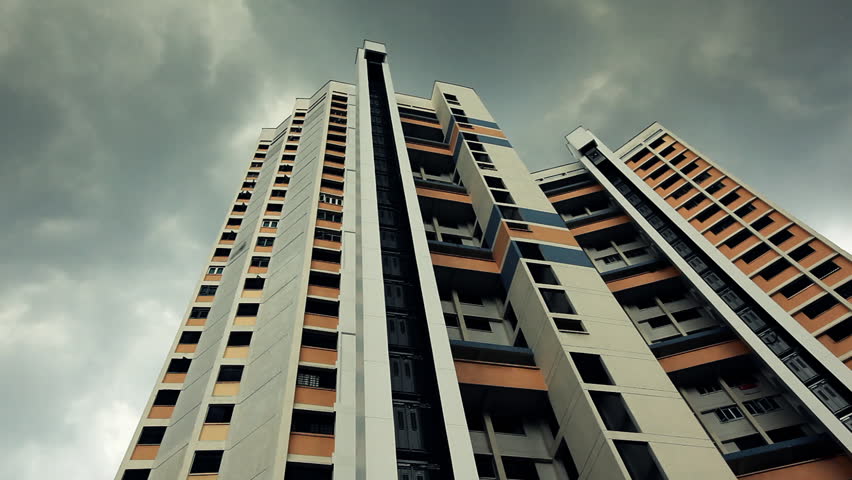
The Building and Construction Authority (BCA) is conducting lift upgrades across Singapore. The Lift Enhancement Programme (LEP) is expected to cost $450 million.
While you won’t have to pay for it (at least not directly), it’s not hard to guess this kind of thing will eventually affect your conservancy charges. And residents in condos don’t have an easy time of it either, with maintenance fees being affected and indirectly raising your costs.
Why are lift maintenance costs and upgrading so expensive?
Have you ever bought a printer? You might notice the actual printer itself is cheap (you can get a good one for under $120), but you get financially murdered over the cost of printer cartridges. The lift business operates pretty much the same way.
The initial cost of installation is quite low. Lifts can be installed for around $100,000, sometimes even less than that. Sometimes there isn’t even a profit margin, as the company installing the lift just aims to cover the cost. The real cost comes in the lucrative contracts that follow.
Lifts need a maintenance schedule, in which they are checked, oiled, cleaned, etc. This may happen as often as once every six months. And with around 61,000 passenger lifts in Singapore, that’s a lot of maintenance work. This is where the companies make the bulk of their money: not in the actual installation of the lift, but in the maintenance.
The lift companies form something of an oligopoly
If you’ve been anywhere in the west, you may notice just about every lift there tends to bear the name Otis, Schindler, or Thyssen-Krupp. Along with Mitsubishi, Kone, and Fujitec, these companies account for most of the lifts in the world.
Now these big lift companies may not seize the lucrative maintenance contracts for themselves. They may allow independent contractors to do it. So that’s not unfair or anti-competitive right?
Of course it is. Those independent contractors need to have their staff trained by the right lift company. And when they want spare parts to fix a lift, those parts – again – need to come from the lift company. So as you can see, it’s crazy difficult to avoid paying your dues to the elevator mafia. And that mentality filters down.
The independent contractors get equally vicious in fighting for, and retaining, their market share.
The bullied becomes a bully
Perhaps taking a cue from the elevator mafia, independent contractors also try to corner the market. And because Elevators Weekly is not a leading entertainment magazine, no one really notices how this costs residents (more on this below).
In June 2014, Shenyang Brilliant Elevator (BLT), a lift company from China complained to the Competition Commission of Singapore (CCS). This is the organisation that prevents monopolies.
Anyway, BLT complained that one of its intermediaries, EM Services, refused to supply parts for BLT lifts to other competitors. This sparked an eventual investigation, in which five companies came under fire for doing the same thing. This caused Marine Parade Town Council Chairman, Lim Biow Chuan, to remark that “Without competition, there is a limit as to how we can negotiate with the lift companies to keep the maintenance costs lower.”
In fact, in a speech to Parliament on 11th July 2016, Minister for National Development Lawrence Wong noted that 70 percent of lifts are maintained by eight contractors.
You get the point: the whole elevator business is more cutthroat than you imagine. It’s like investment banking, except a lot of the people involved are also carrying big wrenches. And this unhealthy business ecosystem ramps up your maintenance costs , in more ways than one:
- If a lift company raises its prices, there’s nothing anyone can do
If all the lifts in your condo are made by, say, Schindler – and Schindler decides to raise its prices for parts – there’s nothing anyone can do. You can yell at the management council to change the independent contractor if you want. It will make as much difference as chucking a pebble at a battle tank. Every independent contractor still needs to buy the same parts from Schindler, or Schindler’s supplier.
The only real alternative would be to replace all the lifts with those of another company. That rarely happens, because imagine the inconvenience of taking all the elevators offline and reinstalling them. It’s noisy, it’s slow, and it costs money (although the initial installation costs are low).
- Lack of competition creates a cartel effect
The lift contractors, as mentioned, are not much better than the lift companies. Going back to Minister Wong’s remarks about the eight lift companies, we can see how easy it is for them to team up.
If all eight lift contractors agree to raise their prices, most Singaporeans (and we emphasise, not just the people in your specific residence but most of the country) will end up paying higher maintenance costs. These eight lift companies apparently have free reign to impose their charges, and make our housing collectively more expensive.
It also means prices may be unreasonably high right now, for all we know. It’s plausible our lift maintenance could cost half as much, but we pay the current rates because there’s no alternative.
- It affects maintenance costs of other property assets
When lift maintenance contracts are too expensive, and there’s no way to negotiate a lower price, other property assets suffer. Remember, the management can’t choose to skip lift maintenance, in the interest of residents not plummeting to a jagged metal death. That means cost cutting has to take place, and other property assets will suffer for it.
It could mean less pool maintenance, and the wading areas turning into a cesspit. It could mean the management council getting what they need from the gardening budget, and the “landscaped parks” eventually resembling an SAF jungle confidence course.
The point is, it’s not “just lifts” that are the issue. The whole model of the elevator industry is due for a massive revamp; and while they’ve so far gone under the radar, it’s only a matter of time before the rest of the property industry wakes up to what’s happening.
About Ryan Ong


Looking to sell your property?
Whether your HDB apartment is reaching the end of its Minimum Occupation Period (MOP) or your condo has crossed its Seller Stamp Duty (SSD) window, it is always good to know how much you can potentially gain if you were to list and sell your property. Not only that, you’ll also need to know whether your gains would allow you to right-size to the dream home in the neighbourhood you and your family have been eyeing.
One easy way is to send us a request for a credible and trusted property consultant to reach out to you.
Alternatively, you can jump onto 99.co’s Property Value Tool to get an estimate for free.
If you’re looking for your dream home, be it as a first-time or seasoned homebuyer or seller – say, to upgrade or right-size – you will find it on Singapore’s fastest-growing property portal 99.co.
Meanwhile, if you have an interesting property-related story to share with us, drop us a message here — and we’ll review it and get back to you.
Join our social media communities!
Facebook | Instagram | TikTok | Telegram | YouTube | Twitter



Leave a comment