
Everyday, 99.co picks a piece of property jargon to demystify. Today, we look at a growing favourite: the shoebox
What is a shoebox unit?
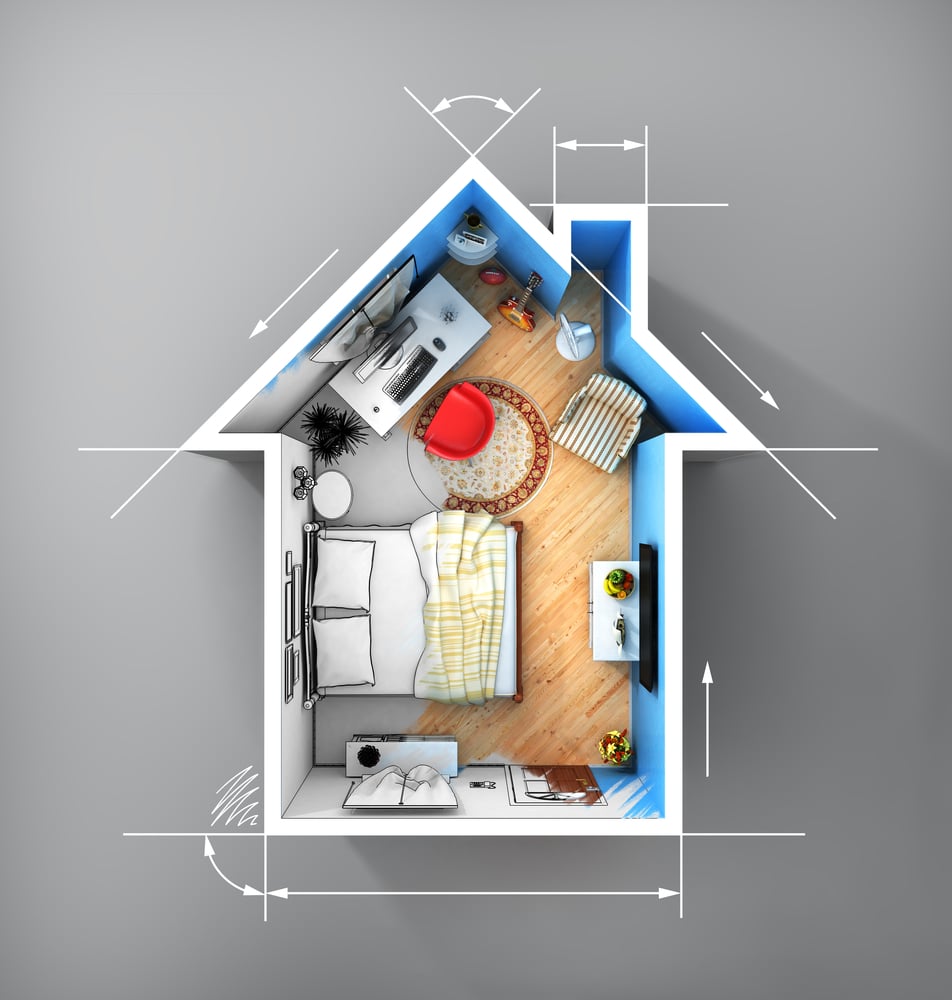
A shoebox unit is defined as any unit that’s about 500 square feet or under (506 square feet if you want to be super precise). Shoebox units are sometimes also called compact units.
It’s probably occurred to you, at this point, that some HDB flats are all smaller than 506 square feet; but those don’t count as shoeboxes. The term generally applies to small condo units, which means shoeboxes are expected to come with the usual amenities (pool, BBQ pit, gym, and so forth).
Most (but not all) shoebox units are purchased by investors to rent out. This is because they’re considered too small to raise a family in. However, some lifelong singles or retirees do use shoeboxes as a home.
It’s not unheard of for large corporations to own multiple shoebox units in a development; these are often used as housing for foreign executives, if they’re posted in Singapore for a year or two (it’s cheaper than paying their housing allowance). If fully paid up, they can also be used as collateral for the business to borrow against.
More expensive per square foot, but cheaper overall
The distinguishing trait of shoebox units is that they have a higher price per square foot than full sized condos. However, their overall prices are lower, due to the smaller size.

At the time of writing, the average price per square foot for a shoebox unit (across Singapore) us about $1,693 psf. However, the price per square foot for condos in general is $1,577 psf. That’s a difference of about 7.35 per cent.
However, the overall cost a shoebox unit tends to fall between $700,000 to $800,000, whereas the average condo will set you back about $1.5 million.
Rental issues of shoeboxes
The average rental income from shoebox units is about $2,000 per month, or around $4.70 per square foot.
This places the rental yield of the average shoebox at three per cent, assuming a price of $800,000. For shoeboxes bought at around $700,000, the rental yield ranges from 3.5 to four per cent, which is among the highest for residential properties (most residential properties have yields of two to three per cent).
The average among all condos – at the time of writing – is about $3,500 per month. Given the average condo price of $1.5 million, the rental yield comes to around 2.8 per cent.
It’s also believed – but not proven – that shoeboxes are easier to rent out, as they’re attractive to single expatriates who don’t want to rent a big place. But there’s no numbers to show that more single / couple expatriates come in than families, nor is there any recent study on shoebox vacancy rates. We wouldn’t put too much stock in it – rentability depends on location and the condition of your property; it’s no different from larger condo units.
Lower share value can be a big help
Shoeboxes are famed for their low maintenance costs, relative to full sized units. As you might imagine, having a smaller unit makes it easier to upkeep. But don’t forget the issue of share value.
Each owner of a condo unit has a share value in the development, based on the size of their property. The larger your share value, the more of the maintenance you pay. Given their small size, shoebox units have the smallest share value (five). This lowers the monthly overheads, compared to a full sized condo.

Also, in the event of an en-bloc sale, there’s a slight chance that sales proceeds will be divided by share value (although owners of big units will fight tooth and nail against this, see the link above). This sort of distribution is better for owners of small units, than big ones.
An alternative for retirees
Shoebox flats are increasingly popular among retirees, especially if they’re used to condo living. If you’ve sold your condo for $1.5 million for example, you could reasonably buy an $800,000 shoebox, and still have a comfortable $700,000 to pad your CPF for retirement. As such, some retirees choose to downgrade to a shoebox, instead of to a flat.
It also helps that many shoebox units are built in older, mature estates – this provides convenience and comfort for older buyers, who don’t need to travel as far for their groceries, dinner, etc.
Should you buy a shoebox as an investment?
It’s certainly a favourite among new investors, given the low quantum. However, do be mindful of one thing: when you own a shoebox, you can no longer buy an HDB flat (you own private property). At the same time, a shoebox might be too small to start a family, if you decide to settle down.
This can result in a tough situation, where you’re forced to sell your shoebox to be able to buy a flat.
Ideally, be sure of one of these things:
(1) You have somewhere else to stay if you decide to settle down
(2) You have an exit plan to sell the property, long before you decide to get married and settle down
(3) You will have enough to buy another private property to live in, by the time you settle down
What bits of property jargon confuse you? Voice your thoughts in our comments section or on our Facebook community page.
Looking for a property? Find the home of your dreams today on Singapore’s largest property portal 99.co! You can also access a wide range of tools to calculate your down payments and loan repayments, to make an informed purchase.
About Ryan Ong


Looking to sell your property?
Whether your HDB apartment is reaching the end of its Minimum Occupation Period (MOP) or your condo has crossed its Seller Stamp Duty (SSD) window, it is always good to know how much you can potentially gain if you were to list and sell your property. Not only that, you’ll also need to know whether your gains would allow you to right-size to the dream home in the neighbourhood you and your family have been eyeing.
One easy way is to send us a request for a credible and trusted property consultant to reach out to you.
Alternatively, you can jump onto 99.co’s Property Value Tool to get an estimate for free.
If you’re looking for your dream home, be it as a first-time or seasoned homebuyer or seller – say, to upgrade or right-size – you will find it on Singapore’s fastest-growing property portal 99.co.
Meanwhile, if you have an interesting property-related story to share with us, drop us a message here — and we’ll review it and get back to you.
Join our social media communities!
Facebook | Instagram | TikTok | Telegram | YouTube | Twitter





Leave a comment