Have you ever wondered how industry experts predict the type of property a new plot of land could hold and how many units it might accommodate?
One of the key factors they consider is the plot ratio of the land and neighbouring areas. But how can you, as a homeowner, landlord, or investor, leverage this information?
Here’s how you can effectively read and decode the URA plot ratio:
Table of contents
What is a plot ratio?
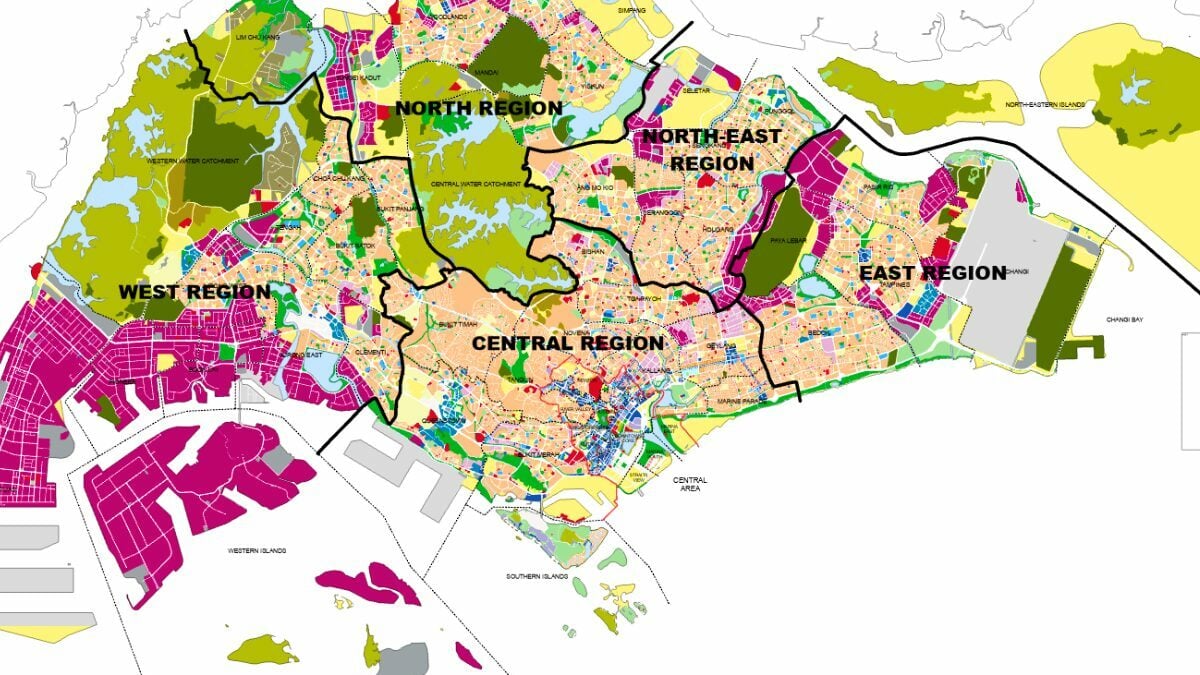
In Singapore’s urban landscape, residential zones are delineated in beige, with each area assigned a specific Gross Plot Ratio (GPR). When you zoom in on the URA Master Plan via URA Space, you’ll notice numerical values associated with each plot (e.g., 2.9, 3.0, 3.5). This number represents the plot ratio of the land parcel.
Plot ratio is a crucial metric that measures how intensively a plot of land can be developed. It serves as an indicator of the potential for skyscrapers or tall buildings within a given area, determining the maximum gross floor area (GFA) allowable for any development on the land parcel.
Read more: URA Master Plan for property buyers: How to read and understand it
Why does plot ratio matter?
Simply put, a high plot ratio in residential plots could signify the presence of towering condo blocks, while commercial land areas might indicate upcoming shopping malls.
Understanding the plot ratio is essential to avoid scenarios where purchasing an expensive condo could lead to obstructed views due to future developments, thereby impacting the property’s valuation significantly.
Take note that, in many areas, additional building height controls may limit the maximum storeys of buildings. For example, HDB blocks in Kaki Bukit were previously limited to 15 storeys because of the nearby Paya Lebar Airbase. However, as the airbase will be moving out and the site gets redeveloped, height restrictions here will be lifted as well.
Read more: NDR 2025: The next decade of housing in Singapore
How to read plot ratio values?
Higher plot ratio values indicate a greater intensity of land use, translating to more units and storeys in developments. For instance, a plot with a high plot ratio will likely accommodate more units and storeys compared to one with a lower ratio.
Here’s a guideline to help you estimate the number of storeys and density by referencing URA’s plot ratio:
| Gross Plot Ratio (GPR) | Density | Storey |
| 1.4 | Very low | 5 |
| 1.6 | Low | 12 |
| 2.1 | Medium | 24 |
| 2.8 | High | 36 |
| More than 2.8 | Very high | More than 36 |
Read more: What to look out for in developer launches: URA Master Plan
Maximum property height restriction in Singapore
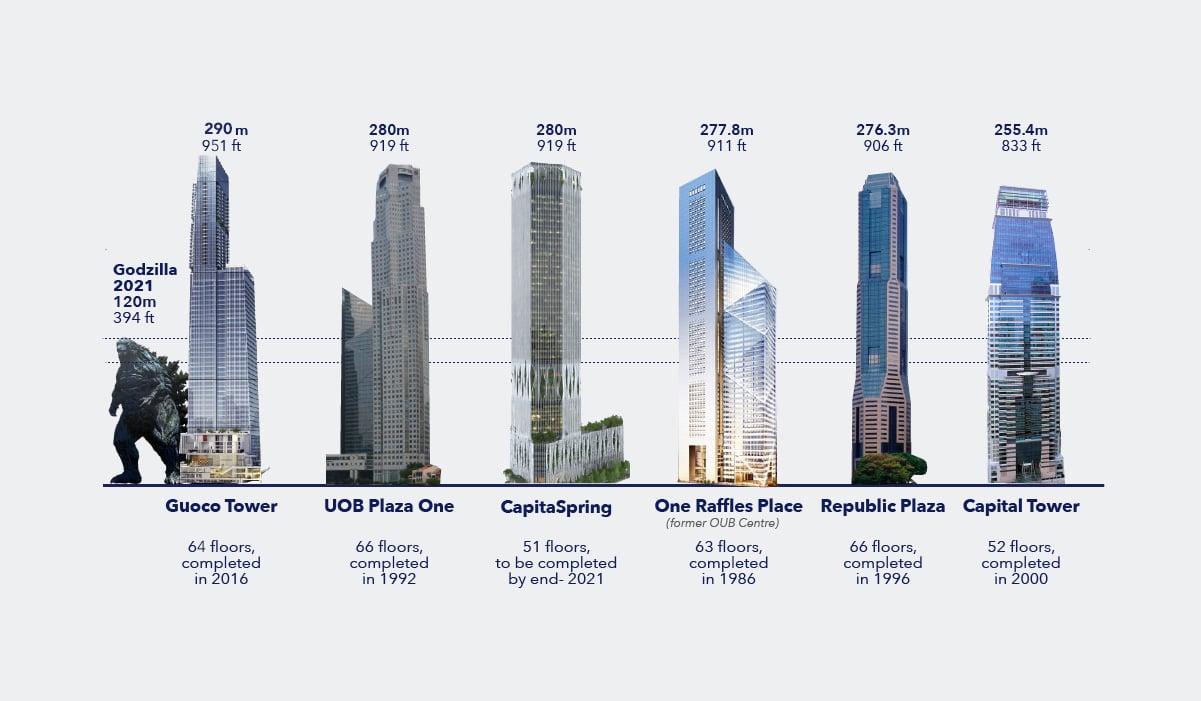
Historically, the maximum height limit for buildings in Singapore stood at 280 metres for nearly two decades until the completion of Tanjong Pagar Centre (Guoco Tower) in 2016.
This landmark surpassed the previous height limit by an additional 10 metres, reaching a height of 290 metres and becoming the tallest building in Singapore at that time. The completion of Tanjong Pagar Centre marked a departure from the previous height regulations.
However, this landscape is set to change in 2028 with the completion of 8 Shenton Way, expected to tower at 305 metres, making it 7.4% taller than Guoco Tower.
Read more: 12 tallest buildings in Singapore (and around the region) on Skyscraper Day (Sept 3)
Under what circumstances might the maximum number of storeys vary?
The maximum number of storeys may vary based on several factors, including:
- Street block controls
- Technical height controls for standards and safety regulations to ensure structural integrity.
- Developments in areas designated for conservation or urban design enhancements may face additional height restrictions to preserve historical or cultural significance.
- Security considerations also influence height regulations in strategic locations to mitigate risks and ensure public safety (We’ll get into more of this in the following section)
- Site-specific conditions such as topography and proximity to amenities can also impact height regulations.
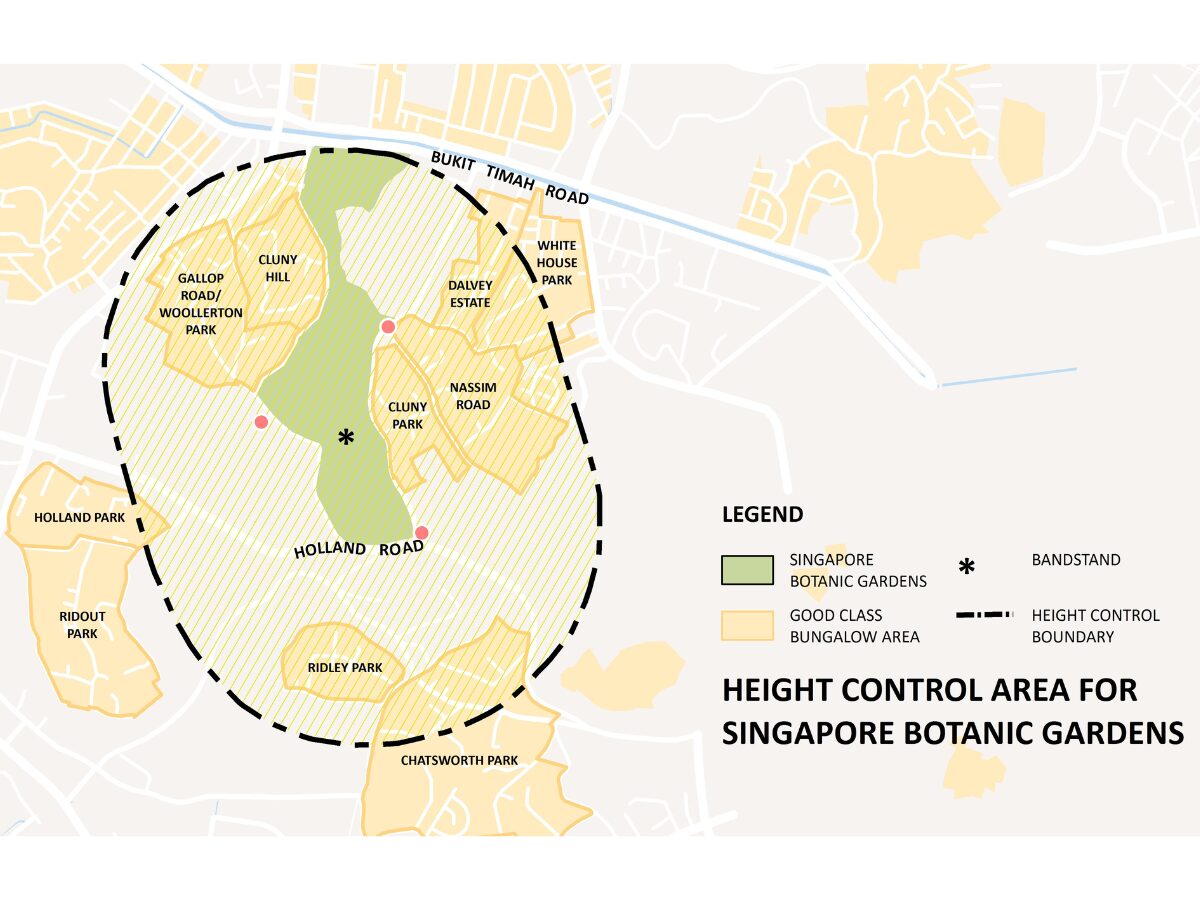
- Areas near the Singapore Botanic Gardens adhere to specific height restrictions to preserve the visual amenity of the area. These include:
| Gross Plot Ratio | Maximum number of storeys |
| 1.4 | 4 |
| 1.6 | 10 |
| 2.1 | 20 |
| 2.8 | 30 |
| More than 2.8 | More than 30 |

Why do we need height restrictions?
Height restrictions in Singapore primarily stem from safety and security concerns, coupled with the limited land area of the country:
Safety and security
Singapore, a small city-state with limited land, prioritises safety and security in urban development. Erecting tall buildings can pose risks to air safety and national security. Authorities like the Civil Aviation Authority of Singapore (CAAS) and the Defence Science Technology Agency (DSTA) closely monitor building heights to ensure airspace safety and national security.
Proximity to Changi Airport
The Central Business District (CBD), situated within the green zone near Changi Airport, requires special attention due to its proximity to air traffic routes. The construction of tall buildings in this area could potentially impact air traffic and safety, necessitating careful consideration and regulation.
Future skyscrapers in Singapore
The planned relocation of the Paya Lebar Airbase, scheduled for 2030, presents opportunities for urban development. It may pave the way for the construction of tall buildings, known as supertalls or super skyscrapers, in Singapore.
However, the realisation of such structures depends on future redevelopment plans and market demand for such projects.

Interested in specific plots in the latest 2H2025 GLS Programme? Read all about it here.
About Sophiyanah David

Sophi, a seasoned copywriter specialising in Singaporean real estate and property, is one of the minds behind 99.co's informative articles. Like her colleagues at 99.co, Sophi is dedicated to keeping you informed about the ever-changing world of real estate so you can find your forever home. When off the clock, you can find her giggling and kicking her feet as she reads her romance novels, watching anime - if FMBA is not your fave, she might fight you (but you'll probably win) and looking up latest skincare trends.

Looking to sell your property?
Whether your HDB apartment is reaching the end of its Minimum Occupation Period (MOP) or your condo has crossed its Seller Stamp Duty (SSD) window, it is always good to know how much you can potentially gain if you were to list and sell your property. Not only that, you’ll also need to know whether your gains would allow you to right-size to the dream home in the neighbourhood you and your family have been eyeing.
One easy way is to send us a request for a credible and trusted property consultant to reach out to you.
Alternatively, you can jump onto 99.co’s Property Value Tool to get an estimate for free.
If you’re looking for your dream home, be it as a first-time or seasoned homebuyer or seller – say, to upgrade or right-size – you will find it on Singapore’s fastest-growing property portal 99.co.
Meanwhile, if you have an interesting property-related story to share with us, drop us a message here — and we’ll review it and get back to you.
Join our social media communities!
Facebook | Instagram | TikTok | Telegram | YouTube | Twitter



Leave a comment