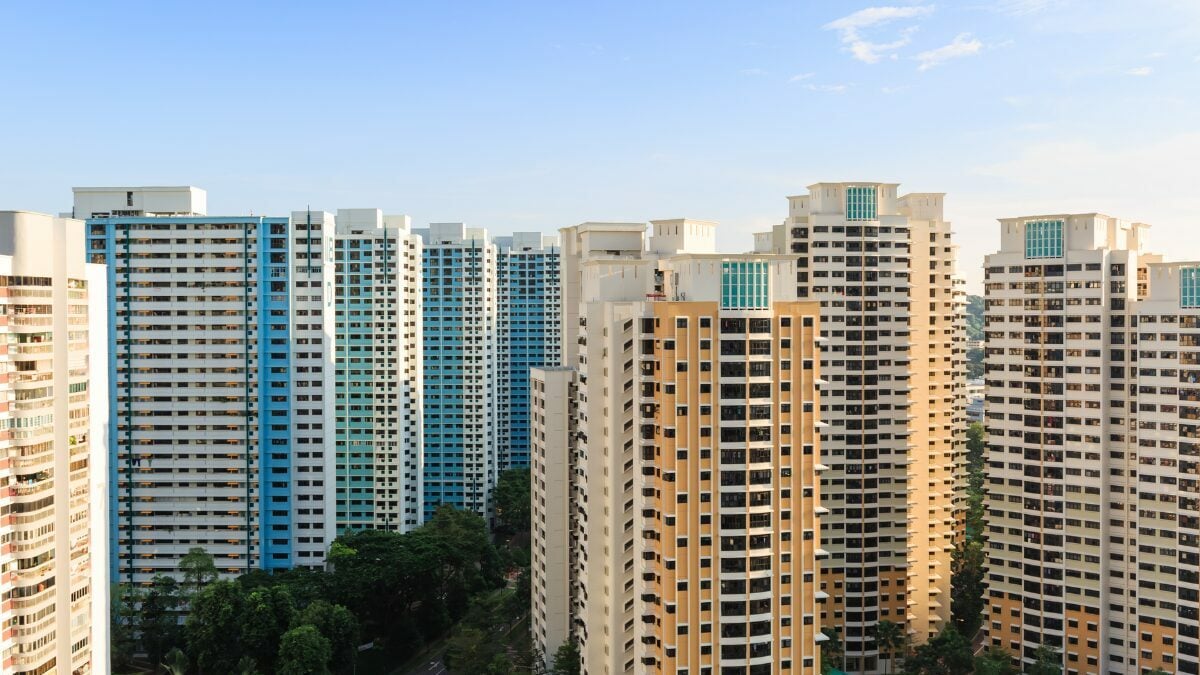
On August 5, Minister for National Development Chee Hong Tat shared an important update that could change how you think about your HDB home. The government has decided to focus on the Voluntary Early Redevelopment Scheme (VERS) and confirmed there are no plans for more Selective En bloc Redevelopment Scheme (SERS) projects in the future.
This is a big change in the way public housing will be managed, especially for older estates. For years, SERS was the main way certain HDB blocks were redeveloped, but it was rare and only applied to selected sites. Now, the shift towards VERS means a more gradual and voluntary approach, giving homeowners more say in what happens to their estate.
Table of contents
Why now?
For decades, Singapore’s Housing & Development Board (HDB) has played a key role in shaping the way we live – providing affordable homes and helping the country achieve one of the highest homeownership rates in the world. But with limited land, the need to use space wisely and refresh older towns has become more important than ever to keep the city liveable and thriving.
Today, many HDB flats are entering the second half of their 99-year leases. If nothing is done, this could lead to a wave of lease expiries in the 2070s and 2080s, forcing many residents to move at the same time – a situation the government wants to avoid. In the past, the SERS helped renew older precincts, but it was used only in places with high redevelopment potential. This meant it couldn’t address the wider challenge of ageing housing across the island.
That’s where the VERS comes in. Unlike SERS, which focused on reclaiming land for better use, VERS is about planning ahead for the gradual renewal of older towns, ensuring homes, facilities, and services continue to meet residents’ needs.
What is Voluntary Early Redevelopment Scheme (VERS) and how does it work?
VERS is a government buyback programme for HDB flats that are approaching the later years of their 99-year leases, typically around the 70-year mark. It’s a voluntary scheme, where selected precincts will get to vote on whether to go ahead with redevelopment. If the decision is in favour, the government will acquire the flats before the leases fully run out, offer compensation to owners, and redevelop the sites.
The main goal of VERS is to tackle the challenge of lease decay – where flat values fall as leases shorten – and to make sure HDB homes stay valuable and liveable for Singaporeans. To prevent younger buyers from purchasing flats that might not last them for life, the government also limits loans on properties with short remaining leases. That said, most HDB households today have leases that stretch well beyond their lifetimes, typically covering them until at least the age of 95.
This approach is also part of a much bigger plan to keep older housing estates refreshed and full of life, while also ensuring that land is recycled fairly for future generations. When a lease eventually ends, the land returns to the state so it can be redeveloped into new homes, helping to avoid a split between those who own property and those who don’t. It also supports inter-generational mobility and gives towns the opportunity to be renewed in line with changing needs and lifestyles.
The idea of VERS was first shared by then-Prime Minister Lee Hsien Loong during the National Day Rally in 2018. More recently, on August 5th, Minister for National Development Chee Hong Tat confirmed that the first VERS projects could take place in the first half of the 2030s. In the meantime, the Ministry of National Development will use the current term of Parliament to work out the details.
VERS vs. SERS: Key differences you should know
The move from SERS to VERS marks a major change in Singapore’s housing renewal strategy. While both aim to redevelop older HDB estates, they work quite differently – and that can make a big difference for homeowners.
| Feature | SERS (Selective En bloc Redevelopment Scheme) | VERS (Voluntary Early Redevelopment Scheme) |
| Mode | Compulsory – all homeowners must take part | Voluntary – will proceed only if a majority of homeowners agree; the exact voting threshold for VERS has yet to be announced. |
| Eligibility | Precincts with high redevelopment potential (~5% of flats) | Precincts with flats about 70 years old |
| Compensation | Market value at announcement + subsidised new flat + SERS grant (up to S$30k) | Still undecided, but expected to be less generous |
| Financial upside | Often seen as a “windfall” | Smaller gains due to older flats |
| Primary goal | Maximise land use and redevelop high-potential sites | Gradually renew aging estates and tackle lease decay |
| Scale | Highly selective, few sites | Wider reach, rolled out progressively |
| Timeline | Offered when opportunities arise | First projects in early 2030s, expanding by late 2030s |
With SERS, once your block is chosen, participation is mandatory. VERS, on the other hand, gives you a choice – it will only go ahead if a majority of homeowners agree. Note that the exact voting threshold for VERS has yet to be announced.
SERS is also far more selective, targeting only estates with strong redevelopment potential. In fact, only about 5% of all HDB flats have ever qualified, and most prime sites have already been used. VERS will have a much broader reach, focusing on precincts with flats around 70 years old, so more aging estates will eventually be included.
When it comes to compensation, SERS homeowners typically get the market value of their flat at the time of the announcement, plus the option to buy a brand-new 99-year flat at a subsidised price, and sometimes an extra SERS grant of up to S$30,000. VERS compensation will be less generous – partly because the flats will be much older, which means less financial upside. The exact details are still being worked out.
In short, SERS was about tapping high-value land opportunities, while VERS is about planning ahead for the steady renewal of towns. It’s a shift from selective, one-off redevelopments to a long-term, phased approach that will touch many more estates over time.
Options for residents not taking part in VERS
If your precinct isn’t chosen for VERS, or if you vote against it, the main option is to stay in your flat until the 99-year lease runs out. Under HDB rules, once the lease ends, the flat must be returned to the state.
The government has said it will continue supporting residents in estates that are not going through VERS – or are still waiting for it – so that flats and neighbourhoods remain safe, comfortable, and vibrant for the rest of their lease. This support comes through several upgrading programmes.
One of the key schemes is the Home Improvement Programme (HIP), which is offered to flats about 30–40 years old. HIP tackles common maintenance issues like spalling concrete, structural cracks, and outdated fittings, and also offers optional upgrades. The government heavily subsidises this work, making it affordable for homeowners.
In addition, a second round of upgrading, called HIP II, will roll out when flats are about 60–70 years old. HIP II will be more extensive than the first round, with stronger and more durable repair solutions – such as corrosion-resistant materials – to help the flat remain liveable until the end of its lease. More details on HIP II are expected during the Ministry of National Development’s Budget debate in 2026. Importantly, HIP II and VERS are not mutually exclusive – a flat could undergo HIP II and still be offered VERS later.
The government has also indicated that, beyond the HIP, it will explore additional measures to upgrade and refresh older estates so they remain attractive and comfortable places to live in for years to come.
For seniors, the Silver Upgrading Programme (SUP) provides subsidised safety features like grab bars, slip-resistant bathroom tiles, and other fittings to make homes safer and more comfortable for residents aged 65 and above.
On a precinct level, the Neighbourhood Renewal Programme (NRP) funds improvements like upgraded seating areas, better landscaping, enhanced playgrounds, and new pavilions or shelters. This is fully funded by the government and carried out by Town Councils.
Taken together – HIP, HIP II, SUP, and NRP – these programmes form a comprehensive strategy to keep HDB estates liveable, functional, and pleasant to live in, even if they’re not selected for early redevelopment. They help address concerns about lease decay, maintain the value of flats, and ensure that living in an older home doesn’t mean sacrificing comfort or quality of life.
What’s next for VERS implementation?
Looking ahead, several key operational hurdles still need to be addressed during this term before VERS can be rolled out smoothly. Authorities will first have to decide on clear criteria for identifying which precincts could be considered for the scheme. At the same time, they will need to make sure there are enough replacement flats ready in advance, so residents can relocate without having to move too far from their current neighbourhoods.
Another critical step will be finalising a fair and transparent package for affected homeowners – including both the compensation amount and the terms of acceptance. To minimise disruption, the roll-out is expected to be done in stages, targeting selected areas rather than entire towns at once.
As the plan unfolds, the Ministry of National Development (MND) and HDB are expected to continuously review the process, making adjustments where needed to ensure the scheme works effectively for both residents and the wider community.
The scheme is expected to grow more significantly only in the late 2030s, when more flats will be around 70 years old.
Before anything begins, the government plans to consult the public to get feedback on how VERS should work. The plan is for a slow and steady rollout over two to three decades. Minister Chee explained that this is to prevent a disruptive situation where too many people have to move at once in the 2070s and 2080s.
About Sophiyanah David

Sophi, a seasoned copywriter specialising in Singaporean real estate and property, is one of the minds behind 99.co's informative articles. Like her colleagues at 99.co, Sophi is dedicated to keeping you informed about the ever-changing world of real estate so you can find your forever home. When off the clock, you can find her giggling and kicking her feet as she reads her romance novels, watching anime - if FMBA is not your fave, she might fight you (but you'll probably win) and looking up latest skincare trends.

Looking to sell your property?
Whether your HDB apartment is reaching the end of its Minimum Occupation Period (MOP) or your condo has crossed its Seller Stamp Duty (SSD) window, it is always good to know how much you can potentially gain if you were to list and sell your property. Not only that, you’ll also need to know whether your gains would allow you to right-size to the dream home in the neighbourhood you and your family have been eyeing.
One easy way is to send us a request for a credible and trusted property consultant to reach out to you.
Alternatively, you can jump onto 99.co’s Property Value Tool to get an estimate for free.
If you’re looking for your dream home, be it as a first-time or seasoned homebuyer or seller – say, to upgrade or right-size – you will find it on Singapore’s fastest-growing property portal 99.co.
Meanwhile, if you have an interesting property-related story to share with us, drop us a message here — and we’ll review it and get back to you.
Join our social media communities!
Facebook | Instagram | TikTok | Telegram | YouTube | Twitter




Leave a comment