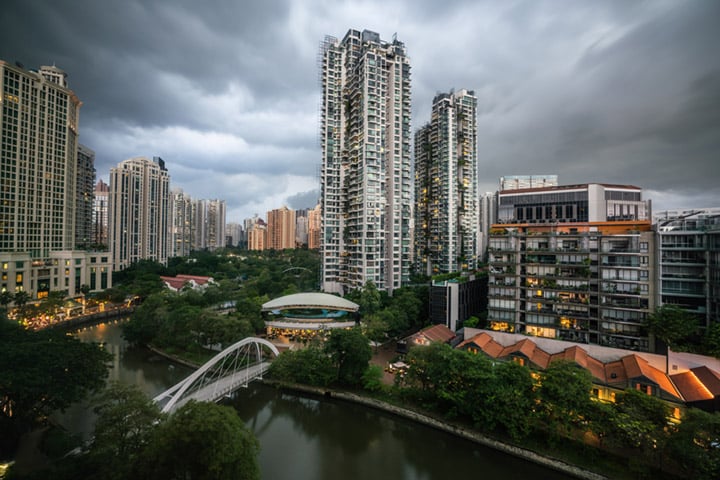
On 17 October 2018, the Urban Redevelopment Authority (URA) — Singapore’s urban planning authority — announced several new guidelines for condominium developments that would take effect early next year*.
Among other things, the rules included reducing the maximum number of units allowed in new condominiums outside the Core Central Region (CCR) of Singapore.
The reasons behind the URA guidelines change? To discourage developers from building shoebox units, counter shrinking condo unit sizes overall and hopefully “manage potential strains and stresses” on Singapore’s infrastructure.
For developers, this is bad news. Lowering the maximum number of units can mean eating into their potential profits down the road. But what can homebuyers expect? Read on to know all about the new rules and the implications:
*The new guidelines apply to new development applications for projects submitted from 17th January 2019 onwards.
New URA guideline #1: Maximum dwelling units lowered
Before: The formula used to calculate the maximum number of housing units allowed in developments outside the CCR is Gross Floor Area (GFA) in square metres divided by 70 square metres (GFA / 70 sq m).
Now: The formula is now updated to be (GFA / 85 sq m). Given the same GFA and assuming developers maximise their GFA quota, this translates into approximately 18% fewer units being built per development.
Why: According to URA’s group director for development control, Goh Chin Chin, this allows developers to provide a more balanced mix of unit sizes. The goal is to cater to the diverse needs of home buyers, not just investors.
Implication for homebuyers: Average unit sizes of new launch condos will increase down the line. As cheaper shoebox-sized units may be a thing of the past, property investors with limited budget might be priced out of an investment, unless they turn to resale. Even those who can afford the larger single-bedder units might work out a diminished rental yield, because while the bigger square footage costs more, it might not justify a higher rent in the rental market. Meanwhile, those buying homes for their own stay might welcome the fact that new developments will be less cramped.
For buyers who are worried that developers might increase their prices to recoup lost profits, let’s just say that, after the July 2018 cooling measures, developers are aware that raising prices — by raising the per square foot (psf) price — would be akin to shooting themselves in the foot multiple times. Buyers might have to pay a higher absolute price for slightly bigger square footage of the larger units, but in psf terms they’re unlikely to get a worse deal.
Plus, if the market is indeed cool, developers might even be forced to sell at a lower psf price in order to keep the absolute price of units affordable.
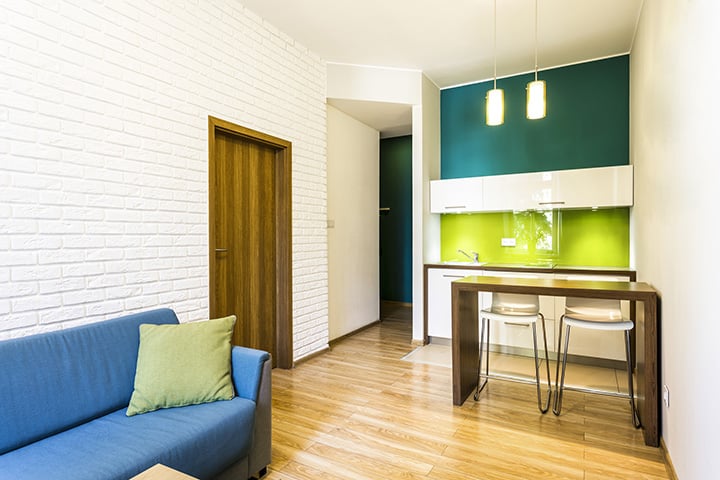
New URA guideline #2: More precincts with special maximum unit controls
Before: Four areas are subject to special requirements when it comes to maximum unit controls. These areas are Telok Kurau, Kovan, Joo Chiat and Jalan Eunos; in these estates, the GFA is divided by 100 sq m (GFA / 100 sq m) to arrive at the maximum units allowable.
Now: Nine areas have to adhere to the special maximum unit controls. These areas are Marine Parade, Joo Chiat-Mountbatten, Telok Kurau-Jalan Eunos, Balestier, Stevens-Chancery, Pasir Panjang, Kovan-How Sun, Shelford and Loyang.
Why: While URA hasn’t said so explicitly, it’s likely that they want to maintain the low-density profile of these neighbourhoods. It happens that these neighbourhoods are characterised by networks of small streets/narrow roads, hence stricter maximum unit controls are needed to prevent new developments putting undue strain on infrastructure in the future. Think of this as a preemptive measure of sorts.
Implication for homebuyers: Those who are looking to live in a more laid-back neighbourhood for decades to come now know where to look. They can also be reassured that if they do want to sell or rent out their homes in these areas further down the road, they wouldn’t face much of an oversupply issue. But note that because of the maximum unit restrictions, properties in these precincts will be less attractive en bloc options for developers too, so it’s a double-edged sword.
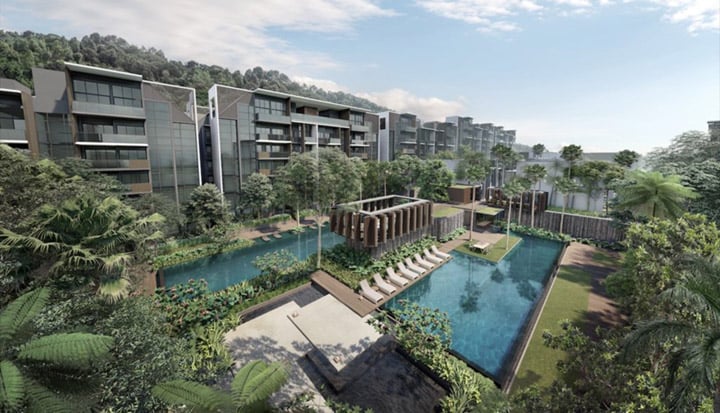
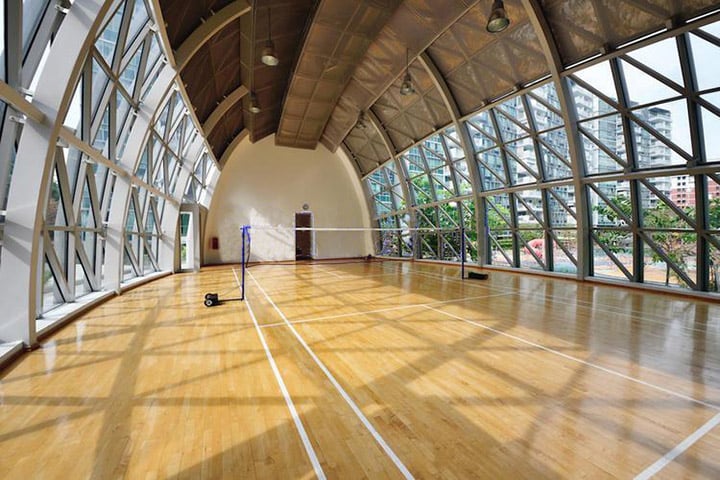
New URA guideline #3: Allowance for indoor communal spaces (Bonus GFA scheme)
Before: No such guideline/scheme in place.
Now: Under the bonus GFA scheme, developers may build indoor recreations spaces such as gyms, libraries, function rooms and reading rooms, and apply for these to be counted as bonus GFA. The maximum bonus GFA is capped at 1% of total area for residential developments, or the GFA of the residential component for mixed-use developments. Take for example a project the size of Kent Ridge Residences, with a GFA of 41,490 sq m. The bonus 1% GFA — 415 additional indoor sq m (1% GFA) — is about the size of a basketball court.
Why: Again, URA hasn’t said so explicitly, but we see this as a move to increase neighbourliness and kampung spirit within condo compounds with more common spaces.
Implication for homebuyers: They can expect more indoor facilities in future new launch condos. With fewer units and more facilities, we think condos will become better living environments. More indoor facilities will also mean greater utility, as these can be used regardless of the weather.
New URA guideline #4: New rules for balconies
Before: Back in 2001, URA stipulated that private developers could build additional space over the maximum development intensity to make allowance for balconies for residents. More specifically, the GFA of residential developments could be extended by 10%, with the caveat that the additional space should be designated purely for a balcony.
There was also no minimum width requirement for balconies, so certain projects ended up with balcony spaces that look more like oversized planters.
Now: The bonus GFA cap for private outdoor spaces will be reduced to 7%. On top of that, the total balcony area for each unit will be capped at 15% of the net internal area. Balconies must also now have a minimum width of 1.5 metres so that the outdoor space can be used meaningfully by residents.
Why: URA has observed that some developments now feature excessively large balconies in relation to the size of the unit’s indoor spaces. (Moreover, the common sentiment is that home buyers find it difficult to look for units without waste-of-space balconies.)
Implication for homeowners: They can look forward to better-proportioned homes with balconies that have greater utility. Hopefully, we’ll see the end of shoebox units with balconies the size of a bedroom!
[Recommended article: Private Enclosed Spaces (PES): Are you paying too much for them?]
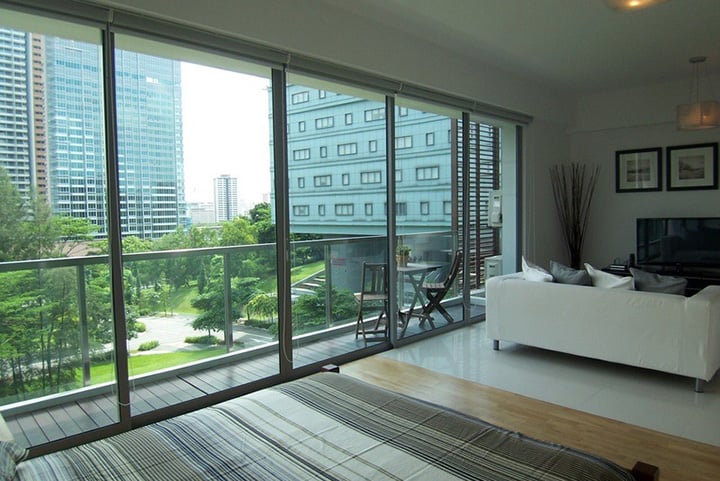
How will the latest URA guidelines impact buyers?
The new URA guidelines are likely to bring about larger unit sizes (and possibly lower psf selling prices), and they definitely favour homebuyers over investors. Considering that we can expect an influx of new units fuelled by the recent en bloc fever, this is a timely move to curb oversupply and overcrowding. If you’re thinking of buying a condo in the next few years, it’s time to rejoice!
Voice your opinion on the latest URA guidelines in our comments section or on our Facebook community page.
If you found this article helpful, 99.co recommends 4 reasons why home buyers in Singapore shouldn’t think like property investors and URA Master Plan for Property Buyers: How to understand it
Looking for a property? Find the home of your dreams today on Singapore’s largest property portal 99.co!

About Kyle Leung

Content Marketing Manager @ 99.co

Looking to sell your property?
Whether your HDB apartment is reaching the end of its Minimum Occupation Period (MOP) or your condo has crossed its Seller Stamp Duty (SSD) window, it is always good to know how much you can potentially gain if you were to list and sell your property. Not only that, you’ll also need to know whether your gains would allow you to right-size to the dream home in the neighbourhood you and your family have been eyeing.
One easy way is to send us a request for a credible and trusted property consultant to reach out to you.
Alternatively, you can jump onto 99.co’s Property Value Tool to get an estimate for free.
If you’re looking for your dream home, be it as a first-time or seasoned homebuyer or seller – say, to upgrade or right-size – you will find it on Singapore’s fastest-growing property portal 99.co.
Meanwhile, if you have an interesting property-related story to share with us, drop us a message here — and we’ll review it and get back to you.
Join our social media communities!
Facebook | Instagram | TikTok | Telegram | YouTube | Twitter





Leave a comment