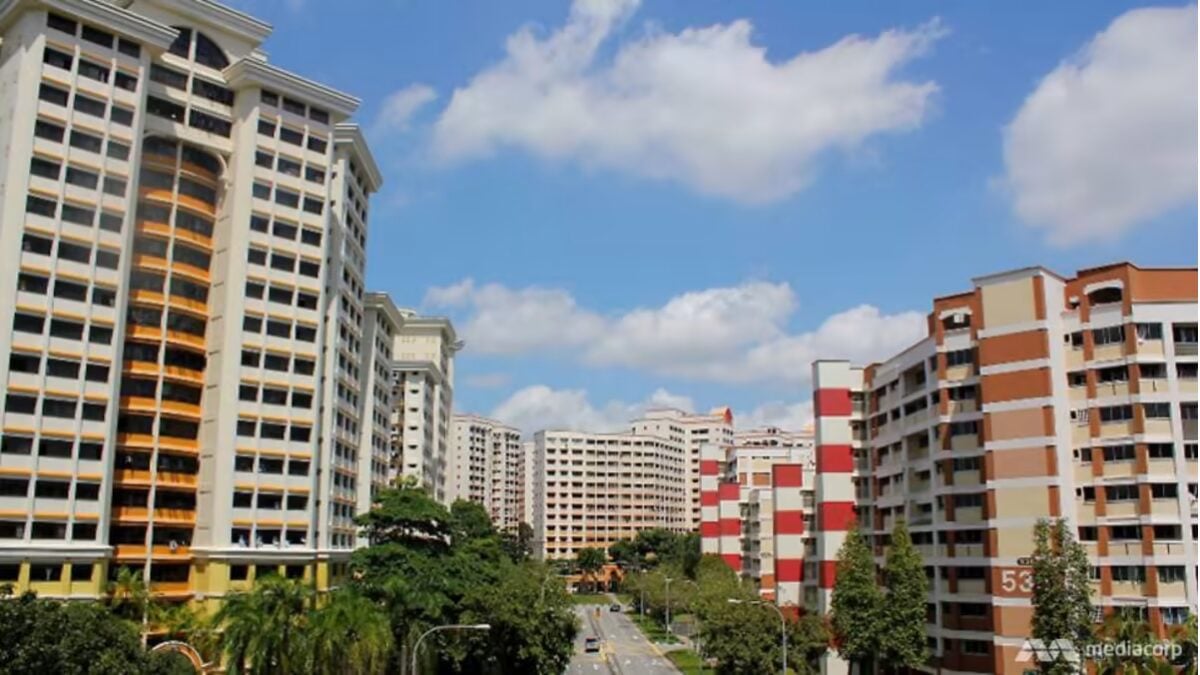
The government is set to introduce three major changes to Singapore’s Executive Condominium (EC) market, with the measures applying to all EC Government Land Sales (GLS) sites with tender closing dates on or after 8 May 2026. This means the changes will affect upcoming EC sites such as the Canberra Drive EC site and the Sembawang Drive EC site under the first-half 2026 GLS programme.
Taken together, the revisions point to a clear policy direction. While ECs were originally created as a housing option for the “sandwich class”, households earning too much for BTO flats but unable to comfortably afford private housing, the latest adjustments appear aimed at strengthening the owner-occupier nature of ECs and reducing speculative demand.
At the same time, the measures are likely to reshape who can comfortably enter the EC market going forward.
Table of contents
Overview of the New EC rule changes
Below is a quick look at the previous rules versus the revised measures that will take effect from 8 May 2026.
| Policy area | Previous policies | Updated policies (Effective 8 May 2026) |
| Minimum Occupation Period (MOP) | 5 years before owners can sell on the open market | Extended to 10 years |
| Full Privatisation | EC becomes fully privatised after 10 years | Extended to 15 years |
| Deferred Payment Scheme (DPS) | Available for eligible EC launches | DPS to be removed |
| First-Timer Quota | 70% quota during launch period | Increased to 90% |
| Priority Period for First-Timers | 1 month before open booking | Extended to 2 years |
EC Minimum Occupation Period (MOP) extended from 5 years to 10 years
One of the biggest changes announced is the extension of the EC Minimum Occupation Period (MOP) from five years to 10 years.
Previously, EC owners could sell their units on the open market after fulfilling the five-year MOP, which is calculated from the date the Temporary Occupation Permit (TOP) is obtained. During this five-year period, owners were not allowed to rent out the entire unit. However, after the MOP was met, owners could purchase private residential property as well.
Under the revised rules, EC owners will now need to hold their units for 10 years before they can sell them on the open market. In addition, full privatisation of ECs will only happen after 15 years instead of the current 10 years.
According to Mr. Luqman Hakim, Chief Data & Analytics Officer at 99.co, the move brings ECs closer to the framework used for Prime and Plus HDB flats, which also come with a 10-year MOP. However, unlike Prime and Plus flats, ECs do not come with subsidy clawbacks because the level of subsidy support is lower.
Mr. Luqman noted that the longer holding period is likely intended to reinforce genuine owner-occupation. As a result, the profile of EC buyers may gradually shift towards households planning to stay for the longer term, while buyers viewing ECs as a medium-term stepping stone to more expensive private residences may become less active in the segment.
Deferred Payment Scheme (DPS) to be removed
Another major shift is the removal of the Deferred Payment Scheme (DPS), which has long been one of the more attractive features of EC purchases, especially for second-time homeowners.
Under the DPS model, buyers only needed to pay the booking fee and downpayment upfront, while the remaining balance was deferred until TOP or Certificate of Statutory Completion (CSC). This meant buyers did not need to service the full mortgage during the construction period.
In contrast, the Progressive Payment Scheme (PPS) requires buyers to make staged payments throughout construction as the project progresses.
DPS vs PPS: What changes?
| Stage | Deferred Payment Scheme | Progressive Payment Scheme |
| Booking Fee | 5% cash | 5% cash |
| Downpayment | 15% cash or CPF within 8 weeks | 15% cash or CPF within 8 weeks |
| During Construction | No payments required | Progressive instalment payments required |
| TOP/CSC | Remaining 80% payable upon completion | Remaining balance payable progressively |
| Mortgage Repayments | Begin after TOP/CSC | Begin progressively during construction |
Before PPS became widely adopted in Singapore’s property market, DPS had been more common. However, DPS was eventually phased out in much of the private housing market because it was seen as contributing to excessive speculation and rapid price growth.
Mr. Luqman estimates that around 60% of EC financing currently uses DPS, particularly among second-time homeowners. He added that removing DPS appears intended to create a more level playing field for first-time buyers, many of whom do not already own a home.
Previously, one major advantage of ECs over private condominiums was the availability of DPS, since private launches generally cannot offer the scheme. Without DPS, buyers will need much stronger cash reserves. Mr. Hakim believes this could significantly affect affordability for second-time homeowners. “For many upgraders, they now have to service the loan for the new EC while still paying for their existing home mortgage or temporary accommodation,” he explained.
As a result, demand for future EC launches may soften, especially among prospective buyers who previously relied heavily on DPS to manage their cash flow during construction.
First-Timer quota increased from 70% to 90%
The government is also revising the allocation quota for first-time buyers. Previously, 70% of EC units were set aside for first-timers during the launch phase, before bookings gradually opened up to second-time applicants.
Under the new framework, the first-timer quota will increase to 90%, and this priority arrangement will now last for two years instead of just one month before open booking. Effectively, this means ECs will function much more heavily as a first-timer-focused housing option during the most critical part of the sales cycle.
According to Mr. Luqman, second-time homeowners may only see wider access closer to TOP, which could be months or a year away depending on project timelines.
Both the higher quota and the removal of DPS appear to point in the same direction – prioritising first-time homeowners over existing property owners with stronger financial positions.
Second-time homeowners are generally more cash and CPF-rich because they may have accumulated savings and housing equity from previous homes. By limiting them to a smaller share of available units, the government may also be reducing a layer of demand that has historically supported stronger EC price growth.
As a result, developers may become more cautious when bidding for future EC GLS sites, which could eventually contribute to slower EC price appreciation.
Possible spillover effects on other housing segments
According to Mr. Luqman, the latest EC changes may also create ripple effects across the wider housing market.
With second-time homeowners facing tighter access to new EC launches and no longer benefiting from DPS, some demand could shift towards resale ECs, Outside Central Region (OCR) resale condominiums, or even high-end HDB flats.
This redirected demand may help support prices in those segments, particularly in areas where upgrader demand has traditionally been strong.
At the same time, the EC market itself may become more stable and owner-occupier driven over the longer term, although affordability pressures for some buyers could still remain a challenge.
About Sophiyanah David

Sophi, a seasoned copywriter specialising in Singaporean real estate and property, is one of the minds behind 99.co's informative articles. Like her colleagues at 99.co, Sophi is dedicated to keeping you informed about the ever-changing world of real estate so you can find your forever home. When off the clock, you can find her giggling and kicking her feet as she reads her romance novels, watching anime - if FMBA is not your fave, she might fight you (but you'll probably win) and looking up latest skincare trends.

Looking to sell your property?
Whether your HDB apartment is reaching the end of its Minimum Occupation Period (MOP) or your condo has crossed its Seller Stamp Duty (SSD) window, it is always good to know how much you can potentially gain if you were to list and sell your property. Not only that, you’ll also need to know whether your gains would allow you to right-size to the dream home in the neighbourhood you and your family have been eyeing.
One easy way is to send us a request for a credible and trusted property consultant to reach out to you.
Alternatively, you can jump onto 99.co’s Property Value Tool to get an estimate for free.
If you’re looking for your dream home, be it as a first-time or seasoned homebuyer or seller – say, to upgrade or right-size – you will find it on Singapore’s fastest-growing property portal 99.co.
Meanwhile, if you have an interesting property-related story to share with us, drop us a message here — and we’ll review it and get back to you.
Join our social media communities!
Facebook | Instagram | TikTok | Telegram | YouTube | Twitter




Leave a comment