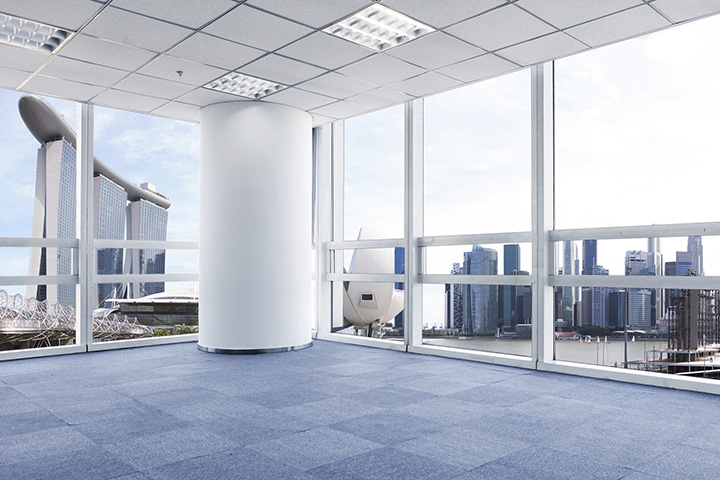
When it comes to investing in commercial property in Singapore, office spaces are often considered a category that only veteran property investors can handle. It’s one of the more volatile property types, but often one of the most rewarding in terms of rental yield. In the first quarter of 2018, Grade A and B office space in the CBD has respectively seen rent rise 8.4% and 4.8% year-on-year (to $9.70 and $7.60 per square foot per month) while rent for residential property remains stagnant.
Furthermore, while rental volume in the residential property market has been trending downwards for some time (leading to more vacancies), the occupancy rate for office space in Singapore has in contrast seen a slight upswing since 4Q17. Hence, property investors might want to give office commercial property some serious thought.
Before you decide to take your first step into the office game, here are 9 things first-time office space property investors must know to maximise potential upside and minimise risk:
-
The names of tenants matter a lot more, compared to residential properties
With residential properties, the name of the previous tenant usually doesn’t matter much. With offices however, the names of the tenants are a big deal.
If Google moves into your office property, for example, better leases and higher rental incomes will probably follow – and you’ll likely get generous offers from interested buyers.
To give you another example, consider two office buildings in the same general location; let’s say they’re both on Shenton Way, and next to each other. Assume that they are similar in rental yield and age.
However, one office building is leased by Samsung, JP Morgan, and Volkswagen. The other office building is leased by a random assortment of small- to medium-sized businesses. In this situation, which office building’s space will command a higher rent?
You probably guessed it: the one with the stronger brand names, because those tenants are internationally known companies; we know they can maintain their leases.
As such, investors in office space must be extra discerning when it comes to who the tenants are. It’s also not uncommon to lower rental rates for iconic companies.
-
C class offices are difficult for property investors who lack experience
C class offices tend to be in difficult locations, are found in ageing buildings, or both. These properties are for investors who see future potential in the area. They might also intend to renovate and revive old properties. If they succeed, the rental yield can be much higher than the typical 4 to 5%, due to the low cost they paid for the property.
But while these properties are much cheaper than their A and B class counterparts, the risk to new investors is very high. It takes a lot of experience and acumen to spot bargain buys, and a new investor runs the risk of owning a dead-end building.
And as for buying a cheap, office space that has been vacant for years…don’t. Just don’t.
-
Office properties are more closely tied to the country’s economic growth
More so than most other property types, offices are affected by Singapore’s economic growth. Even a news report of a lower Production Managers Index (PMI) can be enough to turn away formerly interested buyers.
The reason is straightforward: as companies expand, they need more office space. As they contract, they need less office space. This can cause rental income to swing up or down by large amounts, making offices a particularly volatile investment.
Considering this, investors should retain a portion of earnings during economic booms to ride out losses during the downturns.
In addition, this is a good reason to avoid mediocre or “mass market” type properties. These middle-of-the-road investments may require a smaller cash outlay; but during a downturn, offices with a solid location are resilient: companies will continue to seek out these offices, whereas buildings with mediocre locations will go vacant.
-
Pay attention to who is leaving and staying, before you buy
A common newbie mistake is to fail to check the tenant leases, before buying. The worst thing you can do is buy when four out of the five tenants are about to leave next quarter.
Before you invest, always familiarise yourself with the tenants, and the remaining length of their leases.
-
Shophouses are a favourite alternative to traditional offices
If you can afford to invest in one, shophouses are a strong alternative to traditional office buildings in Singapore. Businesses that require more flair (such as design firms and creative agencies) often opt for shophouses instead of traditional office buildings. Furthermore, there are many shophouses located in the Central Business District (CBD), such as in Chinatown, Tanjong Pagar, and Boat Quay.
One added advantage of shophouses is that many have been classified conserved by the Urban Redevelopment Authority (URA). As they’re considered historically important, you’re less likely to see your investment demolished to make way for a new road.
[Recommended article: 9 reasons to buy a shophouse (instead of a condo)]
-
Co-working spaces are causing a lot of disruption in the office space
Co-working spaces are on the rise, with players like WeWork and The Working Capitol muscling in on prime office locations.
Also called shared office spaces, co-working spaces have three powerful forces in their favour: the growing number of self-employed who need them, the explosion of tech start-ups, and the growing number of companies that don’t want to be locked into long leases.
Of course, co-working spaces have their own challenges, such as the high number of tenants constantly coming and going, the services that need to be provided (e.g. concierge), and the administrative manpower needed.
Nonetheless, it’s something property investors with an entrepreneurial streak may want to consider.
-
Singapore is decentralising its business hub
Singapore’s CBD has long been the home of prime, Class A offices; and it was once assumed that offices in this area will always hold their value. While that’s likely to be true for many years yet, investors must be aware that Singapore is decentralising business activity to locations across the island.
Do check out the Urban Redevelopment Authority (URA) Master Plan: the government’s intention is to have scattered business districts, in places such as Jurong, Paya Lebar, Punggol, and so forth. This is to ease the burden on the transport infrastructure. Buona Vista and one-north has been one of the most successful examples of decentralisation to date.
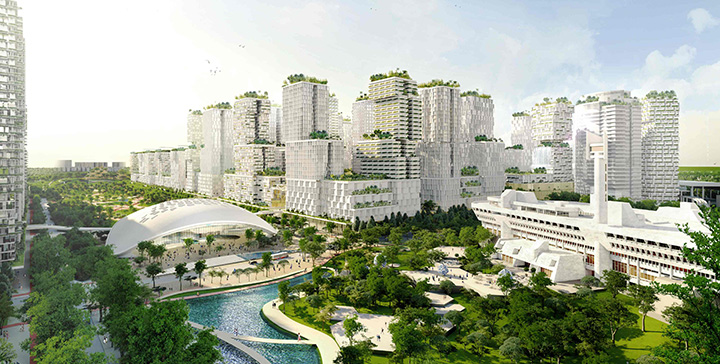
The implication of decentralisation is that, over the longer term, offices in these out-of-central hubs can see a healthy rise in value. Meanwhile, CBD offices may see their traditional dominance fade a little as more decentralised business hubs take off. Of course, in a good economy, it could be a win-win situation.
[Recommended article: URA Master Plan for property buyers: How to understand it]
-
It’s not the number of foreign workers you should be watching, it’s the type of foreign workers
A rise in the number of foreign workers doesn’t automatically translate to better office rentals. What matters is the type of foreign workers coming in.
Investors should pay attention to the Ministry of Manpower (MOM) demographics here, and note the number of S and E Pass foreign workers. When the number increases, it may correlate to a greater demand for office space.
Do note that the requirements for PMET (Professionals, Managers, Executives and Technicians) foreign workers are getting tighter. This could translate to a squeeze on office rentals.
However, offices in prime locations have much less to fear from changes in these demographics. If you stick to the basic principles of office property (good location and recognised tenants), the rental income should keep flowing.
Voice your thoughts in the comments section or on our Facebook community page.
If you found this article helpful, 99.co recommends Residential vs Commercial property investment in Singapore: which is right for you? and How to recognise a good property agent when buying, selling, or renting a commercial property
Looking for a residential or commercial property to buy or rent? Find it on Singapore’s largest property portal 99.co!
About Ryan Ong


Looking to sell your property?
Whether your HDB apartment is reaching the end of its Minimum Occupation Period (MOP) or your condo has crossed its Seller Stamp Duty (SSD) window, it is always good to know how much you can potentially gain if you were to list and sell your property. Not only that, you’ll also need to know whether your gains would allow you to right-size to the dream home in the neighbourhood you and your family have been eyeing.
One easy way is to send us a request for a credible and trusted property consultant to reach out to you.
Alternatively, you can jump onto 99.co’s Property Value Tool to get an estimate for free.
If you’re looking for your dream home, be it as a first-time or seasoned homebuyer or seller – say, to upgrade or right-size – you will find it on Singapore’s fastest-growing property portal 99.co.
Meanwhile, if you have an interesting property-related story to share with us, drop us a message here — and we’ll review it and get back to you.
Join our social media communities!
Facebook | Instagram | TikTok | Telegram | YouTube | Twitter



Leave a comment