
As the world’s most expensive city for expatriates, you may be expecting the worst when it comes to rental costs. Well don’t worry, because…actually, just do worry because it’s crazy expensive. Here are some ways to keep things in check:
First, what does it cost to rent in Singapore?
Since this is such a common question, here are the numbers you’re looking for. They’re accurate as of Q1 2019. We update these every quarter on 99.co, and you can find them in our quarterly report – like us on Facebook for the latest numbers.

Average rental rate for a condo in Singapore: approx. $3,506 per month
Average rental rate for a Core Central Region (CCR) condo: approx. $4,969 per month
Average rental rate for an Rest of Central Region (RCR) condo: approx. $3,873 per month
Average rental rate for an Outside Central Region (OCR) condo: approx. $2,474 per month
For more details on these different areas, look here.
That being said, here’s how to set your budget when renting in Singapore:
1. Budget for the initial deposit
When you decide on a unit to rent, you’ll first sign the Letter of Intent (LOI) with the landlord. As part of this process, you may be asked to hand over a good faith deposit of the first month’s rent (note that this can be negotiated; some tenants insist that they see the TA before they hand over a deposit, for example).

Note that you don’t need to budget for a security deposit after that – the good faith deposit handed over during the LOI will become the security deposit.
Because of this deposit, you should factor in another month’s worth of rent at the start (you’ll get it back when you leave, assuming the house is in good condition).
2. Budget for at least $350 a month in utilities
In Singapore, tenants usually pay the utility bills themselves (this includes the cost of servicing air-conditioners, and internet access). Most internet plans – excluding cable – will reach around $60 per month. Overall, a realistic amount to set aside is $350 to $400 per month.
Bear in mind that Singapore is in the tropics; it’s humid, and temperatures usually hover at around 32 degrees centigrade. The air-conditioner will almost always see use, unless you love the heat (or can bear with just using a fan). Also, the humidity and frequent rain often necessitates the use of a dryer.
3. Set aside money for your property agent’s commission (and it’s a good idea for first time renters to use one)
Singapore is landlord-friendly. There’s no standardised contracts for all tenants, so it’s possible for a landlord to slip in unique clauses that are unfair to you.

The best way around that is to have a property agent representing you. We advise that new renters do this at least for the first time they rent – then you can ask a property agent about what to look for, what each separate form does, etc. The commission paid to the agent is almost always worth the assurance provided.
Here’s how much you’d usually pay:
- Two year lease, with rental above $3,500 per month: Usually nothing (the landlord’s agent will split their commission with your agent)
- One year lease, with rental above $3,500 per month: You pay half a month’s rent in commission
- Two year lease, with rental at $3,500 per month or below: You pay one month of rent to your agent
- One year lease, with rental at $3,500 per month or below: Half a month’s rent to your agent
Agent commissions are technically negotiable, but most tenants’ agents won’t budge on the above.
4. If you’re renting a landed property, or a non-central condo, budget accordingly for transport
The assumption is that, if you can afford a landed property or a high-end condo, you can afford a car. Of course, we know that isn’t true for all foreigners working in Singapore; but nobody told the developers that.
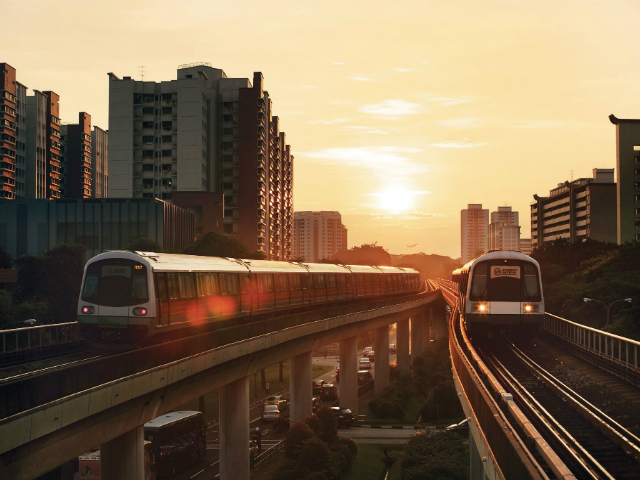
As such, landed properties and condos can be located much further away from bus stops and train stations than public housing. This is gradually changing, and more condos now have MRT stations nearby; but for now, you may be in situations that require a cab or private hire car quite often.
Note that taxis are not cheap in Singapore, despite what you may have experienced in the rest of the region. Even short distances can rack up $15 or $22 fares. If you’re not up for it, you may want to scout for an alternate location.
5. Remember to budget for insurance
Unlike some other countries, your landlord’s home content insurance may not cover tenants. If there’s a fire, or water damage, you could end up having to refurnish or replace your stuff at cost.
As such, you need to ask your landlord if their home content insurance includes you (note: home content insurance, not just fire insurance. The latter only covers rebuilding costs, which are irrelevant to you).

If you’re not covered, you’ll need to buy your own renter’s insurance. You should also purchase insurance for valuables that exceed the pay out limit. For example, if you have a collection of paintings or jewellery that are worth a fortune, the $1,500 pay out on a renter’s insurance policy probably won’t cover it.
You’ll have to speak to insurers back home or in Singapore, to work out a policy for those valuables (locally, a qualified Financial Advisor can help you).
What are your plans for staying in Singapore? Voice your thoughts in our comments section or on our Facebook community page.
Looking for a property? Find the home of your dreams today on Singapore’s largest property portal 99.co! You can also access a wide range of tools to calculate your down payments and loan repayments, to make an informed purchase.
About Ryan Ong


Looking to sell your property?
Whether your HDB apartment is reaching the end of its Minimum Occupation Period (MOP) or your condo has crossed its Seller Stamp Duty (SSD) window, it is always good to know how much you can potentially gain if you were to list and sell your property. Not only that, you’ll also need to know whether your gains would allow you to right-size to the dream home in the neighbourhood you and your family have been eyeing.
One easy way is to send us a request for a credible and trusted property consultant to reach out to you.
Alternatively, you can jump onto 99.co’s Property Value Tool to get an estimate for free.
If you’re looking for your dream home, be it as a first-time or seasoned homebuyer or seller – say, to upgrade or right-size – you will find it on Singapore’s fastest-growing property portal 99.co.
Meanwhile, if you have an interesting property-related story to share with us, drop us a message here — and we’ll review it and get back to you.
Join our social media communities!
Facebook | Instagram | TikTok | Telegram | YouTube | Twitter





Leave a comment