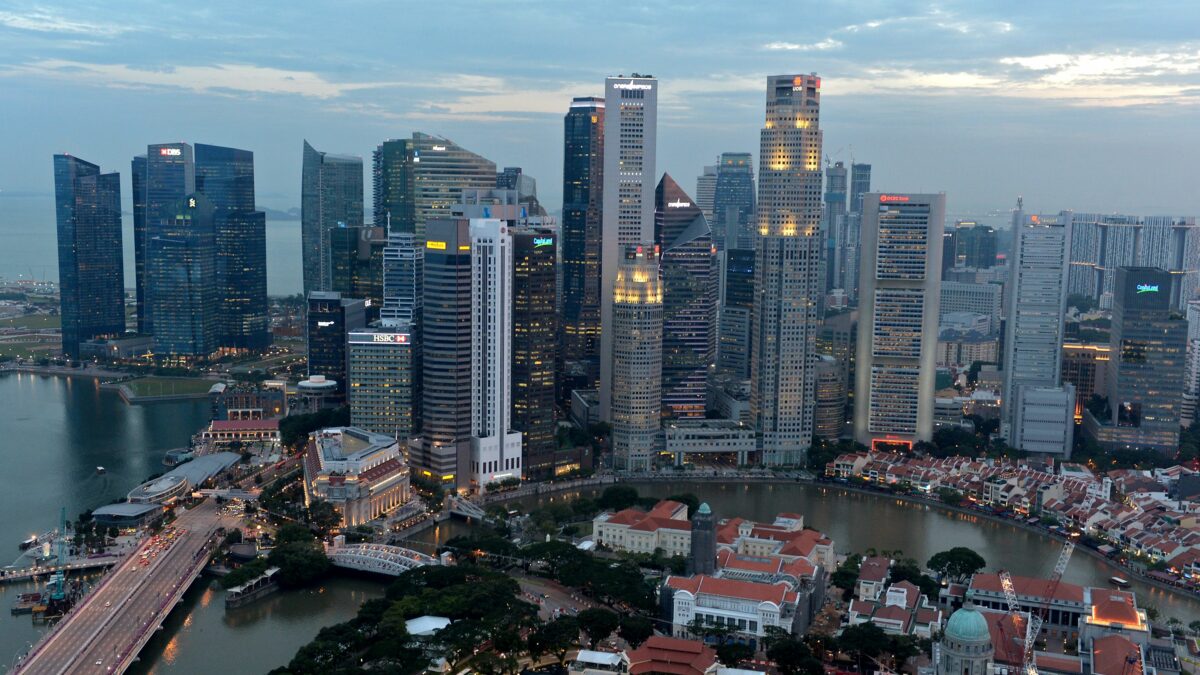
When the Additional Buyers Stamp Duty (ABSD) was introduced, Singaporeans revelled in the idea of affordable housing. The dominant theory in 2012 and 2013 (although we never conclusively proved it) was that foreign buyers were driving up private home prices. And when the ABSD arrived, our housing market did become less attractive to foreign investors – for a while. But now it looks like things are changing again.
The gradual return of the foreign buyers
In the first nine months of 2016, property consultancy JLL recorded 782 transactions from foreign buyers (excluding Permanent Residents). In the same period in 2015, there were only around 691 transactions. The majority the buyers were from China, Indonesia, Malaysia, and the United States. The breakdown of the top four is as follows:
- Chinese buyers – 230 transactions
- Indonesian buyers – 114 transactions
- Malaysian buyers – 82 transactions
- American buyers – 57 transactions
Despite the continued application of the ABSD, which imposed an additional 15 percent tax on foreign property buyers, we are seeing renewed interest from overseas buyers. These are the probable reasons:
- American buyers don’t face the ABSD, and the US dollar is strengthening
- Indonesian investors are facing the AEOI in 2018
- Chinese buyers are moving away from Hong Kong, which is peaking
- Luxury property prices have fallen significantly
American buyers don’t face the ABSD, and the US dollar is strengthening
Under the United States – Singapore Free Trade Agreement (USSFTA), American citizens do not pay ABSD on the first property they purchase in Singapore. As such, the ABSD has never been a deterrence to them.
However, the recent strengthening of the US dollar may interest them in local properties. A good exchange rate, coupled with Singapore’s low tax environment, could see growing interest in Singapore’s property market.
Perhaps the biggest factor that could influence American buyers, however, are the soaring costs in the American property market. Experts are divided as to whether America is in a housing bubble, but the common point of agreement is that housing in major cities is becoming inflated. This could send their property investors looking for a better deal elsewhere, and Singapore is a prime spot for well priced luxury properties right now (see point 4).
Indonesian investors are facing the AEOI in 2018
Following a tax amnesty call this year, some Indonesian investors now have to worry about the Automatic Exchange of Information (AEOI) agreement slated for 2018. Should it come to pass, it would result in the disclosure of financial information (such as bank accounts) between 101 participating countries. This could include Singapore.
Singapore has long been a favourite location for wealthy Indonesians, due to our low tax rates and our banks’ high degree of confidentiality. Now however, these foreign investors are worried that their assets may be disclosed to Jakarta.
This has caused a rush to purchase housing, as it is believed (but in no way guaranteed) that the disclosure of assets in 2018 will not include property.
As we near the 2018 deadline, we expect to see an eventual surge of buyers from Indonesia.
Chinese buyers are moving away from Hong Kong, which is peaking
Hong Kong’s property market at present resembles Singapore’s in late 2012. Housing prices are overheated, and Hong Kong has passed its own additional stamp duties (coincidentally, this is also 15 per cent, on par with Singapore).
As Hong Kong’s prices are widely agreed to have peaked, Chinese buyers will start to look elsewhere. Growing affluence in China, along with a sense of familiarity (Singapore has the most cultural similarities to China in South-East Asia) are likely to send their buyers to our shores.
Luxury property prices have fallen significantly
Luxury properties in Singapore were thought to be bottoming out in Q2 2016, when prices increased by 0.3 percent. However, Q3 2016 saw prices in the Core Central Region (CCR), where most luxury properties are located, fall by 1.9 percent. This is almost double the price drop in the Rest of Central Region (RCR), and Outside of Central Region (OCR).
Most foreign buyers will note that Singapore’s property fundamentals are in place (we are land scarce, politically stable, and a major trade hub). With lower prices making up for the ABSD, it’s a reasonable assumption that foreign buyers will be back, following a few more quarters of declining prices.
About Ryan Ong


Looking to sell your property?
Whether your HDB apartment is reaching the end of its Minimum Occupation Period (MOP) or your condo has crossed its Seller Stamp Duty (SSD) window, it is always good to know how much you can potentially gain if you were to list and sell your property. Not only that, you’ll also need to know whether your gains would allow you to right-size to the dream home in the neighbourhood you and your family have been eyeing.
One easy way is to send us a request for a credible and trusted property consultant to reach out to you.
Alternatively, you can jump onto 99.co’s Property Value Tool to get an estimate for free.
If you’re looking for your dream home, be it as a first-time or seasoned homebuyer or seller – say, to upgrade or right-size – you will find it on Singapore’s fastest-growing property portal 99.co.
Meanwhile, if you have an interesting property-related story to share with us, drop us a message here — and we’ll review it and get back to you.
Join our social media communities!
Facebook | Instagram | TikTok | Telegram | YouTube | Twitter




Leave a comment