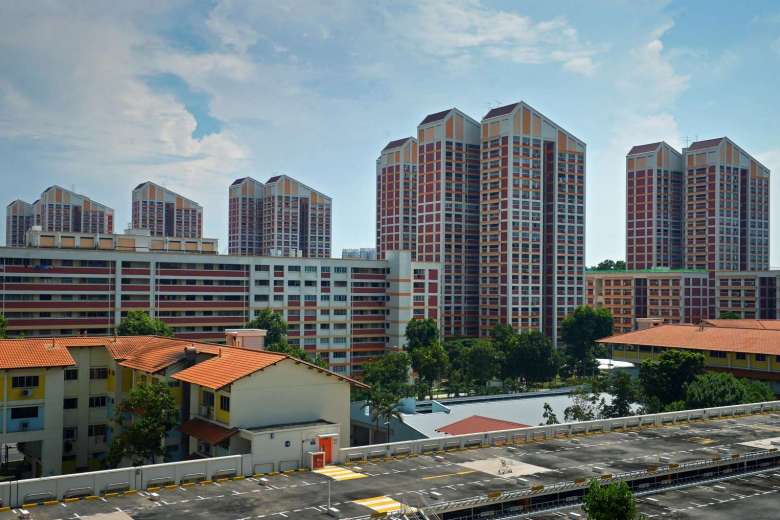
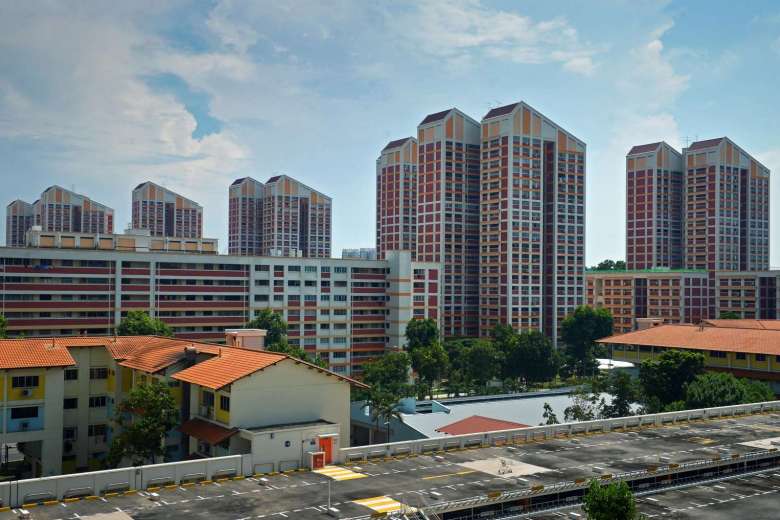
By convention, Singaporeans are lovers of the free market. It goes all the way back to our heritage as a trading port, and it carries over to housing: most of us think of our flats as investments or a retirement fund. But over the past decade, some disagreements have emerged. Should prices of HDB flats be allowed to appreciate, at the risk of pricing future generations out of homes?
HDB flats as investment
If we were to treat HDB flats as we would any other financial asset, they would outperform almost everything else on the market.
The latest boom in flat prices was from 2006 to 2013. During this time, the resale price index showed appreciation of little over 100 per cent. Almost no other type of investment will more than double your money in a short span of seven years.
The key reasons HDB flats perform so well are:
- It is highly subsidised at the time of purchase (many Singaporeans have grants of $40,000 to $60,000). In particular, flats in the Executive Condominium (EC) class come with subsidies, but are sold as private condos.
- Permanent Residents (PRs) have to choose between renting, resale HDB and new build or resale private property. As Singapore’s private property market is one of the priciest in the world, this funnels most of them toward resale flats, thus maintaining a strong demand.
- Singapore continues to project population growth, despite limited land space. This raises demand for property in general, including HDB flats.
However, this is not the sole reason why Singaporeans see their flats as investments…
A simple and understandable investment option
A recent study by the Master Card Index of Financial Literacy shows declining levels of financial literacy in Singapore. Despite being a global financial hub, we place sixth in the region, with especially poor scores in the area of investing.
Most Singaporeans are likely to think of their Central Provident Fund (CPF) savings and their flat as provisions for retirement, and a few may include insurance policies. However, the typical Singaporean does not build and balance his or her own portfolio.
Flats – as with any other form of property – form a simple, understandable, and tangible form of investment. There are schemes in place that tangentially reinforce the idea of the flat as a source of retirement income: the silver housing bonus, for example, offers a $20,000 bonus for citizens downsizing their flats.
The ruckus about rising home prices and the Cash Over Valuation (COV)
The protests against flats being appreciating assets gained ground during a market peak in 2011.
When buying a resale flat, it is common for the seller to ask for Cash Over Valuation (COV). This is a sum of cash above the actual market value of the flat, which is not covered by a mortgage loan.
During Q3 2011, median COV reached a record breaking height of $36,000. Later in 2012, there was an outcry when a HDB flat sold for over $1 million in Queenstown – the COV was $195,000.
In 2013, even this record was broken when a flat in Bishan sold for $1.05 million, due to a COV of $250,000.
This led to growing concerns that flat prices were out of control, and that future generations of Singaporeans would find the resale segment unaffordable. However, the government responded with the assurance that flats would always be available and affordable. The prevailing policy – that of allowing the free market to determine HDB flat appreciation – was to be held intact.
Eventual corrections in COV
On March 2014, the government took a slight step toward controlling COV prices, which did not amount to outright regulation. The Option to Purchase (OTP), which requires the buyer to pay a non-refundable deposit on the flat, has to be signed before the flat’s valuation is revealed.
In other words, the buyer does not know the exact COV. The price of the flat is negotiated as a whole, and only later will they find out what portion of it constitutes the COV.
This is in contrast to previous practice, where the valuation of the flat would be made first, and then buyers and sellers would haggle over the COV.
COV prices fell dramatically in end 2014, in some cases hitting $0. This was not solely due to the new COV system; it also happened on the back of a declining property market, due to the introduction of repeated cooling measures.
Nonetheless, the issue of HDB flat appreciation remains a hot topic:
The argument for HDB flat appreciation
The main argument for flat appreciation is that it narrows the wealth divide. If HDB flats are barred from appreciating (i.e. the government sets a fixed resale price), it prevents many Singaporeans from upgrading.
At present, it is often possible to buy a flat and hold it for 10 years, and then resell at a gain and top up enough cash to move into a private condo. This is a common aspiration among many Singaporeans.
Also, if only private property can appreciate, it could result in a massive wealth gap later. Only those with sufficient capital to invest in private property can benefit from the gains. But at present, 82 per cent of Singaporeans live in HDB flats. This would allow a small minority of Singaporeans access to a lucrative property market, while cutting off the rest.
There will also be an outcry from many current HDB flat owners – no one wants to be told that their property, which they thought of as an appreciating asset – is suddenly of no value to their retirement.
With regard to investments and a retirement fund, this also means Singaporeans will need to be more financially savvy. An HDB flat is currently the most reliable asset for handling inflation rate risk; most flats (this varies depending on district) will outstrip the average three per cent inflation rate in Singapore. Without it, we will have to look at other sources (e.g. conventional stocks and bonds) when building a retirement fund.
We are not in a position to comment on whether Singaporeans have the requisite degree of financial education to undertake this shift. But it will be a seismic change which, if not undertaken, could lead to a large segment of the population being unable to retire.
The argument against HDB flat appreciation
Affordability and a family-centred approach are at the heart of this. In better times, we often predicted wage growth of 4.5 per cent per annum in Singapore. However, as the economic turmoil of low oil prices and China’s slowdown have shown early this year, it is not a figure to count on.
And during the 2006 to 2013 boom, 4.5 per cent wage growth would never have kept pace with the rising cost of resale flats. In fact, the cooling measures and changes to the COV system can be read as acceptance, on the part of the Singapore government, that even a free market approach has limits.
Advocates against HDB flat appreciation want that line to be drawn closer. If the government will fix the prices of resale flats – whether by implementing a cap, or requiring that they can only be resold to HDB at cost and not to the public – unaffordable housing ceases to be an issue.
That’s a generational trade-off: it means the current generation of flat owners will not get rich or retire off their flats, but it does mean their children will have access to more affordable housing.
Something has to give
The issue is not a simple one, because of the aforementioned trade-off. Something has to give. If we want flats (in particular resale flats) to be more affordable to our children, we must be willing to surrender the potential to make large gains on them.
If we want to sell our flats for big gains, or see it as a step to upgrading, it logically means our children will face higher prices later, when they are in the market for those very flats.
The government’s solution has so far been to go between extremes – prices are moderated through policies, but not outright controlled.
If we want to go further, and separate HDB flats from market forces altogether, the current generation will need to look elsewhere to provide for retirement or long term financial gains. What financial alternatives are Singaporeans aware of, or willing to take part in, besides their flats?
If we ensure HDB flat prices keep to their namesake (i.e. they are flat), will the present generation of Singaporeans seek the required education to invest in stocks, bonds, mutual funds, etc. as a way to boost retirement income?
If we’re willing to make the effort (and take the commensurate risks that comes with these other approaches), we can probably regulate flat prices and keep things super cheap for the next generation. The operative word is if.
About Ryan Ong


Looking to sell your property?
Whether your HDB apartment is reaching the end of its Minimum Occupation Period (MOP) or your condo has crossed its Seller Stamp Duty (SSD) window, it is always good to know how much you can potentially gain if you were to list and sell your property. Not only that, you’ll also need to know whether your gains would allow you to right-size to the dream home in the neighbourhood you and your family have been eyeing.
One easy way is to send us a request for a credible and trusted property consultant to reach out to you.
Alternatively, you can jump onto 99.co’s Property Value Tool to get an estimate for free.
If you’re looking for your dream home, be it as a first-time or seasoned homebuyer or seller – say, to upgrade or right-size – you will find it on Singapore’s fastest-growing property portal 99.co.
Meanwhile, if you have an interesting property-related story to share with us, drop us a message here — and we’ll review it and get back to you.
Join our social media communities!
Facebook | Instagram | TikTok | Telegram | YouTube | Twitter



Leave a comment