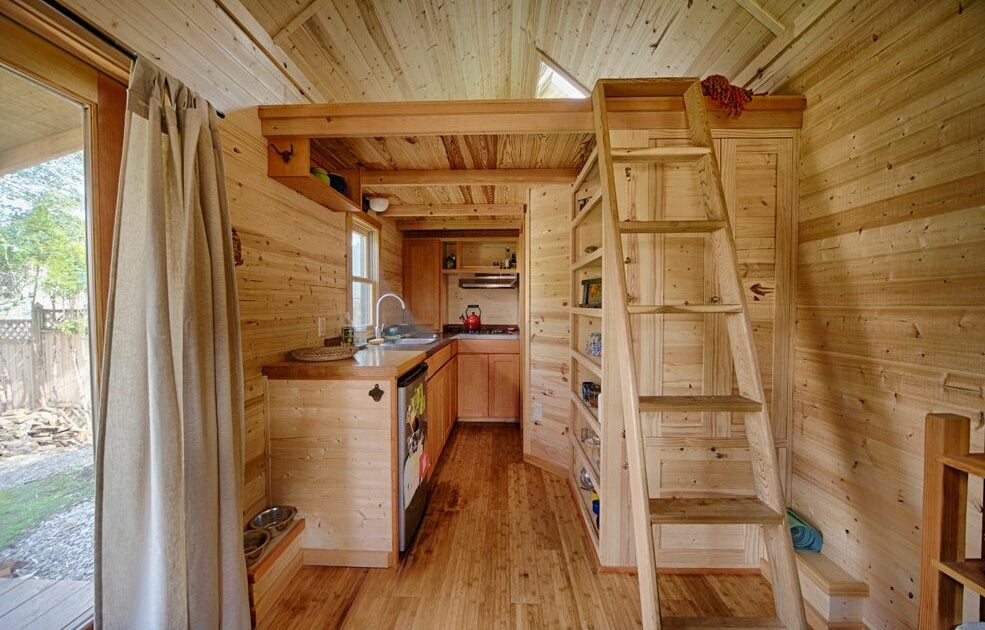
If you’ve been in the United States lately, you may know about a trend among their millennials – the tiny house movement. A trend in which they’re buying smaller and smaller houses to avoid long cycles of debt. Of course, we Singaporeans snort at their idea of “tiny house” – we’ve adapted to live in flats that would be called claustrophobic by nine-year old Chinese circus contortionists. What’s interesting though, is that these people have counterparts in Singapore. But our millennials who buy tiny private properties (shoeboxes) do so for different reasons. (Cover image credits) We spoke to a few:
Shoebox shenanigans
The tiny house movement (Singapore edition) started in 2013, when it was noticed that plenty of Singaporeans were buying shoebox apartments (defined as being 500 square feet or smaller). In fact, it got to the point where the government had to regulate the maximum number of shoebox units in a development.
However, these buyers weren’t interested in actually living in the shoeboxes. What they really wanted was an investment – a way to get exposure to the property market, despite not being able to fork out the huge sums needed for a full-sized condo. Shoeboxes generally have a lower price quantum (they can be as low as $500,000), but a higher price per square foot.
Aspiring young Singaporeans might see it as the first step to being a “serious” property investor, and they buy shoebox units with the intent to rent them out. In the meantime, they continue living with their parents.
This week, we emailed four young (25 to 28 year-old) Singaporeans, who have done exactly this. Here’s some of the reasons why they jumped on the tiny house movement.
(Note that the trend was mostly stopped in 2015, not because buyers don’t want shoeboxes, but because of tighter loan curbs).
-
Belief that property is the most reliable asset
Clarissa Yong, who bought a shoebox in 2014 just before the cooling measures, has actually seen it turn into a liability; but she still believes the payoff is good in the long run:
“Insurance policies are expensive because the agents charge high commissions, and I’m not very savvy with stocks and Forex and so on. But property is a real physical asset, and I know that in the long term it appreciates, and it’s cash generating. The rental market is weak right now but that doesn’t put me off, I think it’s more important to look at the long term”.
Terence (not his real name) bought a shoebox flat in 2015, with a loan from his parents. He chose to be part of the tiny house movement with the aim to pay them back, and then to eventually supplement their retirement fund with the rental income.
“Actually I wanted to run my own start-up. But after doing some research, I found that the most reliable asset class in Singapore is property; if you look at the richest people in Singapore, relatively few of them made their fortune in business compared to property. So I decided to forego the previous idea, and put the money into a property instead.”
The main appeal seems to be that property is a reliable asset. It’s what our parents believed, and what our grandparents believed. That faith seems firmly rooted, even today.
-
A surprising willingness to stay with their parents
The big question we had to ask is: what about buying your own home? If you own a shoebox, you can’t buy an HDB flat; you own private property.
As it turns out, many of the young Singaporeans we ask didn’t mind living with their parents, at least for the next decade or so. 25-year old Ren Yi, who is self-employed, bought a shoebox flat just last year:
“I may move out of my parents’ house when I am 35 or 40, I’m in no rush. My mother’s health is bad, so I need to look after her anyway. By the time I’m ready to move out, I can sell the unit, and I believe the price would have appreciated by then; and right now the rental income more than covers the loan anyway.”
Clarissa gave more or less the same response:
“I’m comfortable living at home, the house is big enough as it’s just me, my parents, and my grandmother. I don’t foresee the need to buy a flat for myself, even if I get married.”
(Although do note that Clarissa lives in a terrace house, which arguably makes her situation different).
-
For some, it’s about the prestige that comes with being a young property owner
Andrew Poh, 27, was blunt about how much better if feels to own a property:
“I can get four per cent owning a property, I can get four per cent* owning shares. The difference is that saying I own a private property, at 27, makes a big deal on a resume. Of course there’s other advantages, like property being a tangible asset; but property ownership conveys an impression of competence.”
Ren Yi adds that property ownership is a confidence booster:
“I think if you can look and touch a property that you own, if you can think ‘I managed to buy this’, it’s a reminder that can keep you going in tough times.”
(Andrew means four per cent per annum, in returns)
But we noticed no one stayed in their shoeboxes, or ever had intention to
Clarissa says “I don’t think I can ever call it a home. Even if I stay single my whole life, it’s too small for me; I wouldn’t stay for more than a few months.”
Andrew and Terence both pointed out that they were reliant on the rental income, otherwise the purchase would be meaningless. Andrew says that: “Shoebox units are not price efficient if the intent is to buy a home. The price per square foot is much higher, and for a bit more I think I’d be better off buying an EC.”
With tighter loan quantums and falling prices, you might want to take a look at some shoeboxes yourself.
Whether shoeboxes are a great investment as part of the tiny house movement is still up for debate; but they’re certainly the “entrance level” for those seeking to break into property game (at least for young Singaporeans). Find the home of your dreams today at Singapore’s largest property portal 99.co!
Interested to read more about shoebox units? Here’re 4 things to consider before buying a shoebox unit and if shoebox units are worth the investment.
About Ryan Ong


Looking to sell your property?
Whether your HDB apartment is reaching the end of its Minimum Occupation Period (MOP) or your condo has crossed its Seller Stamp Duty (SSD) window, it is always good to know how much you can potentially gain if you were to list and sell your property. Not only that, you’ll also need to know whether your gains would allow you to right-size to the dream home in the neighbourhood you and your family have been eyeing.
One easy way is to send us a request for a credible and trusted property consultant to reach out to you.
Alternatively, you can jump onto 99.co’s Property Value Tool to get an estimate for free.
If you’re looking for your dream home, be it as a first-time or seasoned homebuyer or seller – say, to upgrade or right-size – you will find it on Singapore’s fastest-growing property portal 99.co.
Meanwhile, if you have an interesting property-related story to share with us, drop us a message here — and we’ll review it and get back to you.
Join our social media communities!
Facebook | Instagram | TikTok | Telegram | YouTube | Twitter



Leave a comment