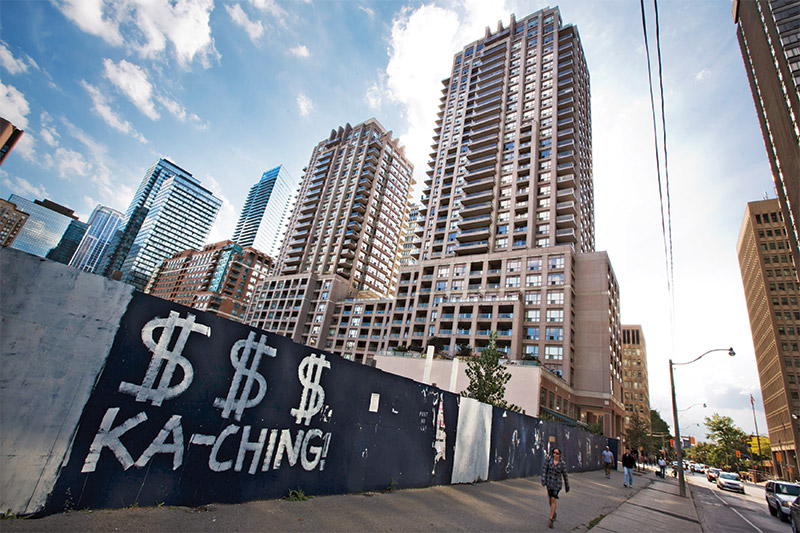
Singaporeans are often accused of being over-optimistic, when it comes to property investment. The truth is, this is not a “Singaporean” or even an “Asian” trait – indeed, excessive optimism with regard to property is common all over the world. In 2006, for example, the total debt owed in home loans in the United States was equal to 99 percent of their GDP. In fact, by comparison, Singaporeans are not too “property crazy” at all. But there are many misconceptions that need to be cleared up.
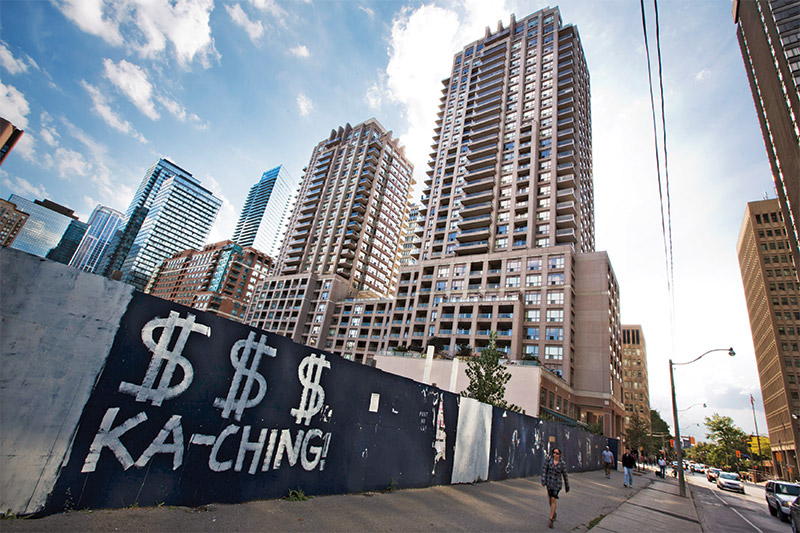
How does residential property investment work?
The typical way to invest in property is to purchase a house, with a low interest rate loan (preferably lower than the rate of inflation). The house is then rented out. In an ideal situation, the income generated from rent will more than pay for the property loan. Further down the road, when the property price appreciates, the investor can then sell off the property at a profit. For example:
Say you buy a condo at $800,000. You have a bank loan, which costs you $3,000 in monthly repayments.
You rent out the condo, getting a rental income of $4,000 a month. This turns your property into a cash generating asset – after repaying the loan, you still have an excess of $1,000 every month.
After 15 years, the value of the property rises; it is worth $1.2 million. You can then sell the house, and your profit would be $400,000 (the difference between the buying price and the resale price), plus $180,000 (you collect $1,000 a month for 15 years, assuming there are no vacancies.) You would make $580,000 in 15 years.
This is a return of about 72.5 percent over 15 years. By contrast, a typical fixed deposit at the bank might give you an interest rate of just 0.8 percent per year.
So if you had put the $800,000 in a bank instead of investing in a house, you would have around $901,560 after 15 years – a measly gain of around $101,560. That’s a fifth of the profit that the condo made.
Even better, you would not need the full $800,000 to buy the house. You would only need a downpayment of 20 per cent, or just $160,000. The rest of the house is paid for by the tenants, since the rent they pay is used to cover the mortgage.
On a more complex level, you could also consider that the rate of inflation (the rising cost of goods) is around three per cent in Singapore. Your property loan interest however, is far below this – home loan rates have been around 1.7 to 1.9 percent for almost eight years now. Since inflation rises faster than the property loan rate, it means the real value of your debt is diminished.
If you think this sounds too good to be true, and there must be a catch…you’re right. What we’ve described is an idealised situation. Don’t get us wrong – the above method has worked for thousands of property investors, and is one of the tried and true methods of growing wealth. But there’s a catch:
Under the wrong conditions, property can become a liability that destroys wealth.
For some investors, housing profits turned out to be an illusion
In the current property slump, we have already seen a number of mortgagee sales. These occur when a property owner is unable or unwilling to make mortgage repayments, and the bank forecloses on the property. The bank will then attempt to auction off the property at the best price it can get.
Some of these include a four-bedroom unit at The Sovereign in Meyer Road (indicative price of around $4 million), a two-storey terrace house at 19 Bedok Walk (around $3.45 million), and a three-bedroom unit at The Bayshore (around $1.5 million.)
By the time a bank forecloses on a property, the former owners should count themselves lucky to escape with minimal financial damage, let alone think about profits.
There were 241 mortgagee listings in 2015, of which 80 percent were residential. This is the highest recorded number since the Global Financial Crisis in 2008.
Even outside of mortgagee sales, there are incidents of steep losses in the property market. The most noteworthy is the sale of a three-bedroom unit at The Ritz-Carlton Residences Singapore, in Q1 2016. The seller, a Permanent Resident from China, bought the unit at $3,815 per square foot in 2013, and resold it at $2,508 per square foot this year. This translates to a total loss of $4.3 million, one of the worst recorded in a decade.
Another significant loss was a sale at Hillview Regency, during which the seller bought a unit at $1,263 per square foot, but resold it at $776 per square foot. In addition, the seller only purchased the unit in 2015, but sold it earlier this year. This incurred a Seller’s Stamp Duty (SSD) of $137,600. In total, the seller is estimated to have lost over $677,000 from the transaction.
But given the seemingly logical scenario outlined above, how could these losses happen? The answer is that, in the following situations, potential housing profits are likely to become illusory:
- The buyer loses a crucial source of income
- Rental income falls below mortgage payments
- The buyer cannot cope with rising interest rates
- Selling during a downturn
- The buyer loses a crucial source of income
If you lose your source of income, can you still manage to pay the mortgage? If you cannot, you will be forced to sell. If the property market happens to be in a downturn, there is a chance you will sell at a loss (this is the current situation as of Q1 2016.)
The same situation could face you if you lose your income, and cannot cover the mortgage payments. This is why holding power is essential – if you lack proper insurance to cover events such as critical illness and job loss, or if you have no emergency savings*, it can be dangerous to stake too much on property investments.
(*It is advisable for all property owners to build up an emergency fund, which can cover at least three to six months of their mortgage payments, in the event of lost income.)
- Rental income falls below mortgage payments
In the event of a vacancy, there is no rental income to cover the mortgage. The property then becomes a liability instead of a cash-generating asset. Even putting aside vacancies, there is always a chance that rental prices can fall, such as due to competition from new condos being built nearby. Rental prices can fall to the point where they no longer cover the mortgage payments.
However, this is avoidable through prudent selection of property. Engage a reliable property agent if you have issues finding tenants. Also, browse and compare property based on historical rental rates in the area. You can do this for free on 99.co.
Some developers provide rental guarantees – they will compensate you if you cannot find a tenant within a stipulated period. Speak to the property agent about the terms and conditions.
- The buyer cannot cope with rising interest rates
There are no perpetual fixed rates for property loans in Singapore. The interest will fluctuate based on the Singapore Interbank Offered Rate (SIBOR). While the interest rates in Singapore have been low since 2008, note that historical rates in Singapore can reach three or four per cent per annum, as opposed to the current average of 1.9 percent.
If you want to invest in property, it is essential that you learn to refinance loans to keep interest low. Most seasoned investors do this every four years, as loan packages tend to give low “teaser rates” for only the first three years.
Be ready to learn to do this, if you want to profit from housing. Remember that the more interest you pay on the loan, the more your eventual profits are diminished.
- Selling in a downturn
In relation to point 1, do not assume the property market will be bullish when you sell. Many unpredictable factors, such as the current property loan curbs, cooling measures, and weak economic conditions can send the market into a downturn.
This does not mean it is impossible to make a profit by selling during a downturn; but it is difficult and much less probable.
You should ensure you have the finances and patience to ride out a downturn. On the upside, whenever Singapore’s property market has rebounded previously, it has reached a peak that is higher than the last.
Most investors, however, do make a good return from property
The key is to have holding power – ensure that you sell when you want to, never because you are forced to. If you don’t have the savings, insurance, and temperament to ride out market fluctuations, your profits will go from eventual to illusory.
As a final word of warning: home owners should think twice before playing the property investor. Home owners do not generate rental income from the property, nor can most afford to sell the house in a pinch (where would they live?).
A property investor needs to make two correct decisions, not one – they must buy at the right time, and also sell at the right time. If a first time home owner makes one decision right, they are still likely to get the other wrong.
Furthermore, home buyers should be aware of what they’re doing when they pour their entire capital into one expensive property: they are making a significant, unhedged bet on a single asset. This throws out a cardinal rule of investing, which is to diversify. Home owners should not rely on their property alone as a retirement fund.
But for investors who meet the right conditions, property may be the safest, high return investment available. There may have been 271 foreclosures this year; but that’s out of the several million potentially profitable units out there.
About Ryan Ong


Looking to sell your property?
Whether your HDB apartment is reaching the end of its Minimum Occupation Period (MOP) or your condo has crossed its Seller Stamp Duty (SSD) window, it is always good to know how much you can potentially gain if you were to list and sell your property. Not only that, you’ll also need to know whether your gains would allow you to right-size to the dream home in the neighbourhood you and your family have been eyeing.
One easy way is to send us a request for a credible and trusted property consultant to reach out to you.
Alternatively, you can jump onto 99.co’s Property Value Tool to get an estimate for free.
If you’re looking for your dream home, be it as a first-time or seasoned homebuyer or seller – say, to upgrade or right-size – you will find it on Singapore’s fastest-growing property portal 99.co.
Meanwhile, if you have an interesting property-related story to share with us, drop us a message here — and we’ll review it and get back to you.
Join our social media communities!
Facebook | Instagram | TikTok | Telegram | YouTube | Twitter



Leave a comment