Every day at 99.co, we pick a piece of property jargon to demystify for you. Today, we look at the Deferred Payment Scheme (DPS), which is usually offered as an option for purchasing Executive Condos (ECs), and some private condominiums may offer it to boost sales.
Note: DPS will be removed for all future EC launches under the 1H2026 Government Land Sales (GLS) programme onwards. See your last chance to buy an EC with DPS here.
Deferred Payment Scheme (DPS)
If you compare the different asset classes right now, stocks are a racecar, bonds are a used Toyota, and property is a sloth with a sad story about its double amputation. Despite the best efforts of developers, units are not moving quickly enough. Enter the DPS, which is here to solve today’s problems (by making them tomorrow’s).
DPS means a buyer forks out an initial down payment (20% of the purchase price), and pays nothing for the next 24 months. Yes, there’s no need for any home loan repayment, stamp duties, and so forth. After the 24 months, the buyers then fork out the remaining 80%.
In contrast, buyers have to fork out the full sum within eight to 10 weeks for standard purchases of completed properties.

It works something like this:
- Secure the OTP (5% of the purchase price)
- Within eight weeks, exercise the OTP and sign the Sale & Purchase Agreement (15% of the purchase price)
- Pay nothing for the next 2-3 years, depending on the developer
- Pay the remaining 80% after 2-3 years
Note that only completed properties (i.e. those that have received their Temporary Occupancy Permit (TOP) or Certificate of Statutory Completion) can be sold under DPS.
For the sake of comparison, here’s how a typical property purchase would work:
- Secure the OTP (5% of the purchase price)
- Within 14 days, exercise the OTP and sign the Sale & Purchase Agreement (20% of the purchase price)
- Within 14 days of completing the purchase, fork out the money for stamp duties such as the BSD and ABSD
- The bank loan then covers up to 75% (assuming you get the full LTV)
- Start making the monthly loan repayments until the end of the loan tenure
Why would buyers want a DPS?
A DPS helps you in the following ways:
- Smaller initial cash outlay
- Giving you extra time to raise the cash
- Escaping two years of interest repayments
1. Smaller initial cash outlay
With DPS, you are only putting down 20% of the property price, at least at the start. Under a more conventional payment method, you need to put down at least 25%. For a typical mass market condo (between around S$1 million), this 5% can translate to around S$50,000 to S$60,000.

That’s not chump change, and it helps if you have, say, a wedding still to pay off.
However, note that when you get the actual bank loan, you may have to borrow less (see below). But you still get to fork out less initially, so your cash flow won’t be the financial equivalent of a traffic accident.
2. Gives you extra time to raise the cash
This is where we take a deep breath and shoot you a judging look. Because if you’re having trouble raising the funds for a house, then it isn’t the right time for you to buy one.
But if you insist on doing so anyway, DPS gives you added time to rebuild a weak credit score, find a guarantor, get some collateral for your home loan, and so forth. Two years is a lot of lead time.

But if you tell this to a financial planner, we want you to know that they’re totally judging you for it, too. Seriously, it’s not a good idea to buy if you’re strapped for funds, DPS or not. What will you do after the two years go by, and you find you still can’t afford the house?
3. Escaping two years of interest repayments
With DPS, you can rent out the property even while you’re not making loan repayments. As such, some investors consider it a way to escape two years of interest repayments. Assuming a typical rental income of S$3,500 a month, that’s S$84,000 you could accumulate before you even pay the first cent of a bank loan.
That sounds fantastic…so there must be a catch
There is; there are two in fact.
1. The price increases
First, most developers are going to charge you more when there’s DPS. This is because… well, because they can. As a rough guide, the property will go for around 10% higher than a comparable unit, which is not sold under a DPS.

For example, say a particular condo sells for S$1.2 million. The development is already completed, but it is taking a long time to sell the units. Shareholders are on edge, and developers now have to keep sharp objects away from them during general meetings.
In order to speed up the sales a bit, developers use the Deferred Payment Scheme. The price of the condo goes up a little, say to S$1.32 million. Now, however, buyers can just put down S$264,000 to buy a unit. They won’t have to pay a single cent until two to three years down the road.
This is often attractive to landlords, because they are assured positive rental incomes for three years (on the condition they find a tenant during this period).
A landlord can buy the unit for S$264,000 and rent it out for S$3,000 a month. At that price, the landlord would make around S$99,000 (deducting agents’ fees, maintenance, etc.) from the unit, before having to make even the first loan repayment.
For homeowners, the two to three-year break means they can bet on Loan to Value (LTV) limitations changing in a year or three (there are rumours that banks will lend more soon). It can also help to save on interest repayments, assuming you don’t need a loan for the initial down payment.
The DPS scheme was common before 2011, before government regulations shut it down. The Deferred Payment Scheme was a partial cause of rapidly rising property prices. Today, private condos can only use a DPS if they have a Certificate of Statutory Completion (CSC).
2. Your LTV is lowered
Second, your LTV will be lowered. This isn’t the bank’s fault. The Monetary Authority of Singapore (MAS) has instructed that banks give you a loan on the adjusted purchase price, not just the stated price. This means the bank needs to subtract any discounts, rebates, or benefits. And DPS is considered a benefit, as MAS feels you could, for instance, invest your capital elsewhere for two years and get a return.
Because “the borrower can use the deferred amount for other purposes during the deferral period, for example, investing the deferred amount for a return… MAS considers this a benefit to the borrowers,” the central bank said.
Your bank can explain the formula they used to determine your adjusted purchase price, assuming your eyes don’t gloss over and you somehow stay awake during that rambling, dull explanation.
Still, buyers are unlikely to shun deferred payment options. “Even with the benefit priced in, the scheme still gives good returns on investment if the buyer rents the unit out,” said Mr Dominic Lee, a branch district director at PropNex Realty.
“Some buyers who defer payment may also be anticipating loan-to-value changes down the road,” he added.
So which condos have the Deferred Payment Scheme (or something like it)?
Properties sold with DPS
OUE Twin Peaks
- Two different payment options
- Discounts from QC deadline
- Units sold fully furnished
- Central location in District 9
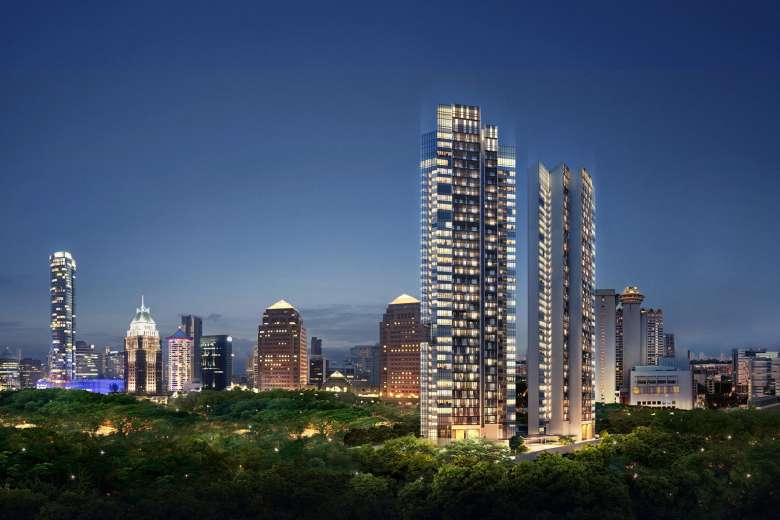
OUE Twin Peaks has two options: a normal Deferred Payment Scheme, and a variant scheme in which you put down 20%, and start payments only a year later. From what we understand, units sold under the normal DPS scheme will cost 3 to 9% more; but units sold under the variant scheme will not have an added cost.
OUE Twin Peaks is a 99-year leasehold development along Leonie Road. Prices are around S$2,600 per square foot, but have been falling because of developer discounts.
This development is ideal for landlords. The combination of deferred payment, together with fully furnished units, means you can immediately lease it out.. And while the rental market is currently weak, it will recover by the time you reach the one year or three-year mark, where you start paying.
The Interlace
- Stay-then-pay option
- Rental prospects (expats)
- Situated just far enough from the city to avoid noise and traffic, but close enough to be accessible
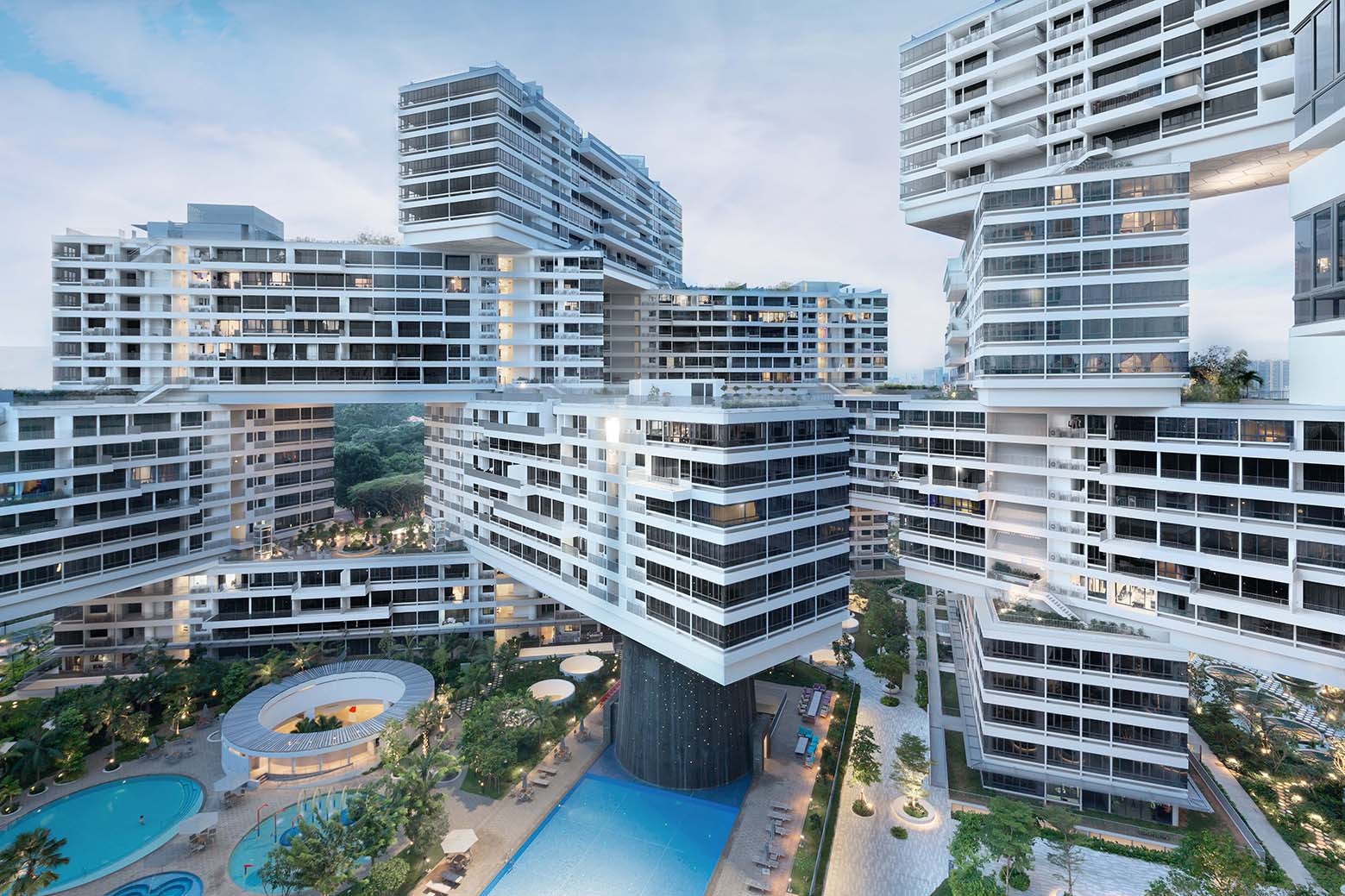
Developer CapitaLand is using a “stay then pay” scheme for both The Interlace and D’Leedon. The buyers only need to make a 1% down payment for the Option to Purchase (OTP), and another 9% down within eight weeks. The buyers can move in right after getting the OTP. The remaining 90% is paid after one year.
The Interlace is a 99-year leasehold unit along Depot Road in District 4. We consider this a good deal for landlords because of its proximity to international schools (ISS, Global Indian International School, International Community School). Expat tenants with families shouldn’t be hard to find.
For homeowners, it’s ideal if you want a place to move into fast. The location is also unique – it’s close to IKEA and Queenstown, but also just 15 minutes by car to the Central Business District (CBD). Not west, not central – but a nook that has the advantages of both.
The Boutiq
- Staggered payment to help your cash flow
- Freehold
- Central location on Orchard
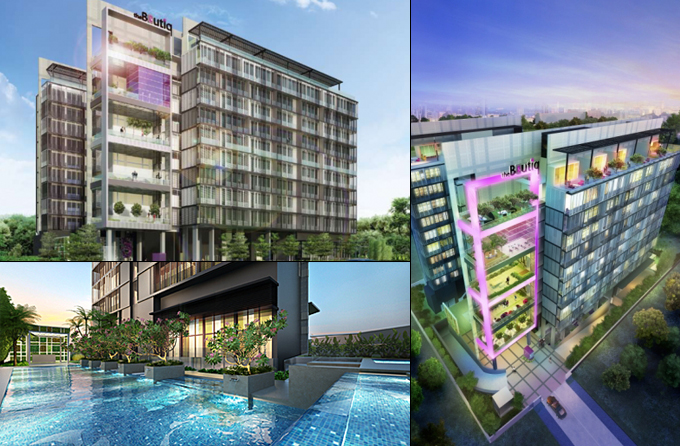
The Boutiq is at 145 Killiney Road in District 9. That’s walking distance to Orchard Road, and it’s one of the few freehold properties of such a location. The payment scheme is a little more complicated than others.
Buyers secure the OTP for 1% down payment and pay the remaining 4% within two weeks. The remaining payments are:
Two months from OTP date: 15%
18 months from OTP date: 30%
24 months from OTP date: remaining 50%
Granted, that scheme is as needlessly convoluted as a seven-wheeled car, but the general idea remains: staggered payments that make it easier to buy.
AMENDMENT: We have been informed that the next example does not fall under the DPS category, but does enable buyers to get on the property ladder:
Lloyd SixtyFive
- Experiential leasing scheme
- Freehold
- Central location on Orchard
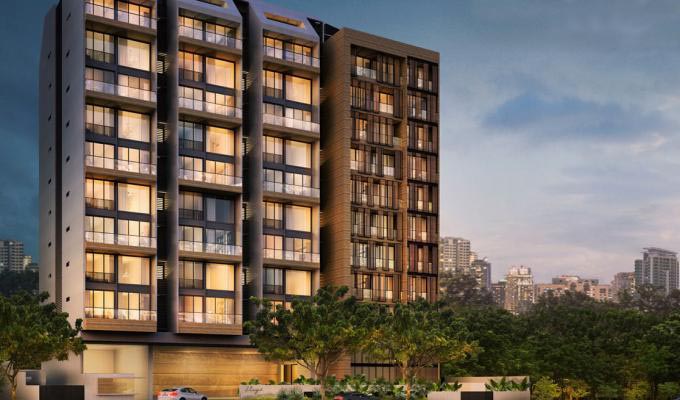
The payment scheme for Lloyd SixtyFive is one that’s already common abroad. The prospective buyer pays an upfront 10% of the price as rent, and a 2.5% security deposit. The buyer can then move in as a tenant once the development is complete. The rent is a whopping S$6,000 a month for a single bedder.
At the end of two years, if you decide to buy, you are refunded the security deposit and the full rental sum (it goes toward paying for the unit). If you decide not to buy, you are only refunded the security deposit.
The idea behind the Experiential Leasing Scheme is to allow buyers to benefit from purchasing a property after living in it, as well as the flexibility in deciding to exit without incurring much commitment. During their tenancy, they will have ample time to plan their finances without having to consider the interest incurred from taking up a bank loan.
Prices for Lloyd SixtyFive, which is at (you’ll never guess) 65 Lloyd Road, are around S$3,800 per square foot. A tad bit pricey, but it is a freehold property in the Orchard area.
What other bits of jargon confuse you? Let us know in the comments section below.
If you found this article helpful, 99.co recommends Additional Buyer’s Stamp Duty (ABSD) explained and Sales & Purchase Agreement for new condos.
Frequently Asked Questions
The DPS is a payment scheme that applies to completed condo units that have received their Certificate of Statutory Completion (CSC).
Under the DPS, a buyer forks out an initial down payment (20% of the purchase price), and pays nothing for the next 24 months. After the 24 months, the buyers then fork out the remaining 80%.
About Ryan Ong


Looking to sell your property?
Whether your HDB apartment is reaching the end of its Minimum Occupation Period (MOP) or your condo has crossed its Seller Stamp Duty (SSD) window, it is always good to know how much you can potentially gain if you were to list and sell your property. Not only that, you’ll also need to know whether your gains would allow you to right-size to the dream home in the neighbourhood you and your family have been eyeing.
One easy way is to send us a request for a credible and trusted property consultant to reach out to you.
Alternatively, you can jump onto 99.co’s Property Value Tool to get an estimate for free.
If you’re looking for your dream home, be it as a first-time or seasoned homebuyer or seller – say, to upgrade or right-size – you will find it on Singapore’s fastest-growing property portal 99.co.
Meanwhile, if you have an interesting property-related story to share with us, drop us a message here — and we’ll review it and get back to you.
Join our social media communities!
Facebook | Instagram | TikTok | Telegram | YouTube | Twitter

Leave a comment