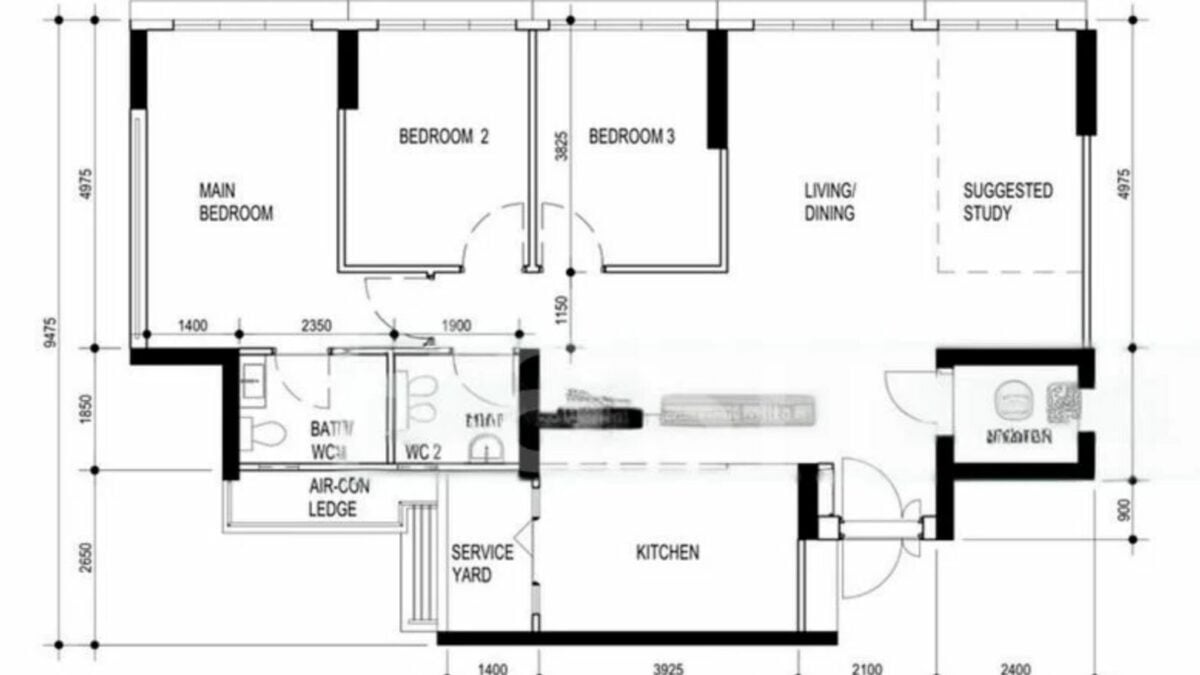
It’s common to find the floor plan of an HDB flat confusing when you buy one. In order to make informed decisions, whether you are buying a flat or planning renovations, it is crucial to understand the floor plan details clearly. To assist you in this step, this article will break down the key elements of reading an HDB floor plan.
Table of contents:
- How do you get your HDB floor plan?
- What are the key elements of an HDB floor plan?
- What other features are important on an HDB floor plan?
- How do you read the dimensions on an HDB floor plan?
- What do certain abbreviations and symbols mean on the floor plan?
- How do you calculate room sizes from the floor plan?
How do you get your HDB floor plan?
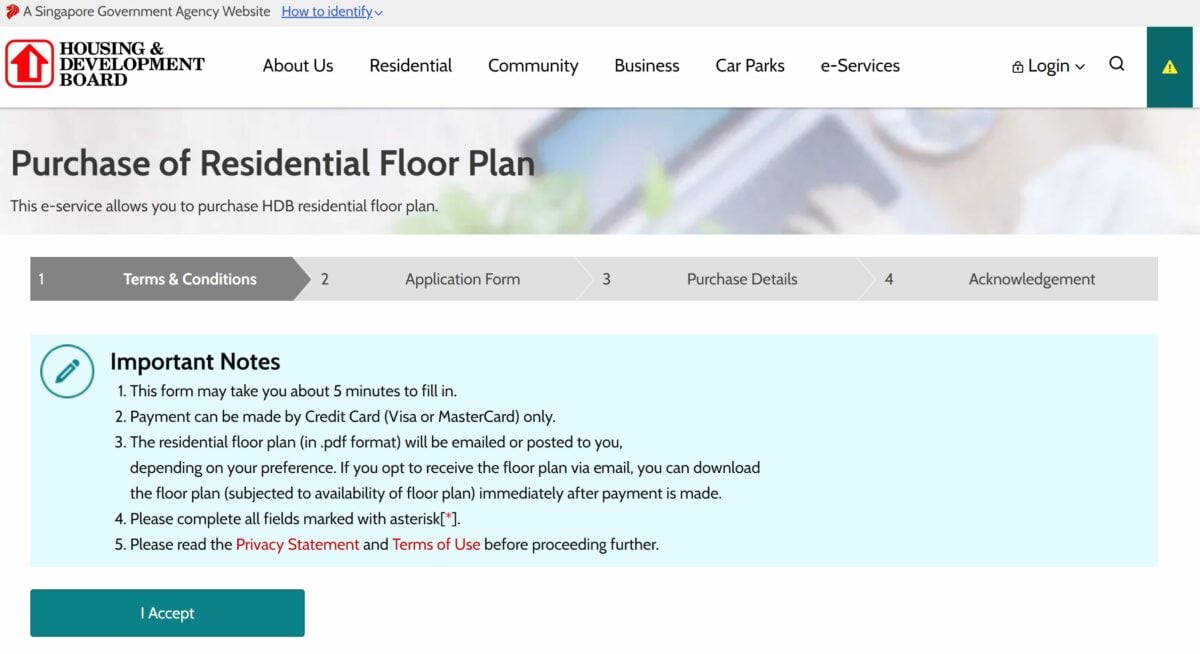
Understanding the layout of your apartment begins with accessing the floor plan. This is how you can get one:
- Apply via the HDB website: Once you have completed the purchase of your flat, you can then apply for your floor plan using HDB’s official website.
- Complete the application form.
- Pay a small fee through your credit card.
- Receive your floor plan by email (for faster access) or through the post.
Read this: HDB BTO application terms you need to know
If you are buying a resale flat, the seller, or previous owner, may also have a copy of the floor plan that they can share with you.
What are the key elements of an HDB floor plan?
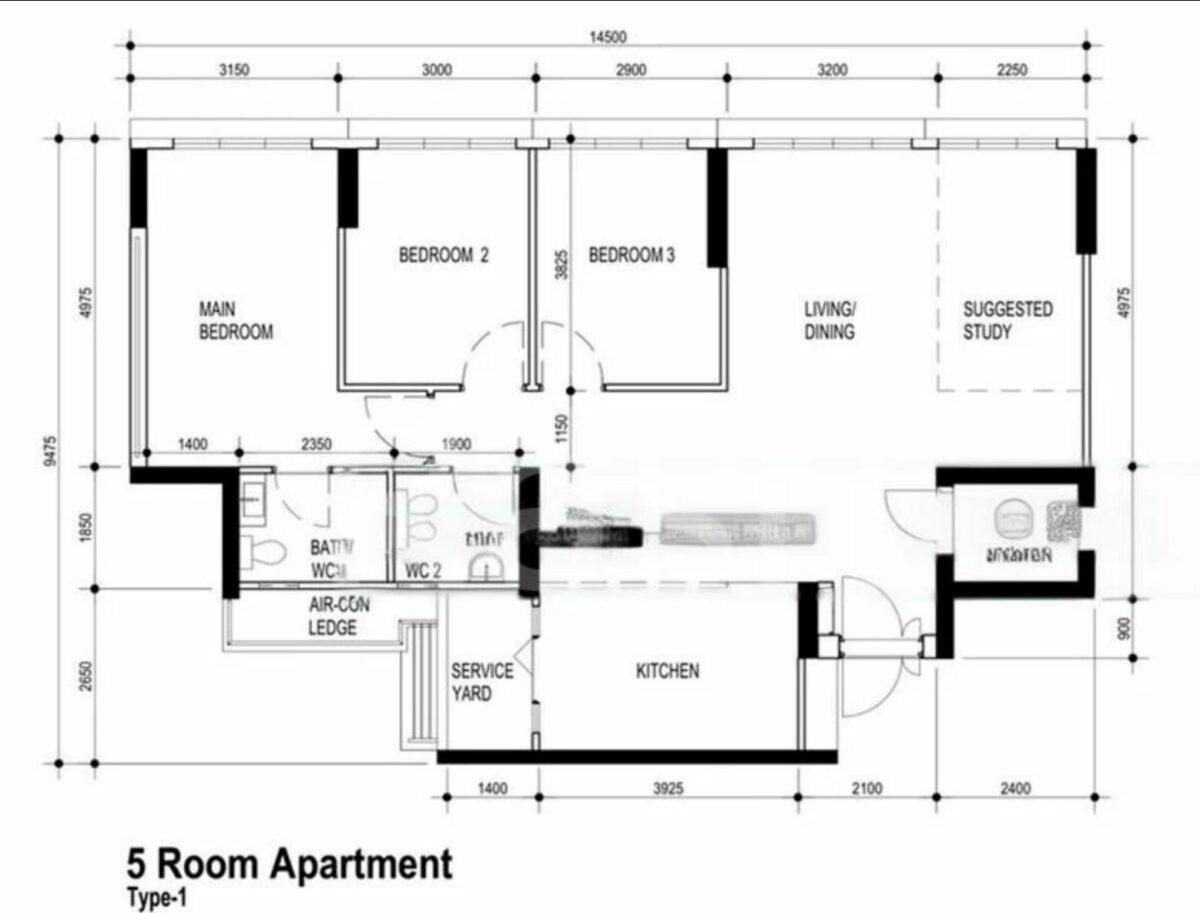
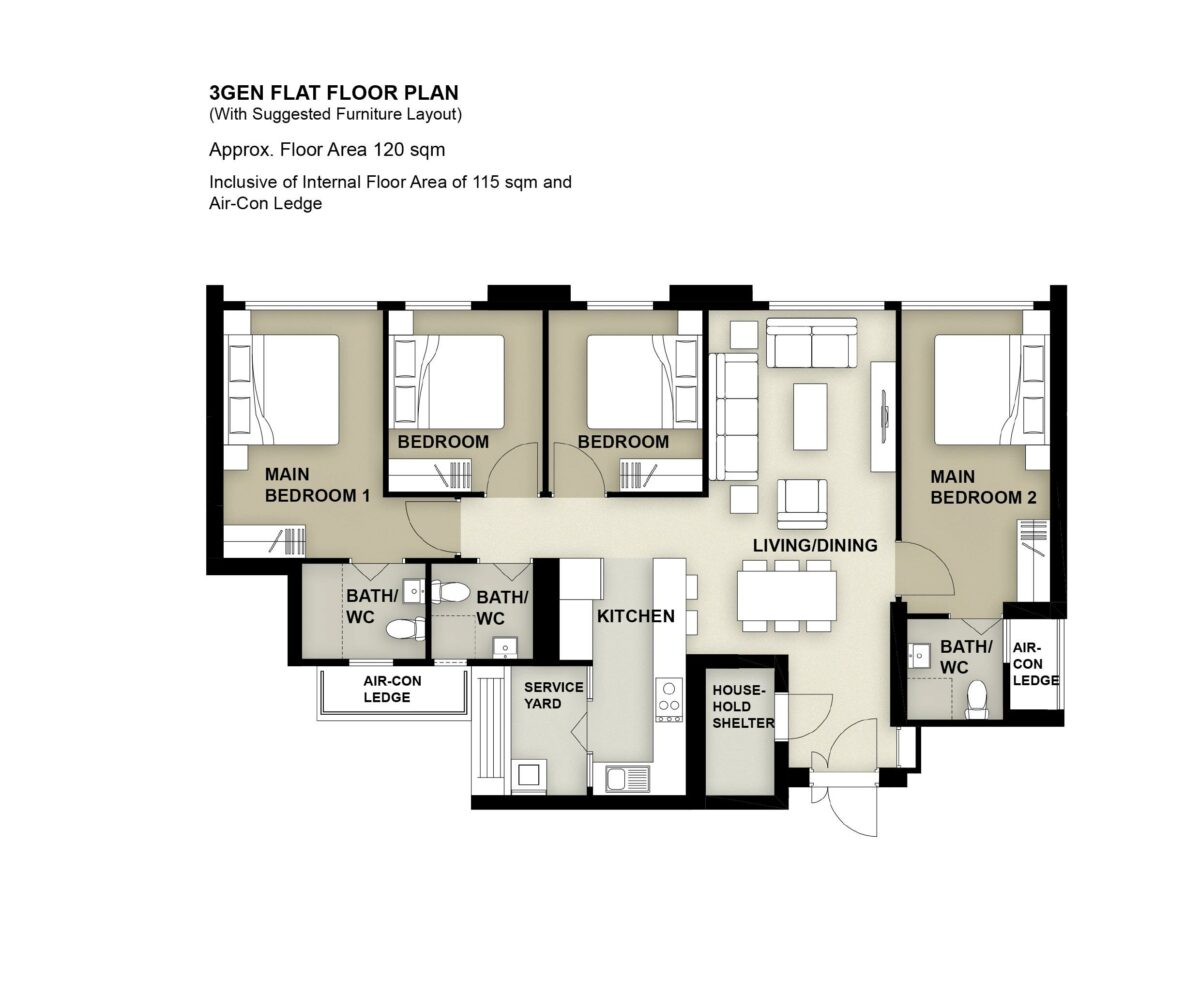
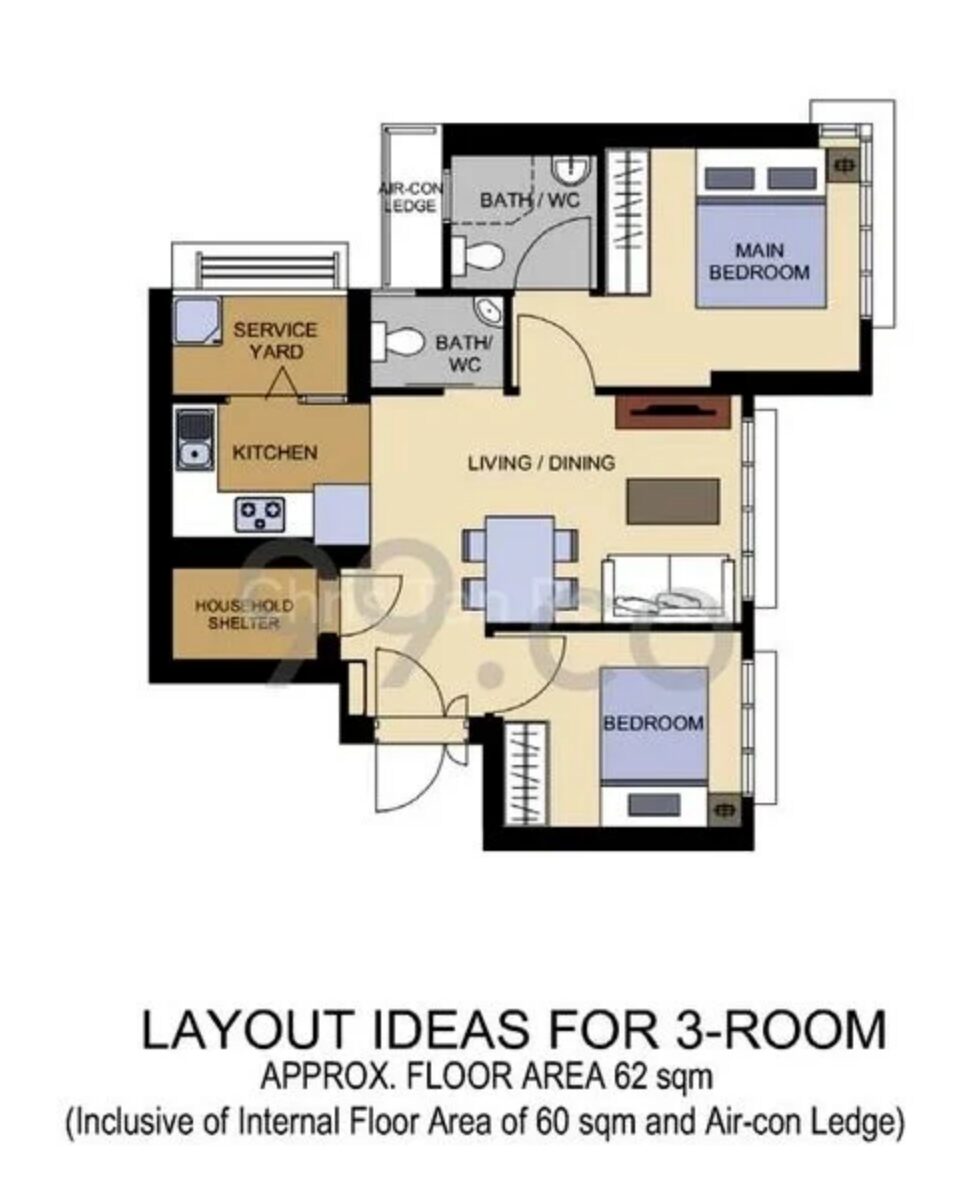
The HDB floor plan provides a top-down perspective of the apartment, displaying details such as room arrangement and size. Let’s take a closer look at the key components.
- What types of walls are there?
- Normal walls: If approved by HDB, these non-structural walls, which are represented by thin lines, can be hacked or taken down.
- Structural walls: These walls, shown with thick, bold lines, are load-bearing and play a vital role in supporting the structure of the building, making their removal impossible.
- Gable-end walls: The walls found at the outer edges of end units are marked by thin lines within them, serving as a clear sign they are not to be demolished.
- What types of doors are on the floor plan?
- Swing doors: Depicted by a quarter-circle, this shows how the door swings open and in which direction.
- Folding doors: Represented by a V-shape, these are commonly used in compact areas like bathrooms or service yards.
- Non-HDB doors: Dashed lines show where HDB has not provided a door, but where you might install one later.
- How are windows represented?
- Casement windows: Shown using a quarter-circle symbol, these are typically found in bedrooms and living rooms.
- Sliding windows: Represented by thin straight lines, these are often found in smaller spaces.
- Top-hung windows: Shown by a thin dotted line inside a rectangle, these are found in bathrooms.
What other features are important on an HDB floor plan?
- Where is the household shelter (HS)? The household shelter, or bomb shelter, is a key feature in every HDB flat since 1998. It is marked with thick, bold structural lines because it cannot be hacked or demolished. Typically used for storage, placing the household shelter can influence the layout and feel of your home.
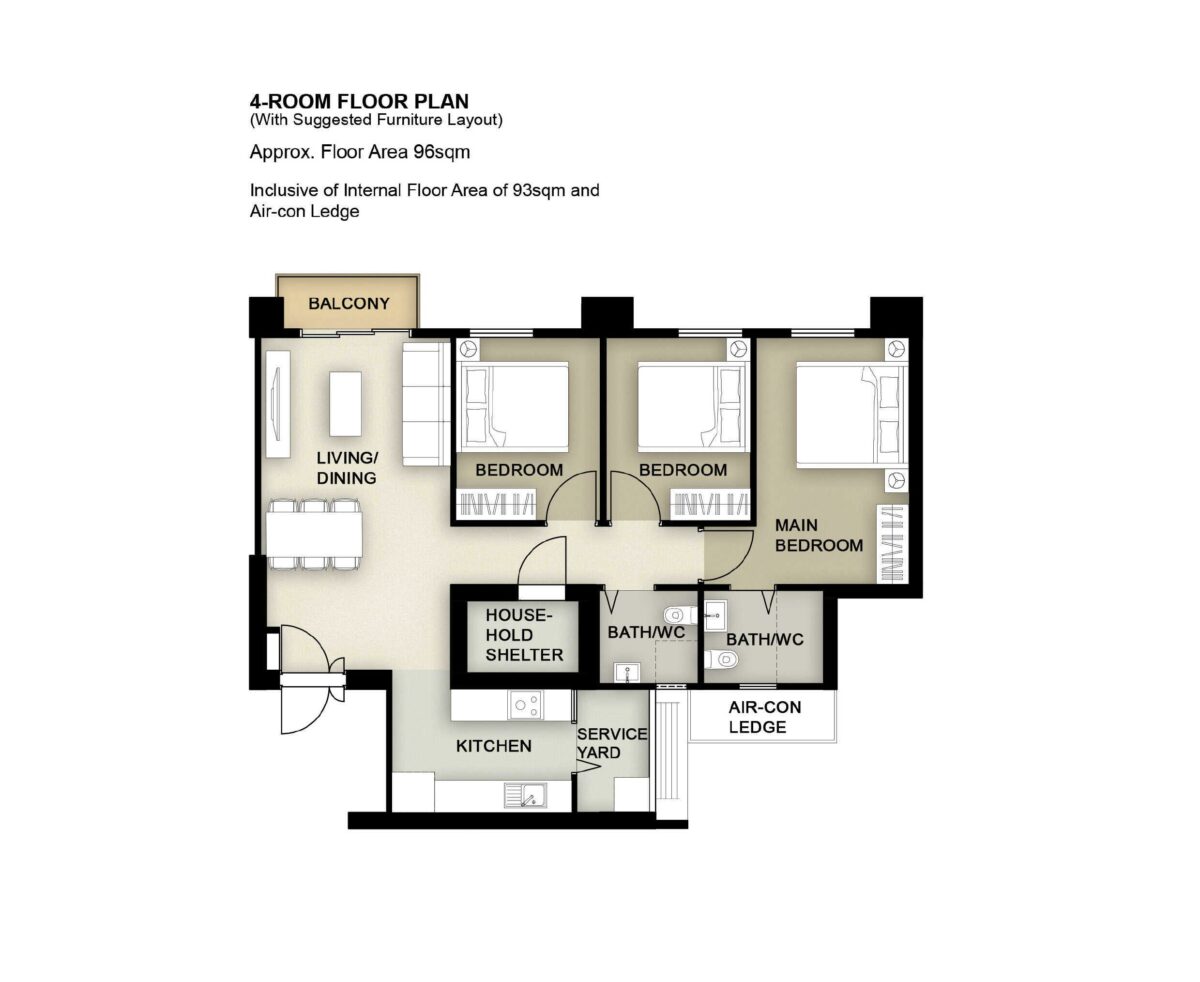
- Where is the DB (Distribution Board)? The distribution board, marked as “DB” on your floor plan, shows where your flat’s electrical switchboard is located. This is crucial for knowing where the major electrical points are, especially if you plan to do renovations.
- Where is the laundry rack? The laundry rack is represented by a grill-like symbol near the service yard. Knowing its placement can help you design an efficient space for drying clothes.
How do you read the dimensions on an HDB floor plan?
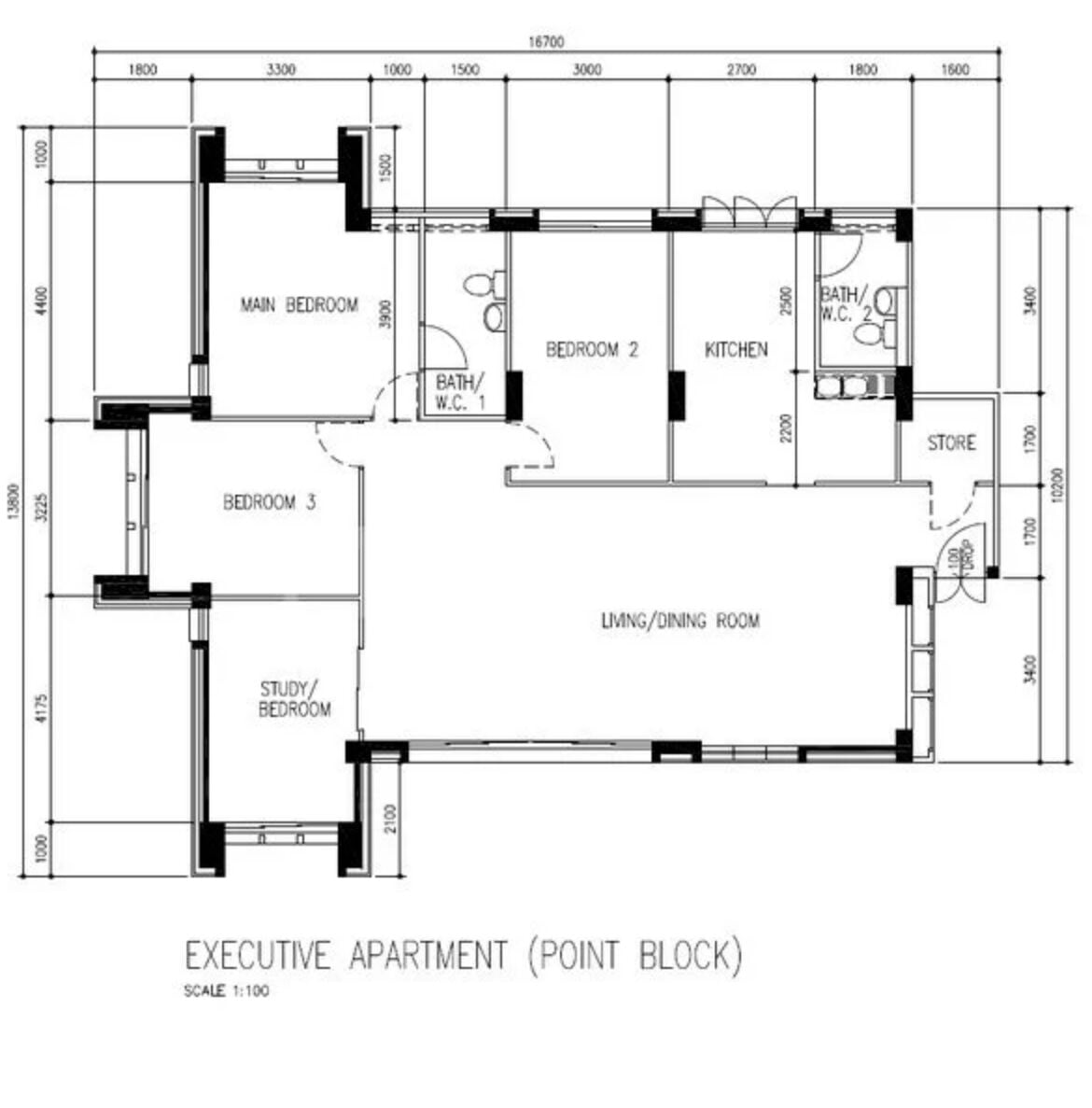
The dimensions on HDB floor plans are usually listed in millimetres (mm). For instance, a wall length of 5,000 mm translates to 5 metres. These measurements are essential for planning furniture placement and renovations.
Floor plans also typically measure the area in square metres (sqm), though some may use square feet (sq ft). Remember that 1 square metre equals 10.76 square feet for easy conversion.
What do certain abbreviations and symbols mean on the floor plan?
- What does 50/100mm drop mean? A 50/100mm drop on your floor plan shows a difference in floor height, usually found near bathrooms or service yards.
- What is the floor area? The total floor area of your flat is usually listed on the floor plan and can also be accessed through the HDB website in the “Flat Information” section.
- What does DB mean? As mentioned earlier, DB stands for distribution board and shows your flat’s electrical switchboard location.
- What does HS mean? HS stands for household shelter, also referred to as a bomb shelter. As this is a mandatory feature, it is marked prominently on all HDB floor plans.
How do you calculate room sizes from the floor plan?
Understanding the room sizes in your floor plan is important for planning renovations or furnishing. The numbers you see on the sides of the floor plan represent the dimensions of the room in millimetres (mm). For example, if you see a wall marked as 5,000 mm, this translates to 5 metres.
Read this: HDB resale grants: An overview of how much can you get in 2024
Converting these numbers to metres helps you easily figure out the exact size of each room and the total space available.
Conclusion
While reading an HDB floor plan might seem daunting at first, it’s much simpler once you understand the basic symbols and measurements. With this guide, you will read your floor plan confidently and use it to plan your renovation or new home purchase. Knowing how to interpret these elements can help you create a living space that suits your needs perfectly.
HDB properties for you to look at

 2
2
 2
2
 4
2
4
2
 3
2
3
2
 3
2
3
2
 2
2
2
2
 3
2
3
2
 2
2
2
2
 2
2
2
2
 3
2
3
2
 3
2
3
2
 3
2
3
2
 3
2
3
2
 3
2
3
2
 3
2
3
2
 3
2
3
2
 3
2
3
2
 4
2
4
2
 6
4
6
4
 3
2
3
2
 3
2
3
2
 3
2
3
2
 3
2
3
2
 3
2
3
2
 4
3
4
3
 3
2
3
2
 4
2
4
2
 3
2
3
2
 4
3
4
3
 3
2
3
2
 3
2
3
2
 2
2
2
2
 3
2
3
2
 3
2
3
2
 3
2
3
2
 3
2
3
2
 -1
-1
 -1
-1
 -1
-1
 2
2
2
2
 2
2
2
2
 -1
-1
 -1
-1
 -1
-1
 -1
1
-1
1
 3
2
3
2
 -1
-1
 -1
-1
 3
2
3
2
 -1
-1
 3
2
3
2
 -1
-1
 3
2
3
2
 -1
-1
 -1
1
-1
1
 -1
1
-1
1
 -1
-1
 -1
-1
 -1
-1
 -1
-1
 2
2
2
2
 3
2
3
2
 -1
-1
 -1
-1
 2
2
2
2
 -1
-1
 -1
-1
 -1
-1
 3
2
3
2
 -1
-1
 2
2
2
2
Disclaimer: This information is intended solely for general informational purposes. 99.co makes no claims or guarantees regarding the accuracy, completeness, or suitability of the information, including, but not limited to, any assertion or assurance regarding its appropriateness for any specific purpose, to the maximum extent allowed by law. Despite all efforts to ensure that the information presented in this article is current, reliable, and comprehensive at the time of publication, it should not be used as the sole basis for making financial, investment, real estate, or legal decisions. This information is not a replacement for professional advice tailored to your unique personal circumstances, and we disclaim any responsibility for decisions made using this information.
About Azhann Rosmin

Azhann Rosmin is a writer who has 6 years of professional forte. He specialises in writing about real estate and lifestyle topics. His coverage mostly focuses on HDBs, condos, BTOs, and landed houses while also favouring topics of food, nightlife, and technology. He has worked in multiple writing positions that include cryptocurrency, fintech, e-commerce, fashion, and cosmetics. Azhann graduated with a bachelor's degree in Applied Linguistics and also writes poetry.

Looking to sell your property?
Whether your HDB apartment is reaching the end of its Minimum Occupation Period (MOP) or your condo has crossed its Seller Stamp Duty (SSD) window, it is always good to know how much you can potentially gain if you were to list and sell your property. Not only that, you’ll also need to know whether your gains would allow you to right-size to the dream home in the neighbourhood you and your family have been eyeing.
One easy way is to send us a request for a credible and trusted property consultant to reach out to you.
Alternatively, you can jump onto 99.co’s Property Value Tool to get an estimate for free.
If you’re looking for your dream home, be it as a first-time or seasoned homebuyer or seller – say, to upgrade or right-size – you will find it on Singapore’s fastest-growing property portal 99.co.
Meanwhile, if you have an interesting property-related story to share with us, drop us a message here — and we’ll review it and get back to you.
Join our social media communities!
Facebook | Instagram | TikTok | Telegram | YouTube | Twitter



Leave a comment