
When you purchase a private property, one of the first things your law firm will do for you after you’ve exercised the Option To Purchase (OTP) is to lodge a caveat.
This is mostly a “behind the scenes” event for most buyers, but it’s more important than you’d think. On top of that, a caveat can sometimes be a good way to check property values.
Here’s what it’s all about:
Table of contents
What is a caveat?
The word caveat means “beware“. The purpose of a caveat is to protect a property buyer: Once you’ve lodged a caveat on the property you’re buying, other people will know that you have priority.
For example, if another person were thinking of trying to claim the property (by trying to buy it out from under you, etc.), the caveat would block them from doing so.
A caveat also prevents owners from executing scams whereby they’d sell the property multiple times to unsuspecting buyers and then disappear with the deposits.
You’ll be notified if such an event occurs so you won’t become a victim. Your lawyer will advise you on the next action if another person attempts to lodge a caveat on the same property after you’ve done so.
Understanding caveats better: ‘Chope-ing’ your property
Consider caveats as ‘chope-ing‘ your property, like Singaporeans chope tables at hawker centres with packets of tissue paper. When you find a table, which is the equivalent of executing your OTP, you place a packet of tissue paper (the equivalent of a caveat) on it to dissuade others from sitting at your table. At the same time, you order and queue for your food (the equivalent of finalising the purchase of your property).
Just as you remove the packet of tissue paper when you’ve returned to the table with your food, the caveat will also cease when the caveator officially takes ownership of the property on the completion date.

Your conveyancing firm will usually help you lodge a caveat right after you’ve exercised the Option To Purchase (OTP) or completed the Sale & Purchase Agreement. Otherwise, another party – such as the bank extending you the loan or even the CPF board if your CPF monies are used- can lodge the caveat (but your lawyer almost always handles it).
Caveats are lodged with the Singapore Land Authority (SLA). You can’t do it yourself unless you have a lodgement account.
Caveats as a strategic tool in property negotiations
Understanding the intricacies of caveats can also be a strategic advantage during property negotiations. For buyers, a caveat search can reveal the seller’s transaction history, providing insights into their selling behaviour and potentially highlighting any patterns that could be leveraged during price negotiations.
For sellers, knowing that a caveat has been lodged on their property can signal to potential buyers the seriousness and commitment of the current interested party, potentially accelerating the decision-making process.
In essence, caveats are not just a legal formality but a strategic tool that can be utilised to navigate the complex landscape of property transactions, ensuring both parties can negotiate from a position of strength and knowledge.
Enhancing market transparency with caveats
Caveats not only serve as a protective shield for property transactions but also enhance the transparency of the real estate market. By making caveat information publicly accessible, the Singapore Land Authority (SLA) promotes an open environment where buyers and sellers can make informed decisions based on the latest transaction data.
This level of transparency is crucial in maintaining the integrity of the property market and ensuring that all parties have access to the necessary information to make fair and equitable transactions.
For potential buyers, this means they can verify the authenticity of the seller’s claims and gauge the property’s market value based on historical data. For sellers, it provides a benchmark to price their property competitively, ensuring they align with current market trends.
Checking for existing caveats on private property
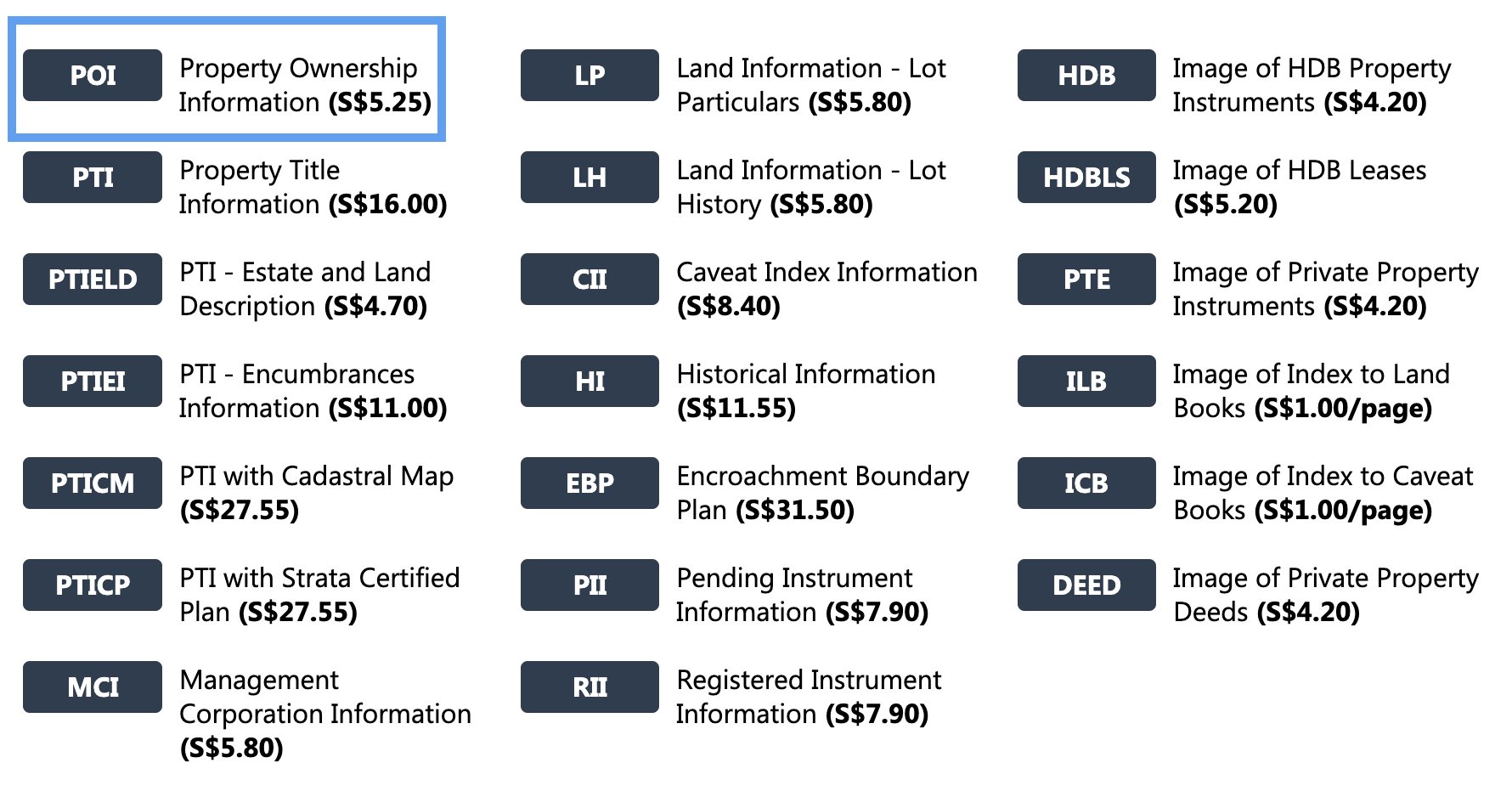
The SLA INLIS portal lets you search for and download caveats for a small fee of S$5.25. Click ‘Property Ownership Information’ under Product Listings and follow the instructions. (Note: click ‘Cancel’ when prompted to purchase the ‘Strata Certified Plan’.)
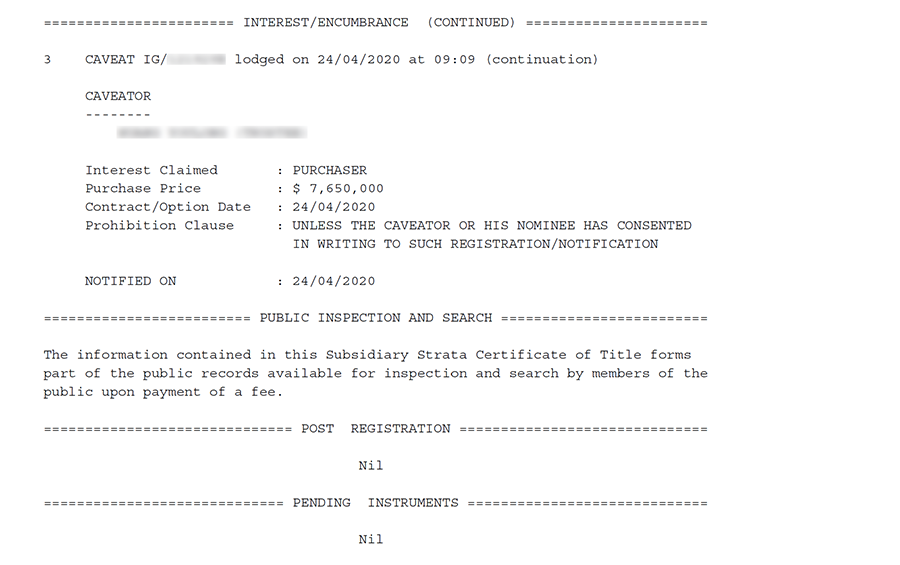
The caveat includes information that’s very useful to property buyers, including
- The name of the rightful owner of the property
- The lot area (i.e. size) of the property
- Tenure of the property
- Details of caveats lodged
- Whether the property is mortgaged
- Any issues with the property (called “encumbrances” that could prevent it from being sold)
A property search portal like 99.co collates all the caveats lodged and presents them in an easy-to-understand format under every property listing. This lets you know what a fair price to offer for the property is based on the latest transaction info. You can also see the price trend for the development:
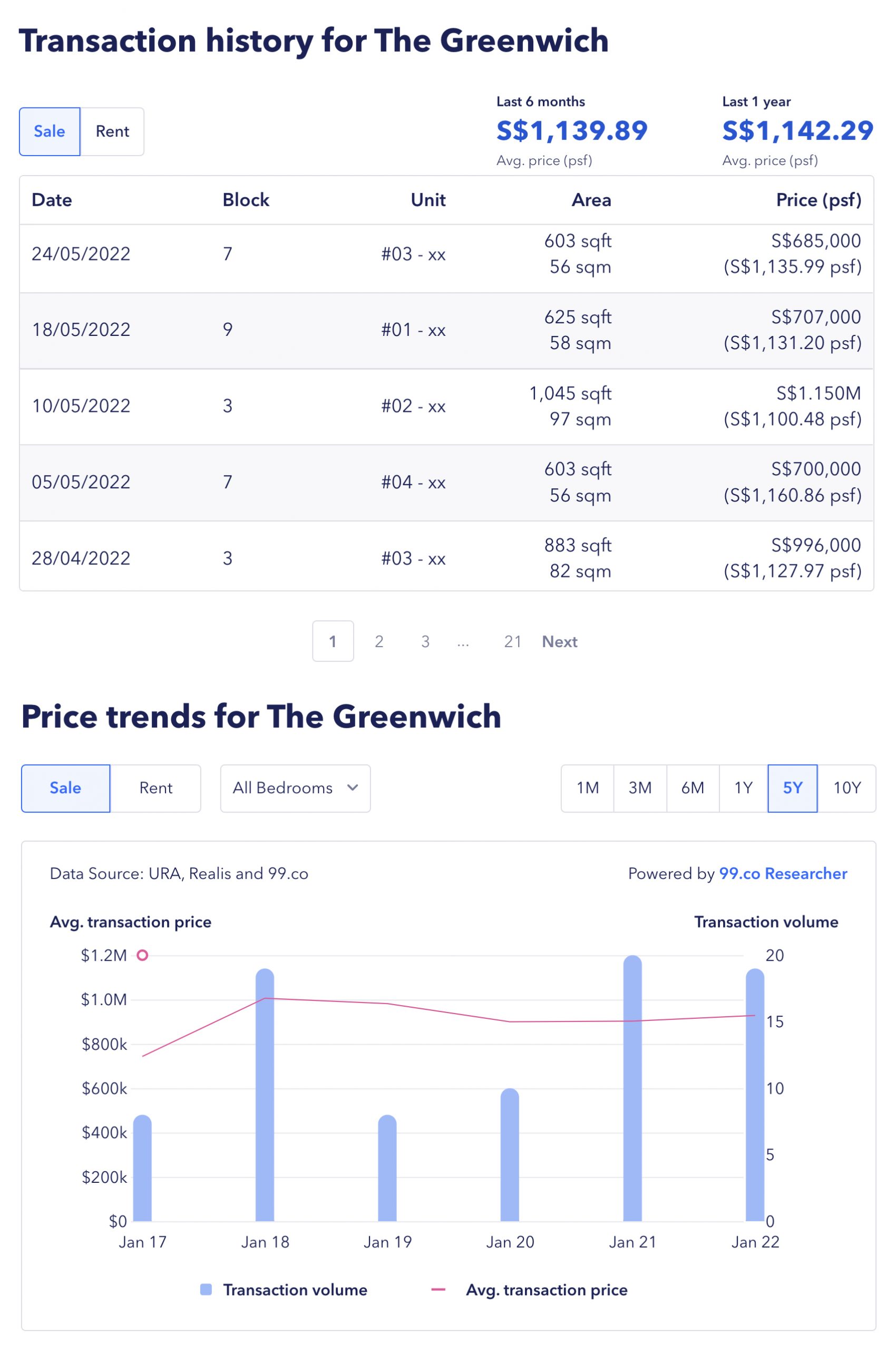
(Note that you might sometimes see bizarrely skewed prices, such as a unit sold far below the norm. These might happen occasionally, such as when parents sell to their children at below market value.)
Recommended article: Option To Purchase: 5 things you might not know about (but really should)
What’s the process for lodging a caveat?
We can tell you, but you probably can’t do it. The lodgement is done online via the Singapore Titles Automated Registration System (STARS) website. You won’t be able to log in and do it, though, unless you have a lodgement account. Your law firm will do it for you.
It costs S$64.45 and takes effect on the day it’s lodged.
Once the caveat is lodged, the information is available to the public via the Urban Redevelopment Authority’s (URA) transactions tool, so anyone can easily find out how much you’re selling (or buying) your home for.
Additional reading: Woman lodges caveat, stopping current owner from selling property for S$7.4m
The property that I want to buy already has a caveat lodged against it. What now?
Before buying any property, your law firm will check for existing caveats. If someone else has lodged a caveat, they have priority over you. Your purchase will be blocked, and you’re not likely to get the property unless something dramatic happens (e.g., the earlier buyer pulls out even after exercising the OTP for some reason or another).

There may, however, be cases where your lawyer can argue against the caveat. For example, if it turns out it was lodged by a spiteful ex-spouse to interfere with the transaction. There have been cases where conveyancing lawyers got a court order for the caveat to be removed or even appealed to SLA to cancel the caveat.
Who are caveats for?
Home buyers
As discussed above, checking for a caveat will save you time as a potential home buyer by checking if anyone has ‘chopped’ the unit already. Just enlist the help of your lawyer to check that there’s no caveat lodged on the property before proceeding to contact the owner for a viewing (or move on to the next unit on your list).
Home sellers
For those selling their homes, using the URA transaction tool gives you a sense of how much you should price your property by looking at caveats lodged on similar listings. It shows all URA caveats lodged within the last 60 months so that you can get the most up-to-date information, such as:
- Project name
- Street name
- Type (condominium, landed, etc.)
- Postal district
- Market segment (CCR, RCR, or OCR)
- Tenure (freehold or 99-year leasehold)
- Type of sale (resale, sub-sale or new sale)
- No. of units
- Price and nett price
- Area (sqft)
- Type of area (strata or land area)
- Floor level (non-specific, e.g. 31 to 35
- Unit price (price psf)
- Date of sale
Having a buyer lodge a caveat on your home also shows they are serious about going through with the sale. This gives you peace of mind when proceeding with your next property purchase.
Conclusion
In conclusion, lodging a caveat is crucial in the property transaction process. It serves as a protective measure for buyers, ensuring their priority in the purchase and preventing potential scams. Furthermore, it provides valuable information about the property, aiding in informed decision-making. Whether you’re a buyer or a seller, understanding the role of caveats can significantly streamline your property transaction, ensuring a smoother and more secure experience. Always consult with your law or conveyancing firm to ensure that all necessary steps, including lodging a caveat, are correctly undertaken during your property transaction.
Have more questions on caveats or need personalised help? Let us know in the comments section below or on our Facebook post.
If you found this article helpful, 99.co recommends 5 reasons why property buyers forfeit their option fees and 5 ways selling your property can go wrong (and how to fix it)
Frequently Asked Questions (FAQs)
What is a caveat?
A caveat is a legal notice lodged with the Singapore Land Authority (SLA) to indicate an interest in a property. It warns potential purchasers or financiers that someone else claims an interest in the property.
Why would I need to lodge a caveat?
Homeowners or interested parties lodge a caveat to protect their property interests. Common reasons include:
- To secure the interest of a buyer after signing a sale and purchase agreement.
- To protect the rights of a tenant under a long-term lease.
- To secure the interest of a lender or mortgagee.
How do I lodge a caveat?
You can lodge a caveat electronically on the SLA website through the Integrated Land Information Service (INLIS) portal. It requires filling out the appropriate forms and paying the requisite fees.
What information is needed to lodge a caveat?
The information required includes:
- Details of the caveator (the person lodging the caveat).
- Details of the property in question.
- The nature of the interest being claimed.
- Supporting documents to substantiate the claim.
How much does it cost to lodge a caveat?
The fee for lodging a caveat varies and is subject to change. As of the latest update, the fee is SGD 64.45 per caveat. It is advisable to check the SLA website for the most current fee structure.
How long does a caveat remain in effect?
A caveat remains in effect until it is withdrawn, lapsed, removed by court order, or cancelled by the Registrar of Titles.
Can a caveat be challenged or removed?
Yes, a caveat can be challenged by the property owner or another interested party. This can be done through legal proceedings where the court may order the removal of the caveat if it finds the claim unjustified.
What happens after a caveat is lodged?
Once a caveat is lodged, it will be registered in the Land Titles Register. This will notify anyone conducting a title search of the caveator’s claimed interest in the property.
Can I sell or mortgage my property if a caveat is lodged against it?
Selling or mortgaging a property with a caveat lodged against it can be more complex. The potential buyer or financier will be notified of the caveat, which may affect their willingness to proceed with the transaction until the caveat is resolved.
How can I withdraw a caveat?
A caveator can withdraw a caveat by submitting a withdrawal form via the INLIS portal. The caveator or their legal representative must sign the withdrawal.
What are the consequences of lodging a caveat without a valid interest?
Lodging a caveat without a valid interest can lead to legal repercussions, including potential liability for damages caused to the property owner or other affected parties.
Can a caveat be lodged on HDB properties?
A caveat can be lodged on HDB properties in Singapore under procedures similar to those for private properties. Ensuring the caveat is justified and backed by proper documentation is important.
What should I do if I receive a notice of a caveat lodged against my property?
If you receive a notice of a caveat lodged against your property, you should:

- Review the details of the caveat to understand the nature of the interest claimed.
- Consult with a legal professional to understand your rights and the implications.
- Consider resolving the issue by negotiating with the caveator or contesting the caveat in court if necessary.
About 99.co

We are a property search engine with the overarching goal of building a more transparent and efficient property market. We are working towards that future by empowering people with the tools and information needed to find a place to live in the best way possible.

Looking to sell your property?
Whether your HDB apartment is reaching the end of its Minimum Occupation Period (MOP) or your condo has crossed its Seller Stamp Duty (SSD) window, it is always good to know how much you can potentially gain if you were to list and sell your property. Not only that, you’ll also need to know whether your gains would allow you to right-size to the dream home in the neighbourhood you and your family have been eyeing.
One easy way is to send us a request for a credible and trusted property consultant to reach out to you.
Alternatively, you can jump onto 99.co’s Property Value Tool to get an estimate for free.
If you’re looking for your dream home, be it as a first-time or seasoned homebuyer or seller – say, to upgrade or right-size – you will find it on Singapore’s fastest-growing property portal 99.co.
Meanwhile, if you have an interesting property-related story to share with us, drop us a message here — and we’ll review it and get back to you.
Join our social media communities!
Facebook | Instagram | TikTok | Telegram | YouTube | Twitter





Hi, I’m Wai Yin. My neighbour’s friend apparently bought a unit in our estate. Apparently, the keys have already been handed over and renovation is already underway. But till today, we have not seen the caveat being lodged with URA. I find it very strange. Is it possible for the whole sale transaction to be completed without a caveat being lodged, please? Thank you.
I am the administrator of my deceased mother estate. There are five beneficiaries. I received a caveat notice from 2 of the beneficiaries. Can I sell her heb 4 room flat?