From the last General Election in 2015 to this one in July 2020, quite a bit has changed in the Singapore property landscape. Owners of private property will be encouraged at how home prices have continued to trend upward, despite additional cooling measures coming into play in 2018. Over the past five years, this is how this growth in private home prices compares to the other periods:
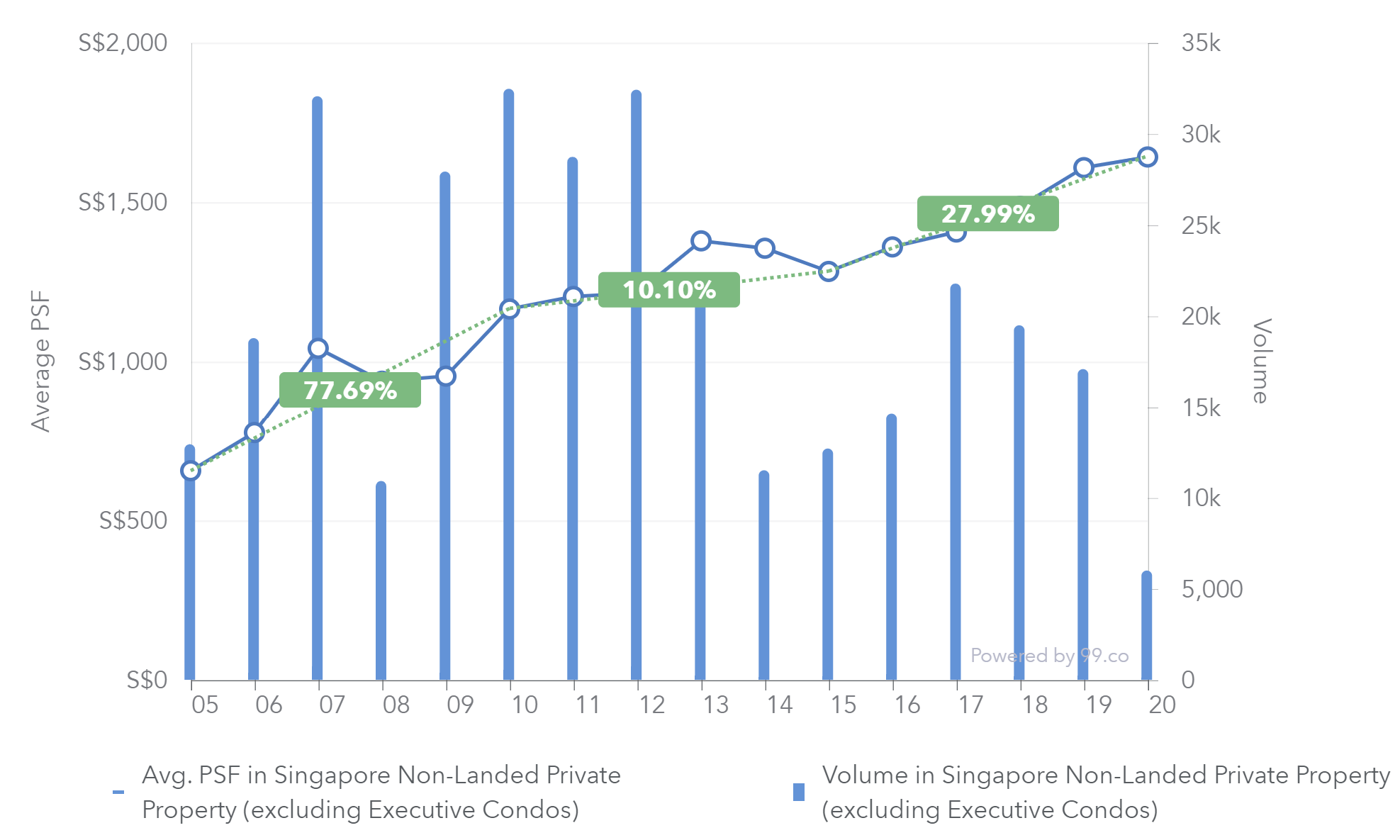
Looking at property prices alone, one could say that the government did well in keeping property price growth consistent and sustainable. That said, there are certain aspects we can build upon over the next five-year period that we’ve outlined in this manifesto. Part 2 specifially addresses the rental property market and private homes. (You can read Part 1 here.)
End prejudice against tenants by enacting an anti-discrimination law
Singapore has always wanted to make working and living here attractive to foreigners, so why let landlords who discriminate against race and nationality shoot the country in the foot?
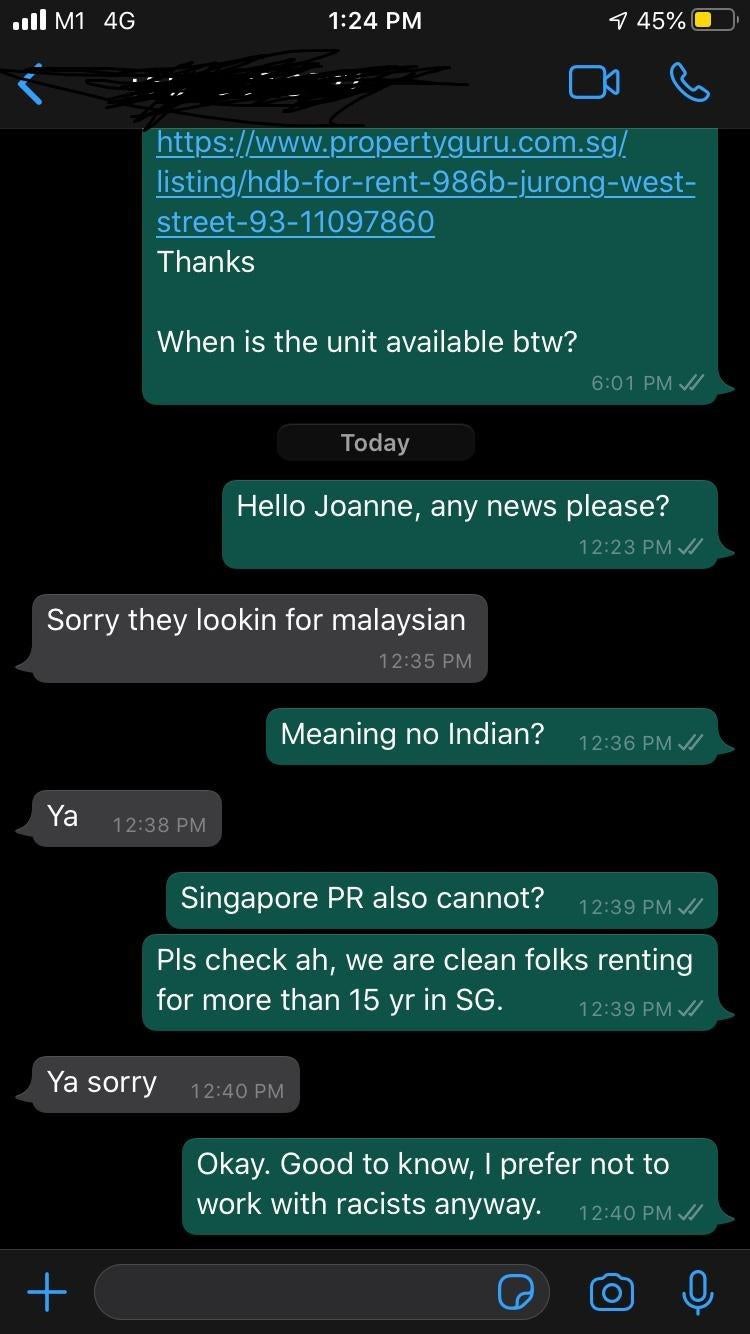
As a property portal, we know the extent of the issue, and it’s pretty ugly. This is why 99.co lets agents to label rental listings as ‘Diversity Friendly’ in our stand against discrimination, be it directed towards people of a certain race, nationality or sexual preference.
Some would argue that it’s the landlord’s right to choose who to rent his/her property to. But this is how we feel: While the landlord can eventually make the final decision privately according to his/her personal bias, as a society we should take a firm and symbolic stand against discrimination.
As such, we propose an anti-discrimination law that covers property rentals, in addition to employment. The law will make questions on race, nationality or sexual preference at all stages of a rental transaction or employment process illegal.
This law will not interfere with transactions; landlords are allowed to ask for the tenant’s documentation and credentials (e.g. company employment letter) at the transaction stage when verifying his/her right to stay in Singapore and the validity of employment and work passes.
Finally, the government should also set up an avenue for redress (like TAFEP for employment matters) for renters who encounter discrimination at any point during the rental process.
Set up a third-party bond authority to handle rental deposits
Not long ago, we wrote an article on how there are unscrupulous landlords out there who devise ways to not return tenants their rental deposit when the lease is up. The victims are often expat tenants, who often forgo their deposits because they are unable to follow up with an errant landlord once they have left the country.
Again, we’ve built up a good rep among foreigners, so why let a bunch of evil landlords tear this apart?
These expat tenants are also surprised that a first-world country like Singapore does not have a bond authority—a third-party organisation set up by the government to handle all rental deposits.
In Australia, for example, most states have a board set up to hold rental bonds (as they call deposits over there). The security deposit for a rental property is held by a neutral governing body, like the Residential Tenancies Bond Authority (RBTA) in the state of Victoria, and promptly refunded at the end of the lease (with any landlord deductions subject to independent assessment and approval).
At the end of the lease, if a tenant and landlord agree, the bond authority will release the money as required (i.e. back to the tenant, with any deductions claimed by the landlord). If they two disagree, a dispute resolution mechanic is already spelled out in the terms of the bond (which saves a lot of time in taking the case to the relevant tribunals).
Because a third party is managing the deposit, the landlord won’t be able to simply run off with the deposit even if he/she wanted to.
A third-party bond authority isn’t just benefitting the tenant. Landlords can also ask for a higher security deposit if the bond authority allows payment in installments. This will allow landlords to insure expensive properties better.
Also, a bond authority can also keep track of a tenants rental track record, so landlords can find out whether a prospective tenant is likely to default.
So, we call upon the government to set up a bond authority, which can also handle deposits from other types of properties other than residential.

To reduce ABSD for local Singaporeans but at the same time help them maintain financial prudence by raising minimum downpayment
The problem with implementing certain one-off taxes on property, such as the Additional Buyer’s Stamp Duty (ABSD) is that the effects wear off after some time. Buyers simply begin to factor the ABSD into their budget. Developers, meanwhile, may also try to meet buyer halfway by offering a discount, or coming with smaller units with lower quantums.
If the intention was truly to keep Singaporeans from over-leveraging on property investment, a better way would be to increase the cash portion of the downpayment required for a private property under the loan-to-value (LTV) ratio guidelines, or slightly lowering the Total Debt Servicing Ratio (TDSR). Doing so can stimulate local demand in the private property market in the absence of foreign buyers (following Covid-19) while ensuring buyers remain prudent.
In the meantime, ABSD for locals can be lowered back to 5 or 7% for the second property (from the current 12%), and 10 or 12 % for the third property (from the current 15%). A lower ABSD for locals may or may not reduce the government’s revenue from property taxes, because the higher resulting demand from buyers may lead to a higher number of transactions, making up for a lower ABSD percentage.
To encourage the rejuvenation of older private properties, allow owners to operate short-term rental via approved platforms such as Airbnb
Currently, the Urban Redevelopment Authority (URA) does not allow private homes to be rented out on a short-term basis. We’ve written about the matter before; some of the arguments against allowing owners from using their properties for Airbnb purposes include safety issues, privacy concerns and a series of possible annoyances that come with having transient residents next door.
When Covid-19 blows over, it’ll be timely to revisit the matter and possibly look at ways to allow owners to rent out their property on a short-term basis in Singapore. We can align the rules and regulations for short-term rental so that it can also uplift the value and utility of older private properties at the same time.
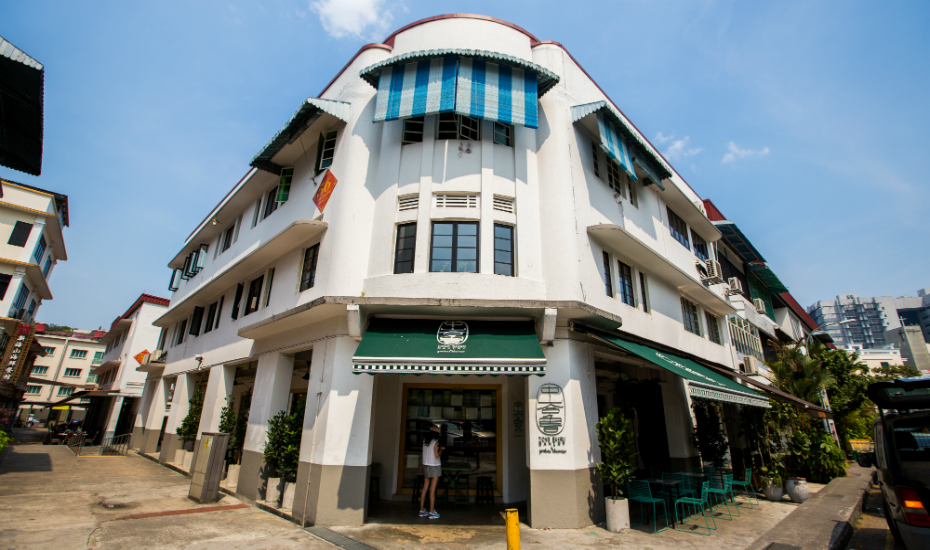
Allowing short-term rental in a controlled manner will afford Singaporeans three other benefits: offer them an avenue for entrepreneurship (although nothing particularly creative about it), help certain landlords cushion the loss of rental income from the pandemic, and let individual Singaporeans reap some of the benefits of the post-Covid tourism recovery.
Firstly, the URA can launch a permit system, much like the Certificate of Entitement (COE) for cars, to control the number of properties that can be used for short-term rental. Only Singaporeans will be allowed to apply, and each Singaporean may have only one property used for short-term rental. Each permit for short-term rental can last for 3 years and can be renewed towards the end of the permit if more the permit holder can prove that units are occupied at least 70% of the time (to prevent hoarding of permits).
Here’s where the permit would differ from a COE, instead of a bidding system, a flat fee can be charged, which would differ for properties in the Core Central Region (CCR), Rest of Central Region (RCR) and the Outside Central Region (OCR).
Secondly, only properties that are more than 20 years of age and with 99 units or fewer will be eligble for the short term rental permit. A maximum of 3 units or 10% of a development, whichever is higher, can be used for short-term rental.
Thirdly, a minimum 3-night stay rule should be implemented to minimise disruption to surrounding residents, and the URA occupancy cap of maximum six persons in a unit should apply to avoid overcrowding.
We believe allowing short-term rentals under the above conditions will raise the utility of older properties and encourage their upkeep—factors that will sustain the resale value of these properties. Allowing rentals for properties with 99 units or fewer will also help stimulate the demand and usage of these properties, which tend to lag behind that of larger condos.
Do you agree with our proposals for rental and private property? Share your thoughts in the comments below!
If you liked this article, 99.co recommends The 99.co Housing Manifesto for Singapore (Part 1 – HDB flats) and 5 real estate scams that could run rampant during Covid-19
Looking for a property? Find your dream home on Singapore’s most intelligent property portal 99.co!
About Kyle Leung

Content Marketing Manager @ 99.co

Looking to sell your property?
Whether your HDB apartment is reaching the end of its Minimum Occupation Period (MOP) or your condo has crossed its Seller Stamp Duty (SSD) window, it is always good to know how much you can potentially gain if you were to list and sell your property. Not only that, you’ll also need to know whether your gains would allow you to right-size to the dream home in the neighbourhood you and your family have been eyeing.
One easy way is to send us a request for a credible and trusted property consultant to reach out to you.
Alternatively, you can jump onto 99.co’s Property Value Tool to get an estimate for free.
If you’re looking for your dream home, be it as a first-time or seasoned homebuyer or seller – say, to upgrade or right-size – you will find it on Singapore’s fastest-growing property portal 99.co.
Meanwhile, if you have an interesting property-related story to share with us, drop us a message here — and we’ll review it and get back to you.
Join our social media communities!
Facebook | Instagram | TikTok | Telegram | YouTube | Twitter




We disagree on all your proposals. Its our PRIVATE property, we rent it to whomever at whatever terms we like. Take it or leave it. Also, you obviously haven’t had shit tenants before. We actually want to keep a higher deposit to protect our property from damage. Finally, we don’t want short term stayers in our condos, it’s condo, NOT MOTEL. (And especially when there is a raging pandemic going around, haven’t you heard??) You obviously are not, or have not been, a landlord for long.