Every day, 99.co picks a piece of property jargon to explain it. Today we look at the Qualifying Certificate (QC), and how it affects both developers and you:
What’s a Qualifying Certificate (QC)?
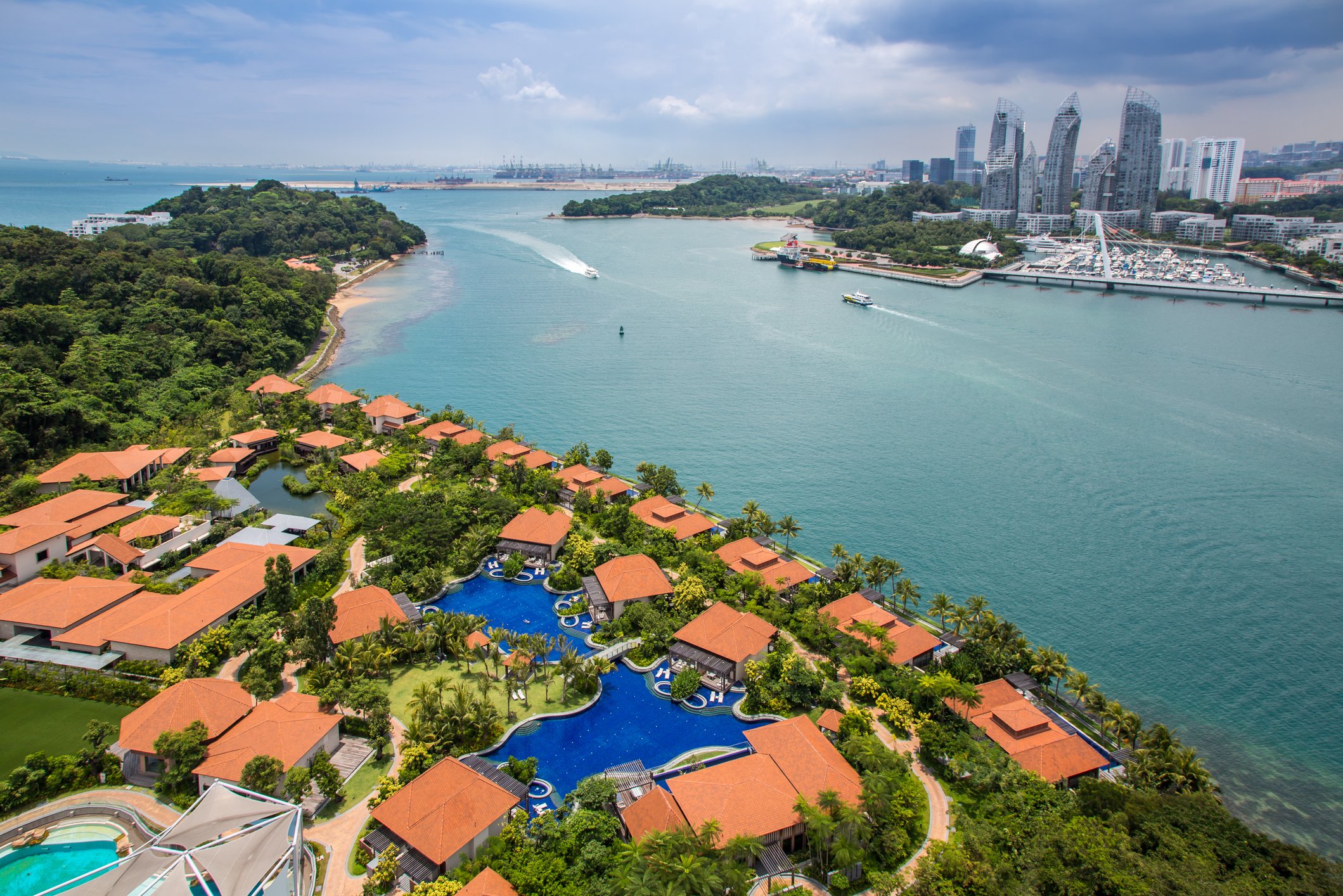
The QC is a scheme imposed on foreign property developers (this includes listed developers by default, as foreigners can own shares in such companies). It applies in all parts of Singapore except Sentosa Cove.
Under the QC, foreign developers need to meet two requirements:
- Any property development must be completed within five years of the land being bought (this means the property must obtain its Temporary Occupancy Permit (TOP), within five years)
- The developer must sell all the units in its project, within two years of receiving the TOP
At the time they purchase the land, a developer has to give the Singapore government a banker’s guarantee, of 10% of the land price. If they fail to meet the conditions above, this amount is forfeited.
If the developer cannot meet the deadline, they can seek an extension of up to three years. However, this incurs extension charges, which are pro-rated based on according to the number of unsold units. Extension charges are 8% of the land purchase price for the first year, 16% for the second year, and 24% for the third year.
Note that the developer is not allowed to rent out the unsold properties to offset the costs.
However, some developers are bypassing the QC regulations with this loophole.
Why is there a QC?
The government imposed QC to prevent land-hoarding. This is when developers buy up land, but don’t develop them, or do so very slowly. This would reduce the supply of available housing, thus driving up demand and prices.

QC also has an indirect effect on keeping home prices down. When developers must sell within a tight time frame, they are less able to inflate prices; they may also be inclined to discount unsold units to meet QC requirements. Which leads us to the next point:
How QC can be a benefit to Singaporean home buyers
Imagine a scenario in which a developer has sold 300 condo units, of its 305 unit development. The price of the land to build this condo was S$220 million. The value of the five condo units are S$1.6 million each.
If the developer fails to sell these 10 condos, they will forfeit the S$22 million in their banker’s guarantee, or have to pay extension charges. Both of those options are more expensive than the combined sales revenue from the five units (S$8 million).

As such, the developer is inclined to slash prices and let these units go for a discount, rather than incur the charges because of them.
QC discounts leading to as much as the ABSD
ABSD on developers is a tax on developments that cannot be completed and sold out within five years. This is 40% of the land price, of which they can get back 35% if they complete and sell everything within the stipulated time.
There has been much speculation that this could lead to steep price discounts as the five-year limit closes. However, many buyers are unaware that the QC can also drive prices down the same way.
Read this: How ABSD for developers may be worsening the supply glut
The initial response of some developers was to de-list. This removed their “foreign” status, and freed them from QC restrictions. SC Global was the first company to de-list while still having unsold luxury property units, and successfully avoided QC penalties.
For some companies however, this is not an option. These developers are often pushed toward discounts instead of paying extension charges. These often result in bulk sales, that can benefit both home buyers as well as certain companies.
Private equity funds, for example, may be interested in developers with unsold stock; it could be cheaper for developers to bulk sell to these funds at a discount, rather than pay extension charges.
As a final alternative, developers may buy the units themselves, thus incurring all the relevant stamp duties including the ABSD. This may not be a viable move for some developers, as the expense of buying the units and paying the stamp duties must not exceed the cost of extensions.
Will it benefit buyers?
Buyers in the luxury market, which is where the sting of QC is most intently felt, stand to gain the most. Land purchases run into hundreds of millions of dollars, so even a single year’s extension is a considerable sum. The Interlace at Depot Road, for example, could potentially cost CapitaLand as much as S$20 million for an extension. In most cases, it is cheaper to offer steep price discounts on units than to pay for the extension.
In 2014, the Straits Times reported that Hallmark Residences in Bukit Timah were being sold at discounts of around S$300,000. It was also reported that St. Regis at Tanglin Road was selling at 49.5% less than the original asking price, and Hilltops in Cairnhill Circle was selling at 33.2% less.
At present, many of these developments have not (yet) seen drastic declines in the asking price. A check on 99.co listings shows that prices have not moved much from the transactions recorded on URA. The Interlace, for all the worries about a S$20 million QC cost, continues to retain an asking price of around S$1,211 psf.
Nonetheless, in the waiting game between developers and buyers, we are confident that developers will flinch first. The government has actively voiced the opinion that property prices must fall further, and that there is presently no consideration of lifting cooling measures. In addition, the ABSD for developers imposes an additional time limit and cost for not quickly selling off stock.
This is all good news for buyers looking to upgrade into higher end properties, or investors who are looking for undervalued units, as developers grow more desperate to avoid sizeable QC and ABSD costs.
However, QC doesn’t always mean developers will slash prices
Developers tend to resort to discounts only when a small handful of units are left.
For example, if only 2 to 3% of units are left unsold, it’s probably worth giving discounts to offload them. But if a relatively large portion of units are unsold (e.g. 60% or more), it’s usually not worth giving a discount. Even if the developer slashes prices, it’s unlikely that they can clear such a large inventory within the time limit anyway.
(Not to mention it’s unhealthy for the developer’s bottom line, to discount so many units!)
Some developers also choose to buy over the units themselves, and sell it a later time. The developers will incur the ABSD this way. But if the property is in a desirable location and can appreciate (e.g it is located in Orchard), the developer could still recoup the costs by holding it and selling it later.
Some listed developers will simply chose to de-list themselves. Popular Holdings and Top Global both did this as a response to the QC. Assuming a developer is Singapore registered, de-listing would mean it’s no longer foreign, and hence not subject to QC.
Finally, some developers would rather bulk-sell the property, than try to slowly sell to home buyers. In 2015, for example, Heeton Holdings made an en-bloc sale of iLiv@Grange this way.
Overall however, the QC works in home buyers’ favour. At the very least, it prevents land-hoarding that could drive up prices.
But the QC isn’t as helpful to homeowners who want an en-bloc
The QC is an indirect impediment to en-bloc sales. It limits how much a developer can spend to buy over an old property, as they need to factor in the risk of not meeting the QC.

In particular, the QC can be an impediment to en-bloc sales involving larger land plots. Mega-projects (those that will have 1,000 units or more) take a longer time to build and sell, due to the sheer volume. The seven-year time limit of the QC is more than enough for most small developments, but can be a nightmare for larger ones.
As such, the imposition of QC is a negative for owners of large, older properties who are looking for an en-bloc.
What property terms do you want to know more about? Let us know in the comments section below.
About Ryan Ong


Looking to sell your property?
Whether your HDB apartment is reaching the end of its Minimum Occupation Period (MOP) or your condo has crossed its Seller Stamp Duty (SSD) window, it is always good to know how much you can potentially gain if you were to list and sell your property. Not only that, you’ll also need to know whether your gains would allow you to right-size to the dream home in the neighbourhood you and your family have been eyeing.
One easy way is to send us a request for a credible and trusted property consultant to reach out to you.
Alternatively, you can jump onto 99.co’s Property Value Tool to get an estimate for free.
If you’re looking for your dream home, be it as a first-time or seasoned homebuyer or seller – say, to upgrade or right-size – you will find it on Singapore’s fastest-growing property portal 99.co.
Meanwhile, if you have an interesting property-related story to share with us, drop us a message here — and we’ll review it and get back to you.
Join our social media communities!
Facebook | Instagram | TikTok | Telegram | YouTube | Twitter



Leave a comment