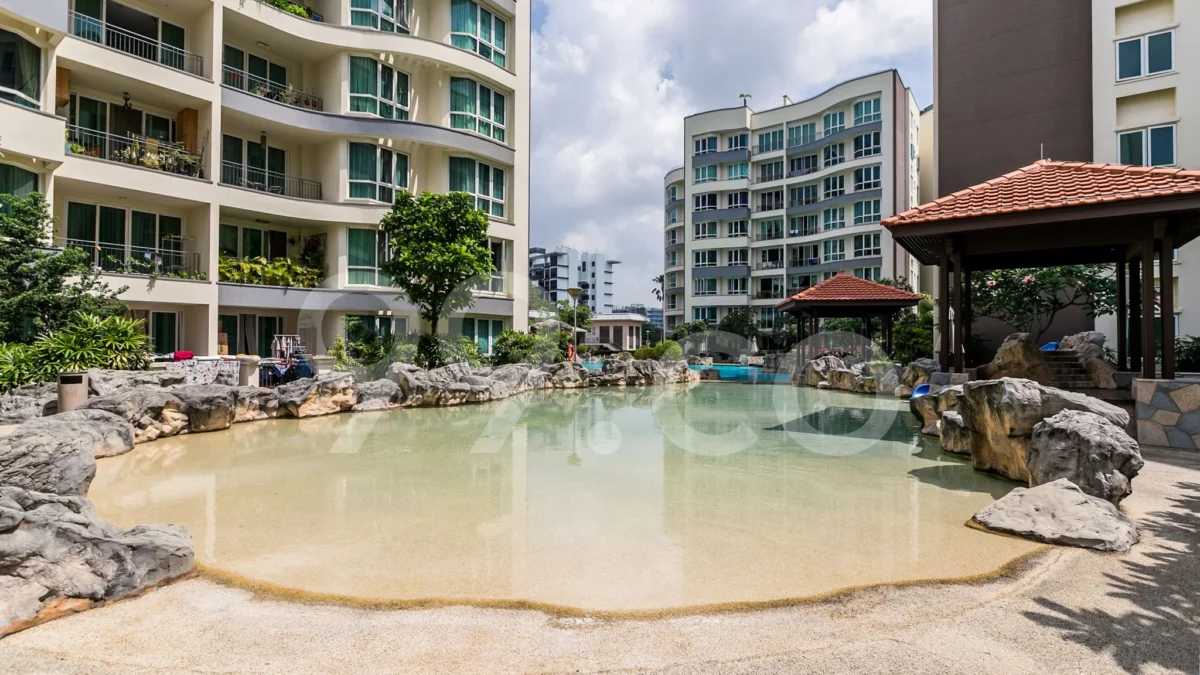
District 17 recently saw its highest capital gain ever recorded with the sale of a 4-bedroom unit in Pasir Ris for S$2.65M (S$829 psf). The former owner got a capital gain of S$1.61M from this transaction after holding the property, Edelweiss Park Condominium, for almost 19 years. While some have considered it an “ulu” condo due to its location, this recent record-breaking sale has proven a shifting trend. More people are interested in the Outside Central Region (OCR) property market now.
This leads us to the question: Is private property in the less central areas like District 17 a cash opportunity or a crash risk?
Table of contents
What do you get for a S$2.650M condo in Pasir Ris?
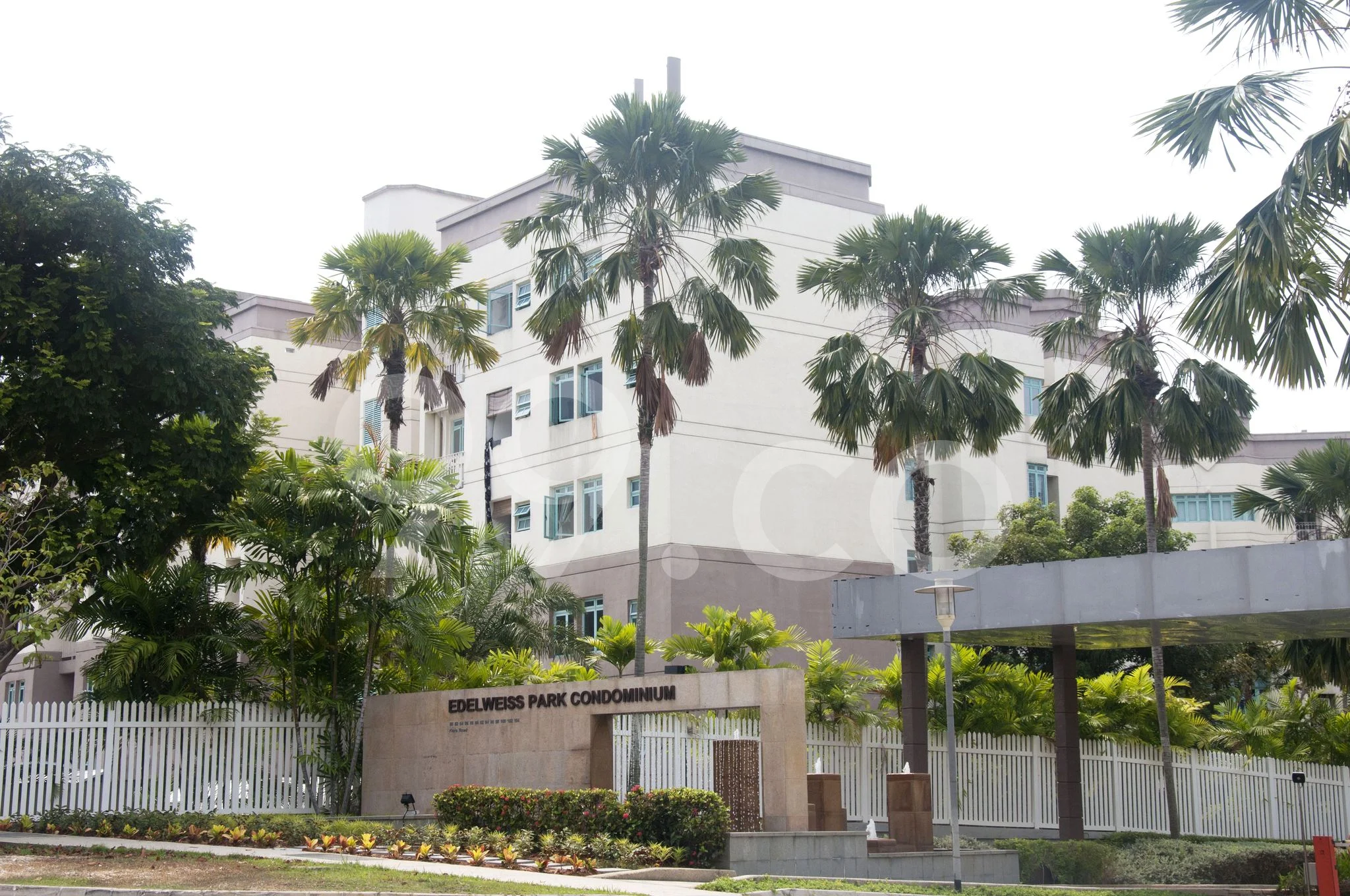
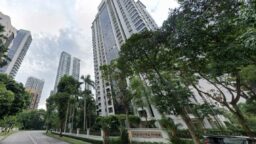
Before dissecting this record-breaking condo sale further, you might want to know what S$2.65M get you in the Pasir Ris neighbourhood. Edelweiss Park Condominium, located near Upper Changi Road, is one of the few freehold residential projects in the area.
The development obtained its Temporary Occupation Permit (TOP) in 2006, making it nearly 19 years old today. Developed by Tripartite Developers Pte Ltd, this 8-storey, 517-unit condo is well-known to be among the older developments that offer spacious units in tranquil environments.
This particular sale that fetched the S$1.61M profit involved a 3,197-sqft, 4-bedroom penthouse, situated on 98 Flora Road. While we don’t have the actual picture of the unit, the floor plan below can help you visualise how spacious the penthouse is.
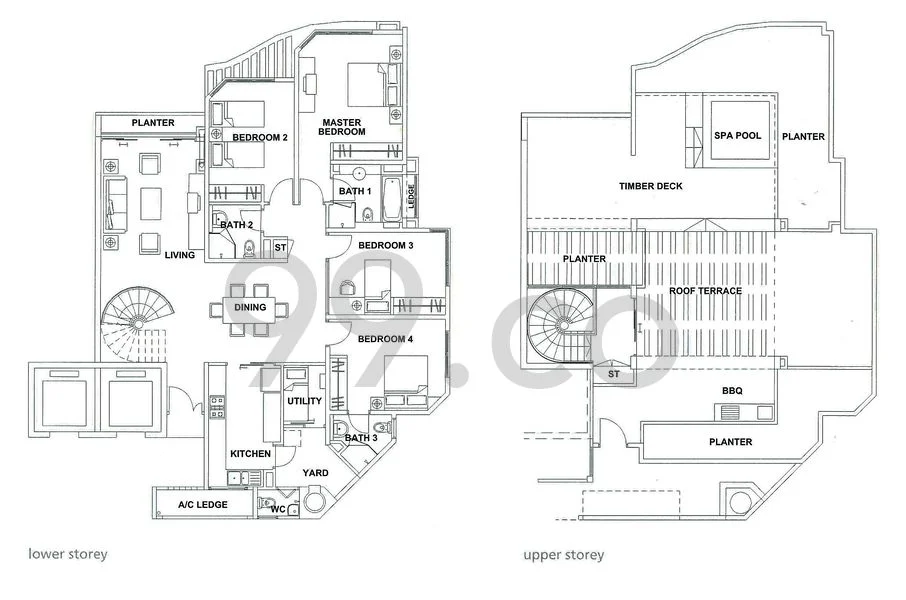
The unit has a sheltered area on the upper floor, which comes in handy for people who would love to enjoy the outdoors without actually being exposed to the sun or rain. The ample space also provides you with the opportunity to do some fancy gardening, in case you want to create your own personal rooftop garden.
Amenities and accessibility
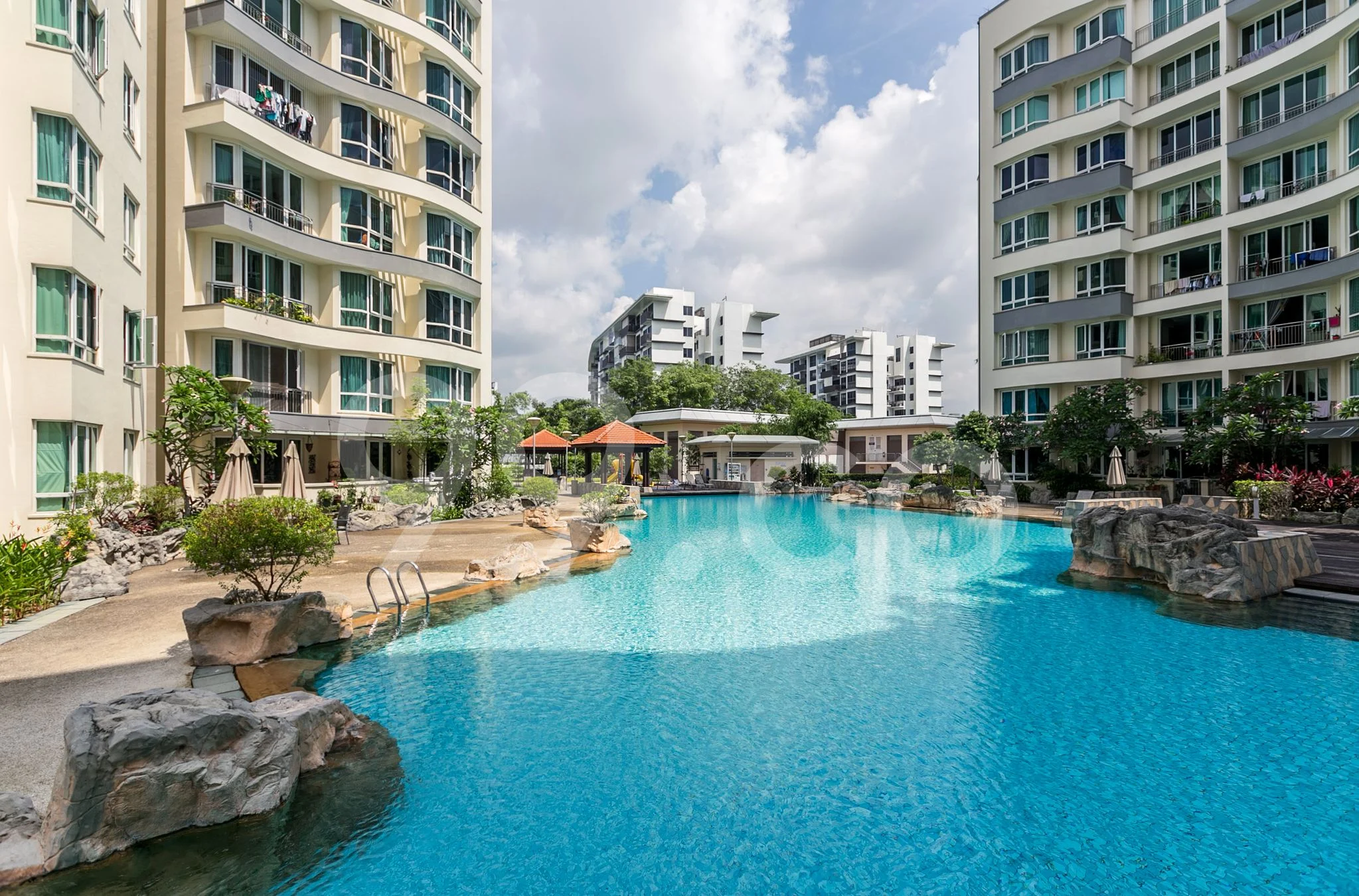
An extensive array of facilities is available within the precinct, including various pools, a children’s playground, a clubhouse, a gymnasium, tennis courts, and a BBQ pit. Liv Changi is also a short walk away from Edelweiss Park and offers a supermarket along with several eateries.
The nearest MRT station, Tampines East (DT33), is approximately 2 kilometres away, but many bus services are available for those who use public transport. Major expressways such as the Pan Island Expressway (PIE) and the Tampines Expressway (TPE), on the other hand, ensure seamless travel for drivers.
Record-breaking capital gain in District 17
The former owner of the 3,197 sqft penthouse originally purchased it directly from the developer for S$1.04M in 2006. After holding onto it for almost 19 years, they sold it in January 2025, securing the highest recorded capital gain in the district.
| Date | Price (S$) | PSF (S$) | |
| New Sale | 5 December 2006 | 1,040,000 | 325 |
| Resale | 31 January 2025 | 2,650,000 | 829 |
With this S$2.65M resale which translates to S$829 psf, they achieved a staggering profit of S$1.61M, reflecting a capital gain of 155%. On an annualised basis, this equates to an impressive 8.15% return per year.
Compared to the penthouse sale in Bishan (District 20) which made 75% capital gain within 5 years, this 19-year holding period seems like a very long time. Locations indeed play a significant part in capital appreciation. However, there are a lot of other factors that make this record-breaking sale noteworthy.
The previous record in District 17 was held by Ballota Park Condominium along Mariam Way, a freehold property just beside the Edelweiss Park complex. In 2014, a unit there sold for S$1.638M, earning the owner a S$700,000 profit. This translated to a 75% capital gain or an 18% annual return. Yes, the owner had only held the property for 4 years!
So, how long should you wait for your property to appreciate?
Some may believe that gaining capital appreciation in “rural” areas takes decades. But is that really the case? Past transaction data in District 17, for instance, shows that roughly half of the homeowners sell within five years, and still make a fair amount of capital gains.
| < 5 years | 47% |
| 5 – 10 years | 49% |
| 10 – 15 years | 3% |
| > 15 years | 1% |
How long you hold onto your property is just one of many factors that influence capital appreciation. Market conditions, location, tenure, etc. all play a role in determining value growth. While a longer holding period can increase the chances of appreciation, external factors often have an even greater influence on a property’s final selling price.
For example, the greatest capital loss ever recorded in District 17 involved a transaction at Palm Isles, a 99-year leasehold condo along Flora Drive. A 5-bedroom unit sold for S$2.05M (S$540 psf) in 2020, resulting in a capital loss of S$556,552 after a 9-year holding period.
Several factors could have contributed to this loss. The Palm Isles sale took place during the COVID-19 pandemic, a period of economic uncertainty that impacted the property market, especially for larger units, which tend to have a smaller buyer pool.
Moreover, leasehold properties generally face depreciation over time, and as they approach the critical 20-year mark, concerns over lease decay can affect demand.

 3
3
 3
3
 3
3
3
3
 1
1
1
1
 2
2
2
2
 5
5
5
5
 2
1
2
1
 1
1
1
1
 3
3
3
3
 3
2
3
2
 3
3
3
3
 6
7
6
7
 3
3
3
3
 5
3
5
3
 3
2
3
2
 4
3
4
3
 2
2
2
2
 3
2
3
2
 1
1
1
1
 4
5
4
5
 1
1
1
1
 4
4
4
4
 3
2
3
2
 5
3
5
3
 3
3
3
3
 4
3
4
3
 4
3
4
3
 3
2
3
2
 1
1
1
1
 3
3
3
3
 2
2
2
2
 5
3
5
3
 3
2
3
2
 3
2
3
2
 4
4
4
4
 4
4
4
4
 3
2
3
2
Are condos in less central locations more profitable?
Location-wise, Edelweiss Park Condominium sits in one of Singapore’s most far-flung districts. However, the recent sale further spotlight the increasing interest in this type of property. “Ulu” condos tend to be priced lower to begin with, so they have more room for gains when market conditions improve.
On the other hand, private condos in central locations have been showing weaker capital gains in recent years. District 1 (Boat Quay / Raffles Place / Marina), for instance, consistently recorded the lowest median capital gain over the past three months (November 2024 – January 2025).
Median capital gain/loss by district in January 2025
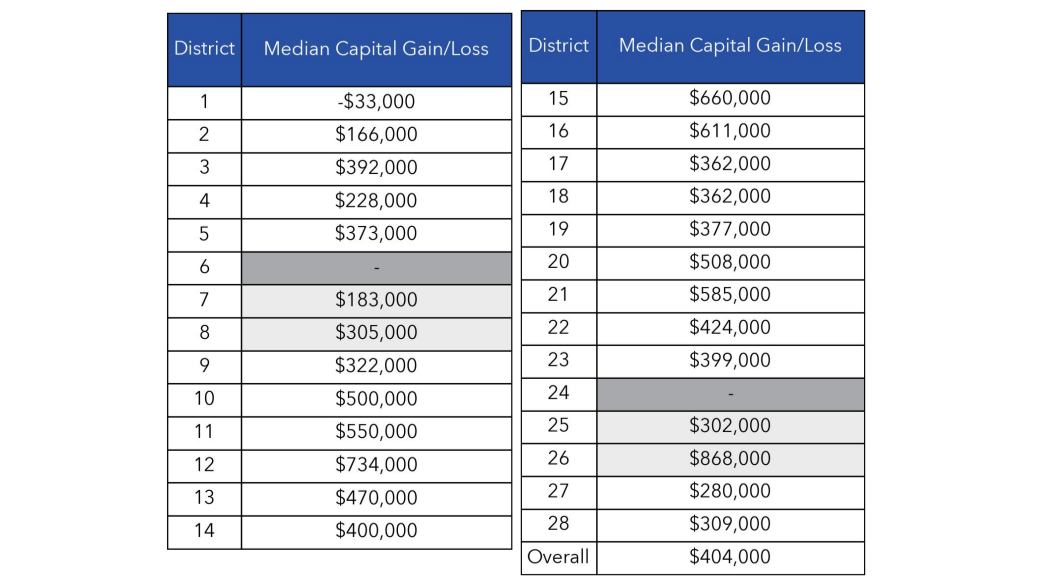
In January alone, District 1 recorded a median capital loss of S$33,000, while the overall market recorded a median capital gain of S$404,000. In the same month, Edelweiss Park in District 17 made a S$1.04M profit, far above the median. That being said, while location is important, accessibility challenges do not necessarily translate to weaker capital gains.
Just like Edelweiss Park buyers, most condo buyers might not care as much about MRT stations because they don’t rely entirely on public transport. Moreover, even the most “rural” condos in Singapore are usually no more than an hour from the nearest mall or entertainment hub, so the value remains attractive.
Sale transaction trend in the past 10 years
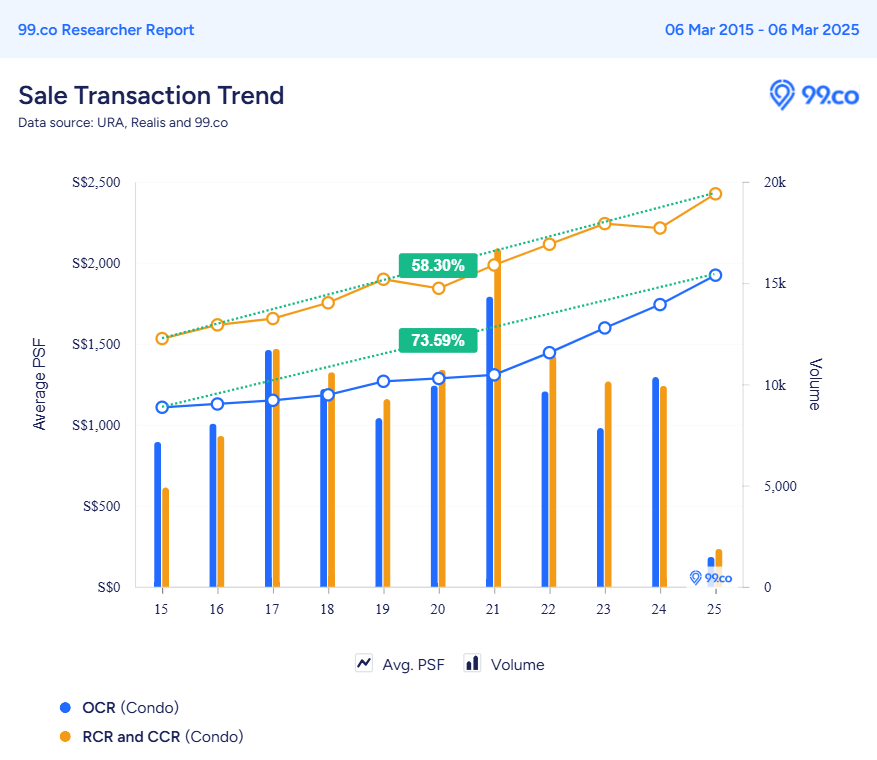
Using 99.co Researcher, we analyse condominium sale trends in Singapore over the past 10 years. In terms of overall price growth, properties in the OCR have outperformed those in the Core Central Region (CCR) and Rest of Central Region (RCR).
Since 2015, OCR prices have risen by 73.59%, with the average price psf now at S$1,924, compared to S$1,108 a decade ago. This trend highlights the strong capital appreciation potential of properties in less central locations.
Thanks to rapid urban development, more malls, MRT stations, and decentralised commercial hubs continue to emerge. This creates a strong buyer confidence that, over time, accessibility concerns tend to diminish, strengthening the investment appeal of properties in these areas.
If you’re going for rentability, it’s a different story
For landlords, location is a bigger concern. An inaccessible area can make it harder to attract tenants, who are unlikely to wait years for new amenities. Additionally, not all foreign workers have the means for private transport, further limiting the tenant pool.
Going for this type of property might not be ideal for landlords. Owner-investors or owner-occupiers focusing on resale gains, however, may still benefit by holding onto the property long enough.
Wrapping up
The recent record-breaking sale in District 17 highlights the evolving dynamics of Singapore’s property market. While location remains a key factor, other elements like tenure, future developments, market timing, and buyer demand play crucial roles in determining profitability.
Properties in less central areas may require a longer holding period to appreciate significantly, but they also tend to offer more room for capital growth. On the flip side, leasehold properties and larger units may face higher risks, especially during uncertain economic conditions.
Ultimately, whether a condo is a cash opportunity or a crash risk depends on multiple factors, and buyers should consider their long-term investment strategy before making a decision.
Enjoying this in-depth analysis? 99.co Condo Cash or Crash covers monthly notable transactions in Singapore’s private property market.

About Ananda Bayu

Ananda has been wrangling Singapore's complex real estate trends into readable bites since 2020. She writes like she's explaining it to a friend over kopi — because who has time for jargon? When off the clock, she’s probably doom-scrolling through cat memes on X, convincing herself it's the highest tier of "creative inspiration".

Looking to sell your property?
Whether your HDB apartment is reaching the end of its Minimum Occupation Period (MOP) or your condo has crossed its Seller Stamp Duty (SSD) window, it is always good to know how much you can potentially gain if you were to list and sell your property. Not only that, you’ll also need to know whether your gains would allow you to right-size to the dream home in the neighbourhood you and your family have been eyeing.
One easy way is to send us a request for a credible and trusted property consultant to reach out to you.
Alternatively, you can jump onto 99.co’s Property Value Tool to get an estimate for free.
If you’re looking for your dream home, be it as a first-time or seasoned homebuyer or seller – say, to upgrade or right-size – you will find it on Singapore’s fastest-growing property portal 99.co.
Meanwhile, if you have an interesting property-related story to share with us, drop us a message here — and we’ll review it and get back to you.
Join our social media communities!
Facebook | Instagram | TikTok | Telegram | YouTube | Twitter


Leave a comment