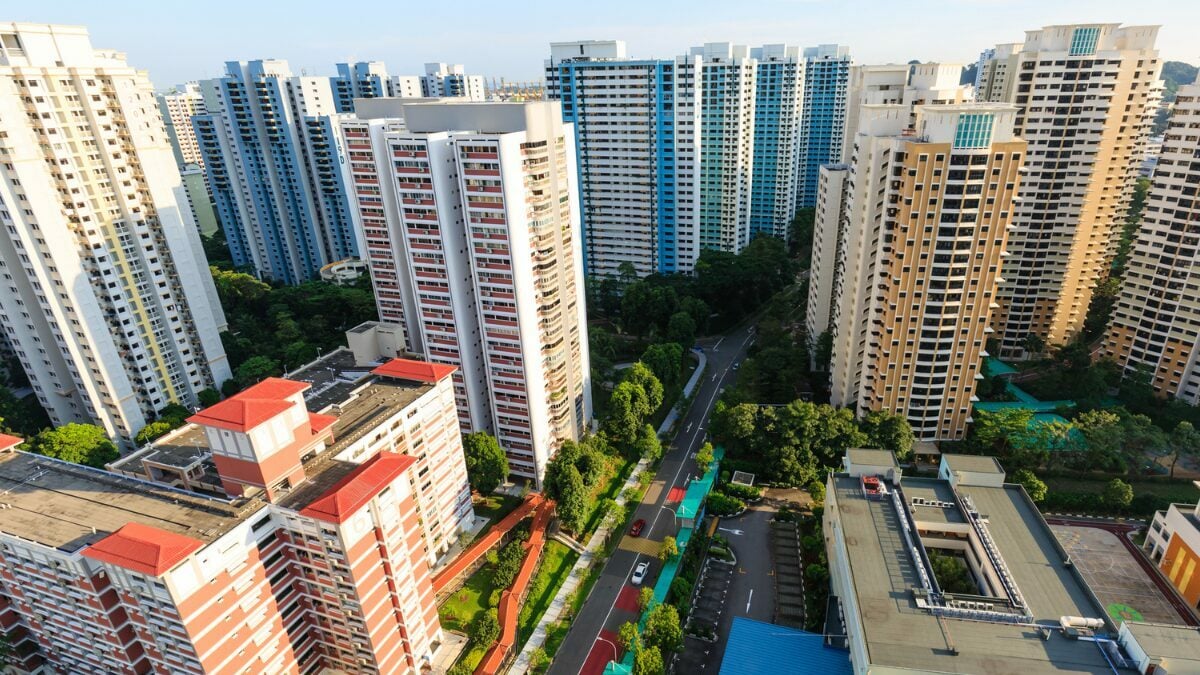
If you’ve been shopping for a new home in Singapore, you’ve likely heard about how much smaller flats and condos have become. But how much smaller are these homes now – and more importantly, what choices are truly available for homebuyers like you?
Let’s walk through what’s driving this shift, how it affects your options, and what you can do to find a home that still fits your needs and lifestyle.
Table of contents
- HDB flats are shrinking – but not all in the same way
- Condos are shrinking too – and even faster
- What’s driving these smaller spaces in Condos?
- Executive Condos are holding up better
- Why exactly is this happening?
- So, what are your options?
- HDB flats still offer space and value
- BTOs and Sale of Balance Flats (SBFs) are still reliable choices
- Look for private property choices beyond the basics
HDB flats are shrinking – but not all in the same way
You’ve probably heard that older HDB flats tend to be more spacious. While this is true, there’s more to this picture. Here’s how HDB flat sizes have changed over time (in square metres):
| Year | 3-room (SQM) | 4-room (SQM) | 5-room (SQM) | Executive (SQM) |
| 1989 | 67.85 | 96.00 | 124.12 | 149.48 |
| 1990 | 68.12 | 94.45 | 123.93 | 149.53 |
| 1991 | 68.15 | 93.69 | 123.80 | 148.84 |
| 1992 | 68.41 | 94.39 | 123.88 | 148.33 |
| 1993 | 68.14 | 94.82 | 123.72 | 147.64 |
| 1994 | 68.51 | 95.89 | 123.56 | 147.84 |
| 1995 | 68.61 | 96.18 | 123.59 | 148.66 |
| 1996 | 68.68 | 96.76 | 123.78 | 148.59 |
| 1997 | 69.19 | 96.88 | 124.15 | 147.78 |
| 1998 | 68.85 | 97.12 | 124.83 | 148.77 |
| 1999 | 68.32 | 98.33 | 125.35 | 150.60 |
| 2000 | 68.54 | 98.35 | 124.75 | 149.62 |
| 2001 | 68.42 | 98.57 | 123.39 | 147.98 |
| 2002 | 67.72 | 98.19 | 123.18 | 147.64 |
| 2003 | 67.85 | 97.95 | 122.98 | 147.81 |
| 2004 | 67.84 | 97.29 | 122.02 | 147.42 |
| 2005 | 67.75 | 96.86 | 121.02 | – |
| 2006 | 67.76 | 96.37 | 120.10 | – |
| 2007 | 67.79 | 96.13 | 119.02 | – |
| 2008 | 67.83 | 96.31 | 118.20 | – |
| 2009 | 67.85 | 96.34 | 118.13 | – |
| 2010 | 67.91 | 96.42 | 118.85 | – |
| 2011 | 67.86 | 96.25 | 118.34 | – |
| 2012 | 67.92 | 96.26 | 118.68 | – |
| 2013 | 67.84 | 96.01 | 118.95 | – |
| 2014 | 68.30 | 95.93 | 118.63 | – |
| 2015 | 68.26 | 96.09 | 118.53 | – |
| 2016 | 68.28 | 96.01 | 118.32 | – |
| 2017 | 68.27 | 95.72 | 118.21 | – |
| 2018 | 68.28 | 95.58 | 118.09 | – |
| 2019 | 68.00 | 95.31 | 118.24 | – |
| 2020 | 67.91 | 94.81 | 117.51 | – |
| 2021 | 67.91 | 94.59 | 117.29 | – |
| 2022 | 67.95 | 94.77 | 117.53 | – |
| 2023 | 68.08 | 94.98 | 117.67 | – |
| 2024 | 67.98 | 94.83 | 117.53 | – |
| 2025 | 68.11 | 94.95 | 117.63 | – |
Table 1: Average HDB flat sizes (SQM) by flat type (1989-2025). Note that sizing estimates for Executive flats after 2004 are not included as no new units have been built since then.
5-room flats: Noticeable size drop since 1999
These larger flats used to be much roomier. Back in 1999, the average size peaked at about 125.35 sqm. By 2008, that had fallen to around 118.20 sqm, and projections suggest it will settle at 117.63 sqm by 2025. So you’re looking at a size loss of about 7 to 8 sqm over time.
3-room flats: Staying consistent
If you’re considering a 3-room flat, you’ll find that the size hasn’t changed much. Since 1989, these flats have consistently stayed within the 67–68 sqm range. This suggests a minimum size is being maintained to support a basic level of comfort.
4-room flats: Small but steady dip
For 4-room flats, a slight reduction is noticeable. In 2008, the average was about 96.31 sqm, while the projected size for 2025 is around 94.95 sqm. While this drop isn’t dramatic, it’s still something to keep in mind as you compare older and newer units.
Executive flats: No longer built, but still in demand
Executive flats were the largest HDB option for years. Back in 1989, the average size was around 149.48 sqm, and by 2004 – when the last of these units were built – it had only slightly decreased to about 147.42 sqm. Since then, no new Executive flats have been produced, so what’s available today can only be found on the resale market. Despite the slight reduction over the years, these flats still offer significantly more space than other HDB types.
So why did HDBs get smaller?
The big picture points to a planned shift. After 2010, HDB introduced more 2-room flats and allowed singles to apply, which increased demand for smaller units. At the same time, the supply of Executive and 5-room flats was reduced.
This was likely a strategic decision. Instead of building many large homes, the goal was to offer a wider range of smaller flats to meet the changing needs of households – especially as more people live in smaller families or on their own.
It’s also worth noting that during the 1997 Asian Financial Crisis, HDB had trouble selling large flats. This may have pushed the agency to be more cautious later on, reducing the supply of bigger units in the 2000s. That move continues to shape flat sizes today.
Condos are shrinking too – and even faster
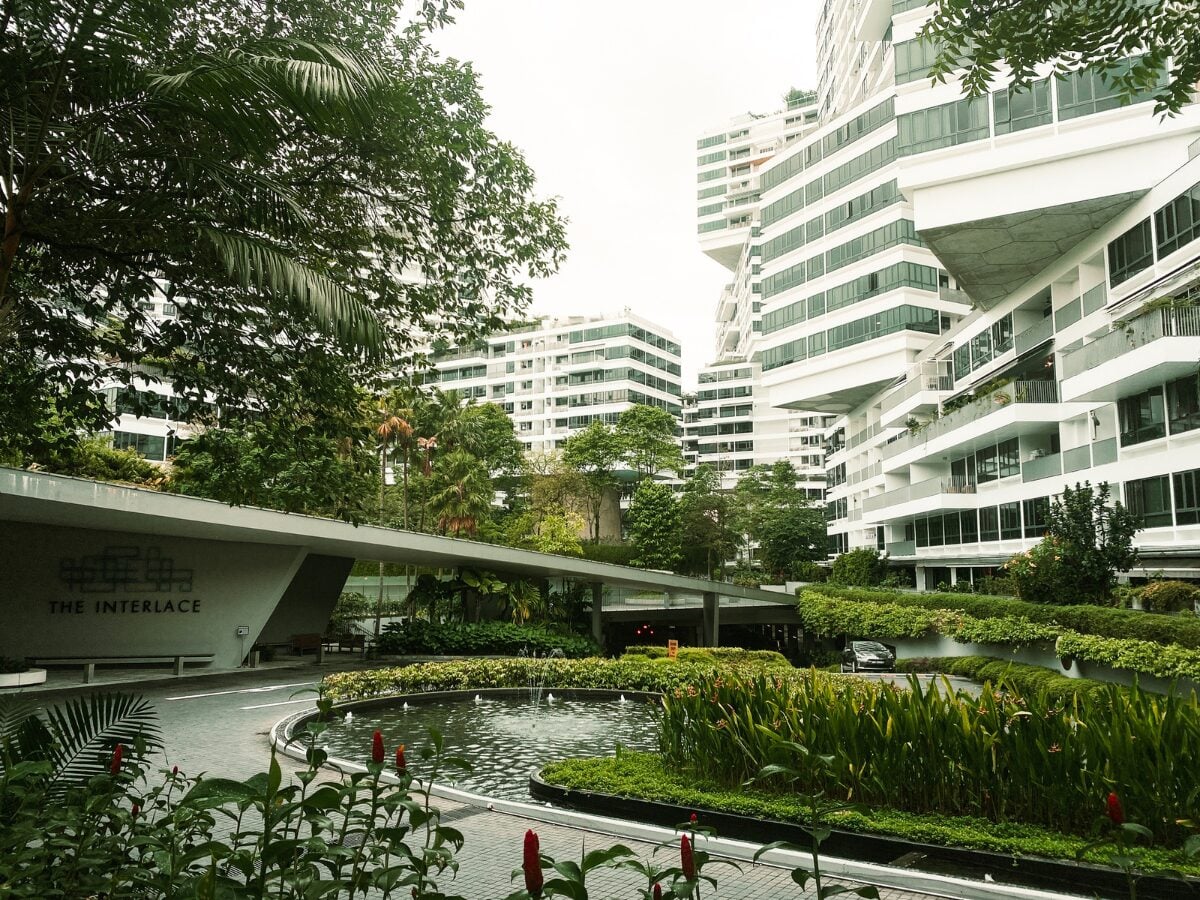
Now let’s turn to private condos. If you’re considering buying one, you should be aware that unit sizes have also been trending down – quite a bit, in fact.
Islandwide drop in median size
| Year | Median size (sqft) | Median size (SQM) | Prime district median size (sqft) | Prime district median size (SQM) |
| 2010 | 1,012 | 94.02 | 1,044 | 96.99 |
| 2024 | 904 | 84.00 | 829 | 77.02 |
| Change | -10.6% | -10.6% | -20.6% | -20.6% |
Table 2: Median new non-landed Condo sizes (SQM) (2010-2024) by Cushman & Wakefield
Between 2010 and 2024, the median size of new non-landed condos dropped from 1,012 sqft (94 sqm) to 904 sqft (84 sqm). That’s a 10.6% decrease in just over a decade. And if you’re looking in a prime district, the change is even more drastic. There, the median size went from 1,044 sqft (97 sqm) in 2010 to just 829 sqft (77 sqm) in 2024 – a 20.6% decrease.
What’s driving these smaller spaces in Condos?
The main reason behind these smaller units are rising prices. Since 2010, private home prices have jumped by 76.9%. As a result, developers want to keep the total price tag of each unit manageable – even if that means offering less space.
It comes down to this: It’s easier to sell a 900 sqft condo at S$1.5 million than a 1,500 sqft one at S$2.5 million. So while you might pay less in total, you’re actually paying more per square foot. And in the end, you’re getting less space for more money.
Executive Condos are holding up better
Interestingly, Executive Condominiums (ECs) haven’t seen the same sharp reduction in size. That’s because ECs are meant for owner-occupiers, not investors. Most buyers here are families, so developers have kept the units a bit more spacious to suit their needs.
On the other hand, private condos attract many investors, and smaller units are easier to rent out and cost less upfront. That’s why the downsizing trend has hit private condos harder than ECs.
Why exactly is this happening?
Land is limited and costs keep rising
First, it’s important to understand how land scarcity plays a big role. Singapore is a small country with many people living in it. Because of this, housing has to be packed more tightly to make room for everyone. As more people need homes, more flats and condos must be built – but there’s only so much space.
At the same time, the cost of land has gone up sharply. That’s partly because of the Government’s Land Sales (GLS) programme, which helps manage supply and demand. On top of that, building materials and labour are now more expensive. Developers also face extra costs from having to meet green building standards.
Because of these rising expenses, developers need to use land wisely. One way they do that is by building more units in a project – but that also means each unit is smaller. This allows them to keep the overall price of each home lower, which makes it more affordable for you as a buyer.
In fact, the Ministry of National Development has pointed out the need to balance flat sizes with housing supply. That’s why smaller flats are being built – to make sure more people have the chance to own a home.
Government measures and developer tactics
Next, it’s worth looking at the policies that have shaped how properties are built.
One key policy is the Additional Buyer’s Stamp Duty (ABSD). This tax was meant to stop people from buying too many properties just to sell them later for profit. Since 2021, developers have had to pay a big 35% ABSD charge, including a 5% tax upfront when they buy land for housing. Because of this, they now try to sell units quickly – and smaller homes are easier to sell fast.
You’ve also probably noticed that loan rules have gotten stricter. Because it’s harder to get big loans, many buyers are now looking for more compact homes that fit within their budget. Developers are keeping up by offering smaller units that are still functional.
To make these smaller homes more useful, developers have been rethinking how space is used. They now include “flex” rooms, which you can turn into a study, a guest room, or a kids’ playroom. They also use “dumbbell” layouts, where bedrooms are placed at opposite ends to avoid long hallways. These designs help cut down on wasted space and make your home feel larger than it actually is.
There are also rules from the Urban Redevelopment Authority (URA) that control how units are designed. In 2012 and 2019, the URA set limits on how many units can be built in each project. This helped prevent homes from getting too small. Around the same time, balcony size bonuses were reduced. Today, balconies can’t be more than 15% of the unit’s liveable area. And since mid-2023, developers must count all strata areas as part of the total floor area, including things like air-con ledges. That way, the focus stays on building more liveable and comfortable homes – not just larger ones on paper.
Lifestyle changes and what buyers want

The size of your home is also being affected by changes in the way people live.
One major reason is that households are getting smaller. More people are staying single longer or choosing to have fewer children. So instead of looking for big family homes, many buyers prefer compact units that are easier to maintain and better suited to their needs.
There’s also the matter of price. A 3-bedroom condo at S$1.5 million may be much more appealing than a larger unit costing S$2.5 million. If you’re an HDB upgrader with a budget between S$1.2 million and S$1.8 million, it’s clear why smaller units feel more within reach.
At the same time, a growing number of buyers are leaning into a simpler way of living. You might find that a smaller home helps you cut down on clutter and focus on what really matters. Plus, with access to parks, malls, and shared spaces, you may not need as much private space indoors.
Now let’s not forget investors. For them, smaller homes offer a lower entry price and are often easier to rent out. That’s why developers have built so many compact units over the years.
However, in more recent years, things have shifted again. After several rounds of ABSD hikes since 2018, fewer investors are buying. As a result, more people who actually plan to live in their homes are entering the market. And many of them are now looking for bigger units once more, especially if they’re planning to start a family.
So, what are your options?
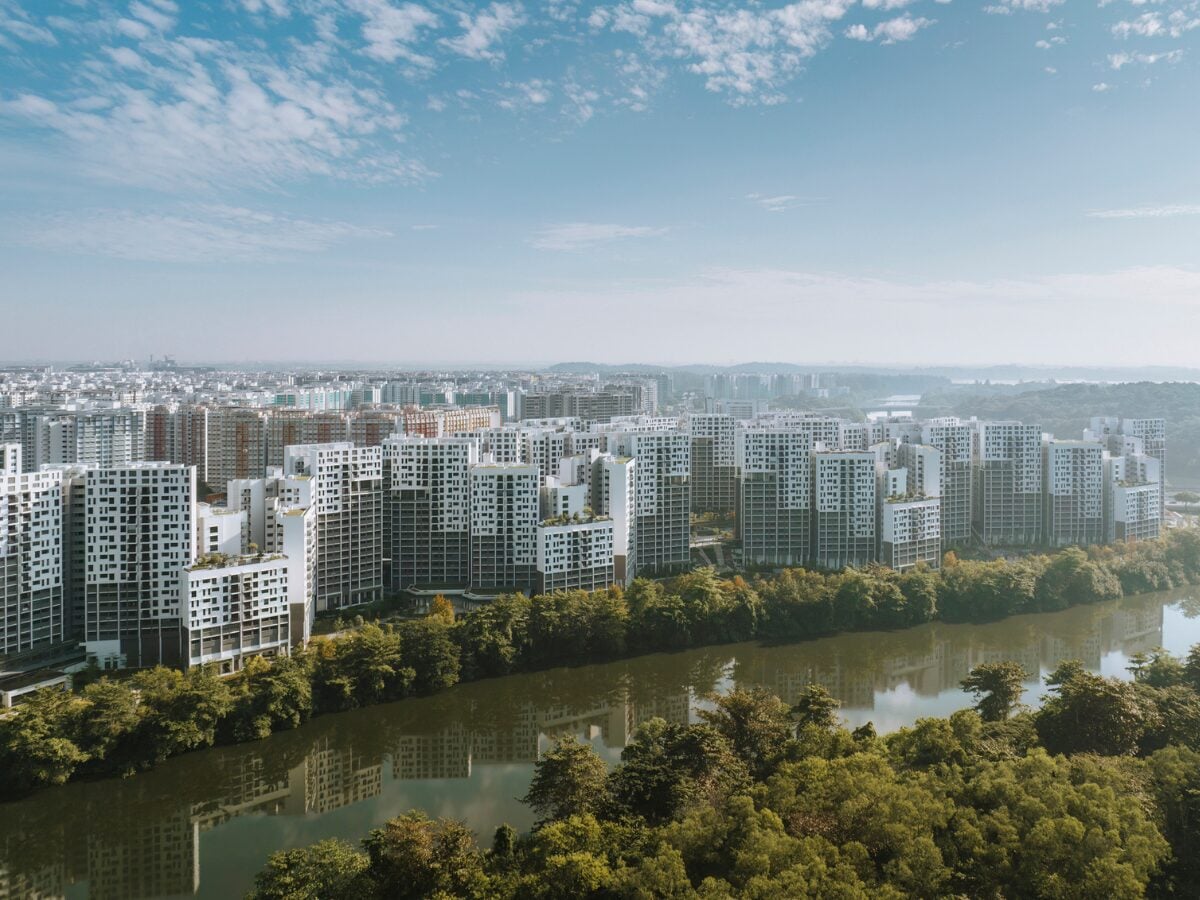
Now that you know what’s going on, it’s time to look at your options.
HDB flats still offer space and value
Even though newer flats are more compact, HDB flats still offer good value – especially if space is one of your top priorities.
Consider older resale HDBs for more room
If you’re open to buying an older flat, you’ll likely find more space for your money. Larger resale HDBs, such as 4-room, 5-room, and Executive flats, were built with more generous layouts in past decades. These often include dedicated service yards and spacious rooms – features that are becoming rare in newer flats and private condos.
In fact, the rising number of “million-dollar” HDB transactions shows just how much people still value size and location. Many buyers are paying a premium for bigger resale flats in central areas, and this proves that large public housing is still in high demand.

 3
3
 2
2
 2
2
2
2
 2
2
2
2
 3
2
3
2
 3
2
3
2
 3
2
3
2
 3
2
3
2
 3
2
3
2
 3
2
3
2
 3
2
3
2
Executive Condominiums (ECs) for the best of both worlds
If your income is too high for a BTO flat but a private condo seems out of reach, ECs can offer a great balance. Designed for the “sandwich class,” ECs are meant for people like you who earn up to S$16,000 a month and want both space and affordability.
Here’s why ECs are worth considering:
- Lower prices: ECs are often 20% to 30% cheaper than similar private condos, even though they come with similar facilities like pools, gyms, and BBQ pits.
- Grants available: First-time buyers can receive CPF housing grants, such as the Family Grant (up to S$30,000) or the Half-Housing Grant (up to S$15,000).
- Long-term potential: After 10 years, an EC becomes fully privatised. At that point, it can be sold to foreigners, which could lead to capital gains for you since ECs are purchased at subsidised prices.
However, you’ll need to meet certain conditions. ECs come with a 5-year Minimum Occupation Period (MOP), and you’ll be subject to HDB rules for the first 10 years. Most ECs are also found in suburban areas and are only eligible for bank loans, not HDB loans.
 2
2
2
2
 3
2
3
2
 1
1
1
1
 1
1
1
1
 1
1
1
1
 1
1
1
1
 1
1
1
1
 1
1
1
1
 1
1
1
1
 1
1
1
1
BTOs and Sale of Balance Flats (SBFs) are still reliable choices
If you’re not in a rush to move, BTO flats and Sale of Balance Flats (SBFs) are great for long-term planning. HDB has committed to launching around 19,600 new flats in 2025, with a goal of offering 130,000 flats between 2021 and 2027.
SBF exercises – like the one expected to offer 8,500 units in 2025 – also provide more immediate opportunities, though demand can be high. While newer flats are smaller overall, 3-room units have stayed consistent in size, making them a solid option if you’re part of a smaller household.
Look for private property choices beyond the basics
If you’re able to stretch your budget or want specific features, there are several types of private homes you can explore.
Dual-key Condos: Two units, one title
Dual-key condos give you two separate living spaces under one unit. You’ll enter through a shared main door, but each side has its own entrance inside.
Here’s how you might benefit:
- Perfect for multi-generational families: You can live with elderly parents or grown-up children while maintaining privacy.
- Rental potential: One part can be rented out while you live in the other, helping you earn passive income without sacrificing personal space.
- No ABSD for “second” unit: Since both sections are counted as one property, you won’t need to pay Additional Buyer’s Stamp Duty for owning both.
Do keep in mind that dual-key condos often come with higher prices. You could pay S$1,800 psf or more, compared to around S$1,500 psf for standard units.
Read more: How to convert your HDB flat into a Dual-Key setup
Older resale Condos: More space, less trendy
Another option is to look at resale condos built in earlier years. These usually offer larger rooms and layouts than newer launches. Although some may need renovation, they often provide better value per square foot, especially if your main concern is usable space.

 2
2
2
2
 3
3
3
3
 1
1
1
1
 3
3
3
3
 3
2
3
2
 4
4
4
4
 1
1
1
1
 3
2
3
2
 3
3
3
3
 4
4
4
4
About Sophiyanah David

Sophi, a seasoned copywriter specialising in Singaporean real estate and property, is one of the minds behind 99.co's informative articles. Like her colleagues at 99.co, Sophi is dedicated to keeping you informed about the ever-changing world of real estate so you can find your forever home. When off the clock, you can find her giggling and kicking her feet as she reads her romance novels, watching anime - if FMBA is not your fave, she might fight you (but you'll probably win) and looking up latest skincare trends.

Looking to sell your property?
Whether your HDB apartment is reaching the end of its Minimum Occupation Period (MOP) or your condo has crossed its Seller Stamp Duty (SSD) window, it is always good to know how much you can potentially gain if you were to list and sell your property. Not only that, you’ll also need to know whether your gains would allow you to right-size to the dream home in the neighbourhood you and your family have been eyeing.
One easy way is to send us a request for a credible and trusted property consultant to reach out to you.
Alternatively, you can jump onto 99.co’s Property Value Tool to get an estimate for free.
If you’re looking for your dream home, be it as a first-time or seasoned homebuyer or seller – say, to upgrade or right-size – you will find it on Singapore’s fastest-growing property portal 99.co.
Meanwhile, if you have an interesting property-related story to share with us, drop us a message here — and we’ll review it and get back to you.
Join our social media communities!
Facebook | Instagram | TikTok | Telegram | YouTube | Twitter




Leave a comment