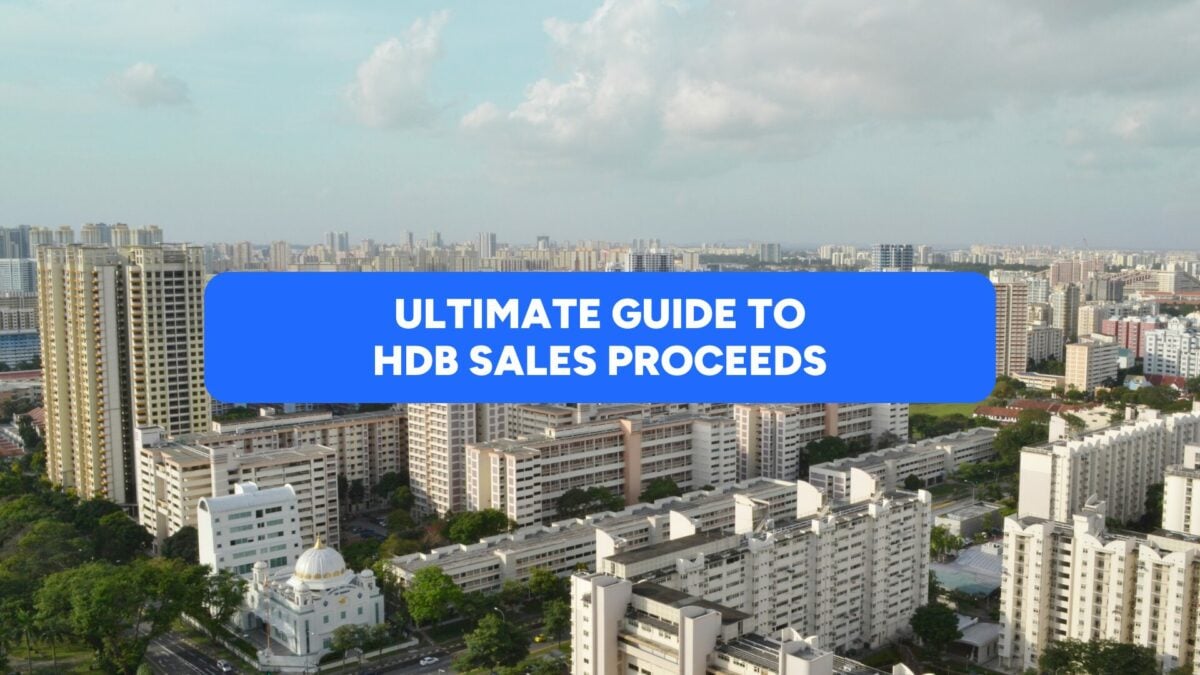
Selling your HDB flat is a significant financial step, and understanding the HDB sales proceeds is crucial. It’s not just about selling high and pocketing the difference.
Several factors influence your final sales proceeds. Selling your HDB flat is rarely as simple as listing it and waiting for the right buyer — especially those with freshly MOP-ed units looking to upgrade. But before you pop the champagne, it’s important to understand how your sales proceeds are calculated and how much you stand to earn.
This comprehensive guide will help you navigate the process, ensuring you’re fully informed before making any decisions.
Table of Contents
- What are HDB sales proceeds?
- Prerequisites before selling your HDB flat
- Breakdown of deductions
- HDB sales proceeds calculation example
- Cash Over Valuation (COV)
- Receiving your HDB sales proceeds
- Using your HDB sales proceeds for your next home
- How 99.co simplifies your HDB resale
What are HDB sales proceeds?
HDB sales proceeds refer to the net cash amount you receive after selling your flat, following the deduction of all outstanding loans, CPF refunds with accrued interest, agent commissions, legal fees, and other associated costs. The final amount varies depending on your financial obligations and housing arrangements.
Key insight: Estimating your sales proceeds accurately is crucial for financial planning. Use 99.co’s online calculator for a preliminary estimate, which will help you calculate the final value of your sales proceeds.
Prerequisites before selling your HDB flat
As with most other property-related transactions in Singapore, the first step prior to selling your flat is checking if you meet the eligibility criteria. Check the following before listing your flat for sale:
1. Minimum Occupation Period (MOP)
The Minimum Occupation Period (MOP) dictates how long you must occupy your flat before you are eligible to sell it. For most resale flats purchased from the open market, or Build-To-Order (BTO) flats bought from HDB on or after 11 May 2010, the MOP is 5 years. Always verify your specific MOP through the HDB Flat Portal. You can sell your HDB flat only when the MOP is complete.
2. Ethnic Integration Policy (EIP) and Singapore Permanent Resident (SPR) quota
The Ethnic Integration Policy (EIP) helps maintain social cohesion by setting ethnic quotas for HDB estates. The Singapore Permanent Resident (SPR) quota regulates the number of non-citizens in a neighbourhood. These policies are designed to maintain a balanced ethnic mix within HDB estates.
For sellers, this means that the pool of eligible buyers for their flat may be limited based on the existing ethnic proportions in their block and neighbourhood.
Here are several scenarios illustrating how the Ethnic Integration Policy (EIP) and Singapore Permanent Resident (SPR) quota can affect the sale of an HDB flat:
Scenario 1: No EIP or SPR restrictions
Seller: Malay
Buyer: Malay
EIP Quota: Malay quota is not full
SPR Quota: Buyer is Singapore Citizen
Outcome: Sale can proceed
Scenario 2: No sale due to EIP restrictions
Seller: Indian
Buyer: Indian
EIP Quota: Indian quota is full
SPR Quota: Not applicable
Outcome: Sale cannot proceed. Seller must find a buyer from a different ethnic group with available quota. So, if the Chinese quota has available slots, then the seller must find a buyer within the Chinese community
Scenario 3: No sale due to SPR quota restrictions
Seller: Chinese
Buyer: PR Couple (both buyers are PRs)
EIP Quota: Chinese quota is not full
SPR Quota: SPR quota is full
Outcome: Sale cannot proceed. Only households with at least one Singapore Citizen can purchase the flat
Scenario 4: When both EIP and SPR quotas are both full
Seller: Malay
Buyer: PR Couple (Indian ethnicity)
EIP Quota: Indian quota is full
SPR Quota: SPR quota has available slots
Outcome: Sale cannot proceed. Buyer does not meet the EIP requirement despite meeting the SPR quota
Scenario 5: Successful sale scenario!
Seller: Indian
Buyer: Singaporean Malay
EIP Quota: Malay quota has available slots
SPR Quota: Not applicable
Outcome: Sale can proceed
Scenario 6: When EIP restrictions are applicable after monthly HDB update
Seller: Chinese
Buyer: Chinese
EIP quota (at the time of agreement): Chinese quota has available slots
EIP quota (after monthly update): Chinese quota is full
Outcome: Sale cannot proceed. EIP quotas are subject to monthly updates, which may affect transactions if the sale is not finalised before the new quota is applied
It is essential to check the current EIP and SPR quota via the HDB portal when registering your Intent to Sell (explained below). These quotas are updated regularly and must be met before proceeding with the sale.
3. Rules and regulations for special circumstances
Selling an HDB flat under special circumstances, such as divorce or bankruptcy, involves additional complexities and requires strict adherence to specific rules and regulations.
If you are undergoing a divorce, the division of matrimonial assets, including your HDB flat, must be addressed in your divorce proceedings. The court may order the sale of the flat and the division of the proceeds between the parties. You will need to provide HDB with a copy of the court order to facilitate the sale. In cases where there are children involved, the court may also stipulate specific arrangements regarding housing.
For individuals facing bankruptcy, the sale of an HDB flat is subject to the Official Assignee’s (OA) approval. The OA will assess the situation and determine if the sale is necessary to satisfy outstanding debts. If approved, the OA will oversee the sale process and distribute the proceeds according to the relevant bankruptcy laws. The OA may also impose conditions on the sale, such as requiring the flat to be sold at a market value to maximise returns for creditors.
In both divorce and bankruptcy cases, it is highly recommended to seek legal advice and consult with HDB to understand the specific requirements and ensure compliance with all applicable regulations. Failure to do so can lead to legal complications and delays in the sale process.
4. Intent to Sell and Option to Purchase (OTP)
Before selling your flat, you must register your Intent to Sell on the HDB Flat Portal. Your HDB Intent to Sell is valid for 12 months and must be valid when you are granting the Option to Purchase (OTP) to your potential buyers. After you have registered your HDB Intent to Sell, you will be able to download a copy of the OTP and view your estimated sale proceeds.

 5
5
 6
6
 3
1
3
1
 3
2
3
2
 3
2
3
2
 2
2
2
2
 3
2
3
2
 3
3
3
3
 3
2
3
2
 4
4
4
4
 3
2
3
2
Breakdown of deductions
When calculating your sales proceeds, you need to take into account any outstanding loans, mortgages, and the CPF funds. Let’s break down all of these below:
1. Outstanding home loan deduction
Any remaining balance on your home loan will be deducted from the sale price. This applies to both HDB loans and bank loans. For example, if your sale price is S$500,000 and your outstanding loan is S$150,000, your balance for further deductions will be S$350,000. If the outstanding loan exceeds the sale price, the shortfall must be paid in cash.
2. CPF refunds with accrued interest
Any CPF funds used to finance your flat must be returned to your CPF Ordinary Account (OA) — with accrued interest. This includes the down payment, monthly mortgage payments, and housing grants.
Let’s say you’ve used S$200,000 of CPF funds, and the accrued interest amounts to S$50,000. That’s S$250,000 that must be refunded to your CPF account from the sales proceeds. If the remaining proceeds aren’t enough to cover this amount, you won’t need to top up the shortfall in cash — but there’ll be fewer funds available for your next home purchase.
3. Agent fees and other deductions
At 99.co, agent commissions typically range around 2% of the sale price. Additional deductions include legal fees, property taxes, and service and conservancy charges up to the completion date.
HDB sales proceeds calculation example
Here’s how your estimated cash proceeds might look after all the deductions. Please note this is just an illustrative example:
| Description | Amount |
|---|---|
| Flat sale price (HDB Valuation) | S$500,000 |
| Outstanding home loan | -S$150,000 |
| CPF refund with accrued interest | -S$250,000 |
| Agent fees (2%) | -S$10,000 |
| Other fees | -S$5,000 |
| Estimated cash proceeds | S$40,000 |
Cash Over Valuation (COV)
Cash-Over-Valuation (COV) is the difference between the agreed-upon sale price of your HDB flat and its official HDB valuation. This amount is paid by the buyer directly to you in cash. It’s important to understand that COV is a separate component from the overall sales proceeds and directly impacts the amount of cash you receive.
Taking the example above: Let’s say you sell your flat for S$550,000, and the HDB valuation is S$500,000. The COV in this scenario is S$50,000.
This S$50,000 is paid directly to you in cash, in addition to the other sales proceeds. Therefore, the COV effectively increases the total cash you receive from the sale.
However, it’s crucial to note that the HDB valuation is only revealed after the buyer exercises the Option to Purchase (OTP). This means you cannot accurately predict the COV amount until this stage.
💡Important note:
Market conditions and the buyer’s willingness to pay above valuation play significant roles in determining the COV. In a hot market, buyers may be more willing to pay a higher COV to secure a desirable property. Conversely, in a buyer’s market, the COV may be minimal or non-existent.
So, while COV can boost your final cash proceeds, it’s not a guaranteed amount and should be considered a potential bonus rather than a fixed component of your sales proceeds.
Receiving your HDB sales proceeds
The cash portion of your sales proceeds is disbursed via cashier’s order on the completion day. CPF refunds are typically processed within two to three weeks after the sale completion.
While selling at a profit is desirable, deductions can significantly reduce your final cash proceeds. It is essential to calculate your estimated proceeds thoroughly and seek advice from experienced property agents before making a decision.
Using your HDB sales proceeds for your next home
Your sales proceeds from your HDB flat can play a significant role in financing your next HDB property purchase. These funds can be utilised for the down payment, reducing the overall loan amount required, or to cover other cash components associated with the purchase.
Let’s understand how these proceeds can be effectively channelled into your new home:
1. Enhanced Contra Facility
For those purchasing another HDB resale flat, the Enhanced Contra Facility offers a streamlined approach to financial management. This facility allows for the direct transfer of your CPF refunds and cash proceeds from the sale of your existing HDB flat to the purchase of your new resale flat.
While the Contra Facility simplifies the transfer of funds, it does not cover all expenses. Specifically, CPF funds cannot be used to pay for stamp duty or legal fees, which must be covered separately.
2. Bridging loans
In situations where your next property purchase precedes the disbursement of your sales proceeds, a bridging loan may be necessary. This type of loan provides temporary financing to cover the gap between your purchase and the receipt of your sales proceeds.
Do note that bridging loans come with interest charges, and you’ll need to factor these costs into your overall financial planning. Also, be sure to chart a clear plan for repaying the loan once your sales proceeds are received to avoid financial struggles.
How 99.co simplifies your HDB resale
Understanding your HDB sales proceeds is just the first step in a successful property transaction. To truly maximise your resale potential, you need to reach the widest possible audience of qualified buyers. This is where 99.co’s Owner Listings service becomes invaluable.
By listing your property directly on our platform, you immediately reach out to 15,000+ active real estate agents across Singapore. Each of these agents has their own network of potential buyers. This significantly increases your chances of securing a swift and profitable sale.
Notably, over 50% of enquiries on our Owner Listings come from agents with ready buyers and tenants. While you have the option to decline agent commissions during listing, remember that collaboration with these professionals often accelerates the sales process and helps you achieve the best possible price.
At 99.co, we provide you with the tools and exposure necessary to navigate the HDB resale market with confidence; without the risks associated with unverified platforms. List your HDB property on 99.co today and experience a smoother, more efficient path to a successful sale.
About 99.co

We are a property search engine with the overarching goal of building a more transparent and efficient property market. We are working towards that future by empowering people with the tools and information needed to find a place to live in the best way possible.

Looking to sell your property?
Whether your HDB apartment is reaching the end of its Minimum Occupation Period (MOP) or your condo has crossed its Seller Stamp Duty (SSD) window, it is always good to know how much you can potentially gain if you were to list and sell your property. Not only that, you’ll also need to know whether your gains would allow you to right-size to the dream home in the neighbourhood you and your family have been eyeing.
One easy way is to send us a request for a credible and trusted property consultant to reach out to you.
Alternatively, you can jump onto 99.co’s Property Value Tool to get an estimate for free.
If you’re looking for your dream home, be it as a first-time or seasoned homebuyer or seller – say, to upgrade or right-size – you will find it on Singapore’s fastest-growing property portal 99.co.
Meanwhile, if you have an interesting property-related story to share with us, drop us a message here — and we’ll review it and get back to you.
Join our social media communities!
Facebook | Instagram | TikTok | Telegram | YouTube | Twitter

Leave a comment