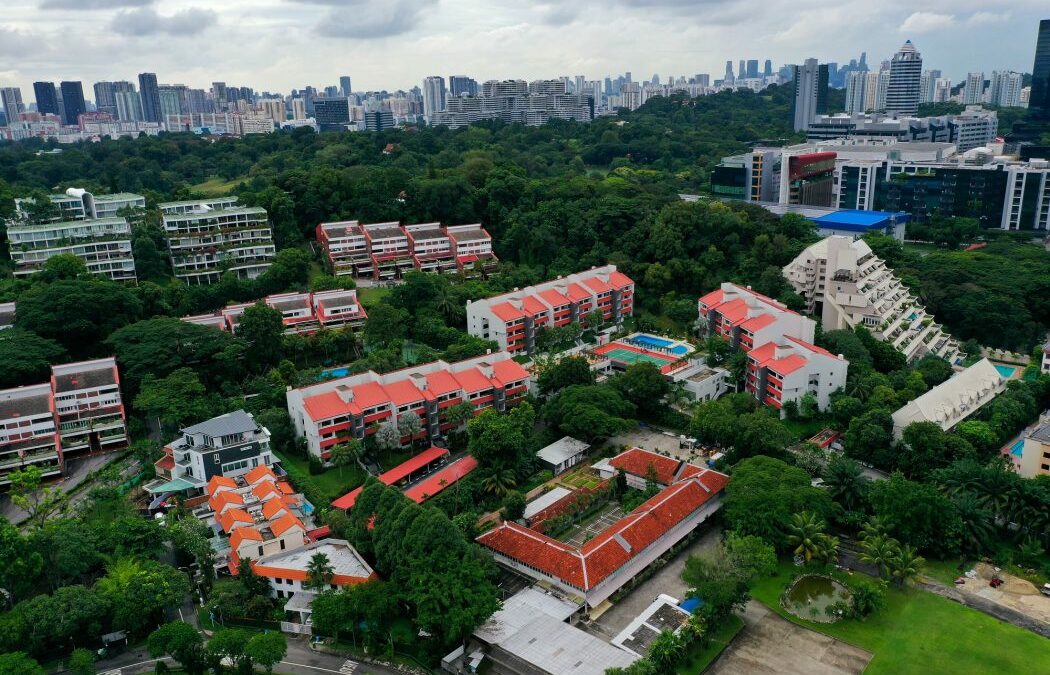
Earlier in September 2021, Flynn Park at 18-22 Yew Siang Road went en bloc at S$371 million, making it the largest collective sale of the year.
Brokered by Savills Singapore, the buyer (a joint venture between Hoi Hup Realty Private Limited and Sunway Developments Pte. Ltd.) bought all 72 apartments at S$1,355 psf per plot ratio (or S$1,318 psf ppr when including the 7% bonus gross floor area from balconies).
Several other ageing properties have been put for collective sale, or at least, seen its majority owners’ doing so. One of them is the 50-storey International Plaza, the commercial-and-residential building in Tanjong Pagar, which has a record reserve price of S$2.7b – marking it as Singapore’s largest en-bloc deal in its number of units and value once a buyer is found.
Indeed, Singapore’s lucrative en bloc sales have often made overnight millionaires out of property owners, making them highly prized real estate options. 99.co looks at what factors contribute to a successful en bloc sale.
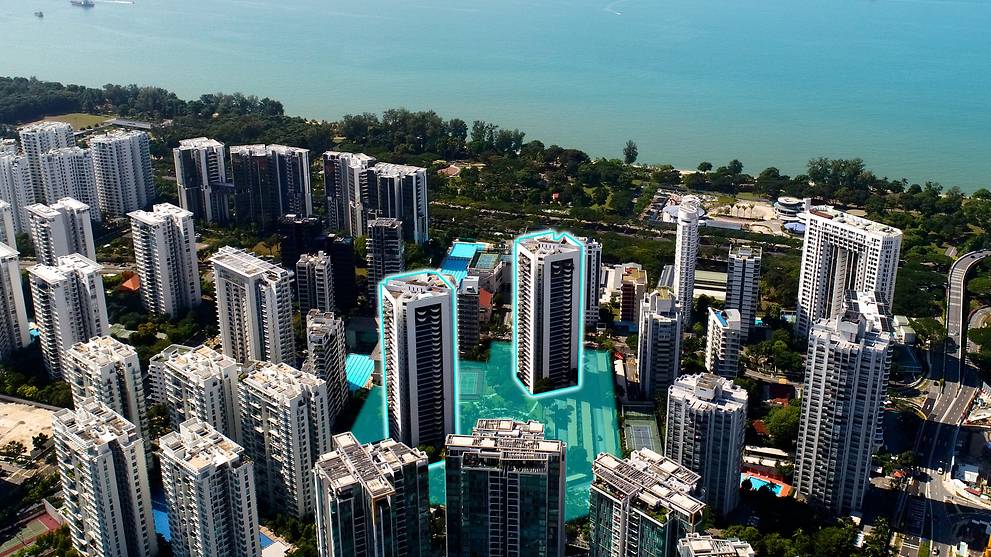
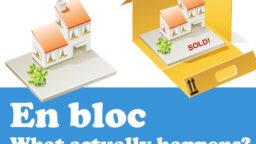
In land-scarce Singapore, old buildings have traditionally been torn down to accommodate newer, swankier developments. En bloc stems from French for ‘all together’ or ‘as one block’. It translates to a sizeable collective sale of a condominium development by one purchaser (usually the government or a property developer) to be redeveloped and priced into a new project.
For condos less than ten years old since TOP, at least 90% of all owners must sell, while condos older than ten years need at least 80% of all owners to do the same.
Such collective sales translate into a mini golden handshake for each landlord, as the reserve price is set at a premium that is usually higher than the current resale market value.
It’s a lucrative win-win situation for both parties with en blocs, as the buyer will also eventually recoup his cost and make a healthy profit with the new planned development.
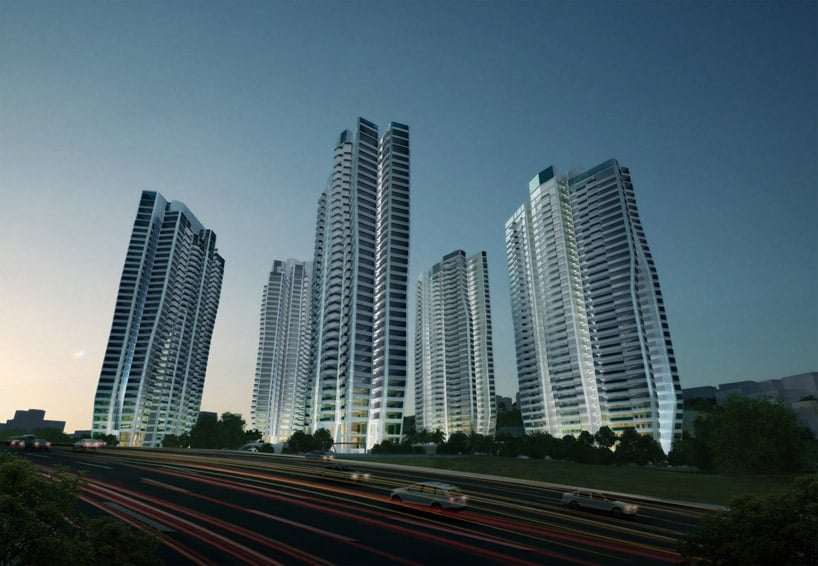
The largest en bloc sale happened in 2007, where all 618 apartments of Farrer Court were collectively bought for S$1.339 billion, working out to a payout of approximately S$2.122 to S$2.238 million per apartment.
Not bad at all when you consider the market price for the same units was only about S$500,000 to S$600,000 before the en bloc negotiations started. The site was subsequently redeveloped into the d’Leedon, the grand apartment complex with over 1,715 high-end luxury apartments by Farrer Road.
What factors contributed to a potential collective sale?
1. Age of the development
Older developments are decrepit, requiring expensive ongoing maintenance, so replacing the building with something new and more profitable makes financial sense. Furthermore, older developments (especially those approved before 1990) have usually not been built up to the prevailing Master Plan plot ratio, so it will undoubtedly yield a much higher return for a redevelopment today, given its land value.
2. Location
Has the area been earmarked for redevelopment by the government? It’s no secret that if the condominium development is in prime Districts (9, 10, 11 or 15), an en bloc sale is relatively high compared to the rest of the island, as there are fewer chances of government land sites being released in these areas.
Likewise, is there a new MRT or other exciting developments coming up in the area? Such developments usually manifest as a hike in the area’s land and property prices.
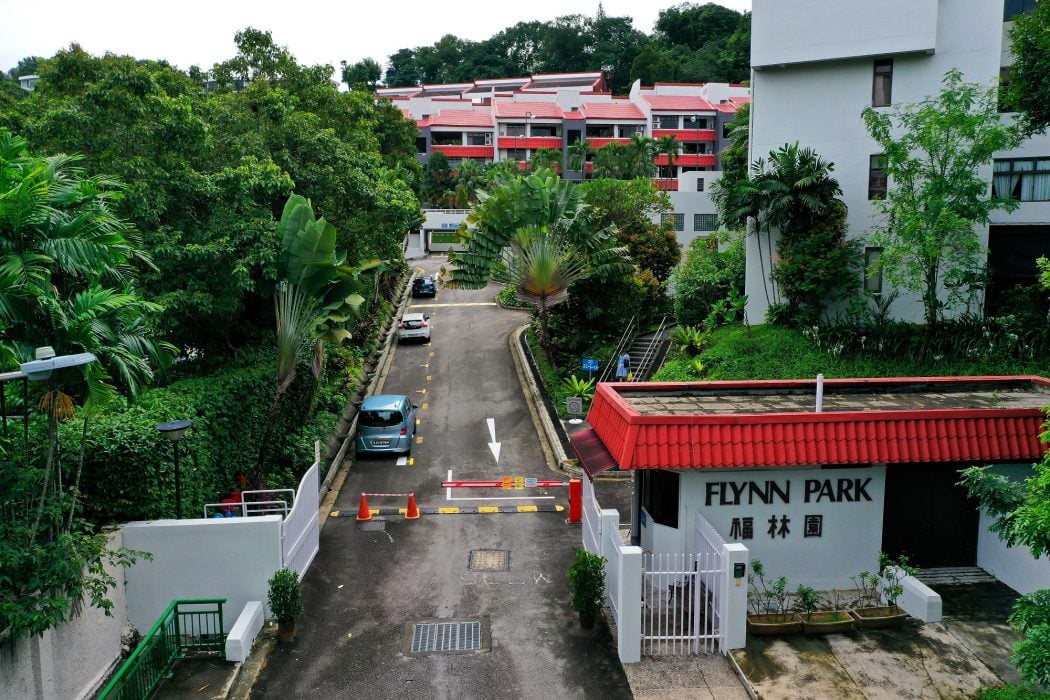
For instance, the redevelopment plans for the Greater Southern Waterfront have certainly played a role in the recent lucrative collective sale of Flynn Park. Said Wong Swee Chun, Chairman, and MD, Hoi Hup Realty Private Limited (purchase of the en bloc), “We are very pleased to secure the tender of Flynn Park. It is a rare hillside plot that offers panoramic views to the South.
“It is tranquil, lush and green, yet enjoys proximity to the MRT network and is minutes to the city. It will also benefit significantly from its adjacency to the new Southern Waterfront development. We look forward to developing a premium product on this unique site.”
3. Plot ratio
Condos with a lower plot ratio means fewer units are sitting on the plot of land. The land can be used more intensively by putting up more units for future developments. The profits will also increase by putting up a new, more densely packed development, so these plots of land are potential cash cows for en bloc sales where a larger plot ratio is allowed.
4. En bloc fatigue
When an en bloc sale isn’t successful the first time, owners might feel discouraged from going through the whole process again and may opt to not go for en bloc again.
5. Size of the apartment and alternative options
The older the condo, the more spacious the units. While some owners might be keen to sell their units for money, others might reject the offer because of having to settle for small units elsewhere.
6. Residential makeup of the development
An old development is to have a larger, more ageing population living in it, with most residents also being the owners of their units. In such cases, it is usually easier to convince the older folk to take the golden handshake and to move to a smaller, newer unit somewhere else where they will be more comfortable in their remaining years.
7. Size of the development
The chances of a collective sale are higher in smaller developments, as there is a higher probability of getting most owners to agree to sell their units collectively.
On the flip side, having a smaller pool of people to contend with can also mean that sale efforts can be thwarted more easily if even a small percentage of the owners don’t want to go ahead with en bloc, making it difficult to achieve the required 80% consent level.
–
Is your development currently undergoing or planning for en bloc or collective sale? Let us know in the comments section below or on our Facebook post.
If you found this article helpful, 99.co recommends En Bloc Sales – how does it work? and Property Jargon of the Day: En-Bloc Sale.
Looking for a property? Find the home of your dreams today in Singapore’s fastest-growing property portal 99.co! If you would like to estimate the potential value of your property, check out 99.co’s Property Value Tool for free. Meanwhile, if you have an interesting property-related story to share with us, drop us a message here — and we’ll review it and get back to you.
–
[sc_fs_multi_faq headline-0=”h3″ question-0=”What is an en bloc or collective property sale?” answer-0=”In land-scarce Singapore, old buildings have traditionally been torn down to accommodate newer, swankier developments. En bloc stems from French for ‘all together’ or ‘as one block’. It translates to a sizeable collective sale of a condominium development by one purchaser (usually the government or a property developer) to be redeveloped and priced into a new project.” image-0=”” headline-1=”h3″ question-1=”Why is an en bloc sale lucrative to homeowners?” answer-1=”Essentially, such collective sales translate into a mini golden handshake for each landlord, as the reserve price is set at a premium that is usually higher than the current resale market value. It’s a lucrative win-win situation for both parties with en blocs, as the buyer will also eventually recoup his cost and make a healthy profit with the new planned development.” image-1=”” headline-2=”h3″ question-2=”What is required for an en bloc sale to go through?” answer-2=”For condos less than ten years old since TOP, at least 90% of all owners must agree to sell, while condos older than ten years need at least 80% of all owners to do the same.” image-2=”” count=”3″ html=”true” css_class=””]

About Priyanka Elhence


Looking to sell your property?
Whether your HDB apartment is reaching the end of its Minimum Occupation Period (MOP) or your condo has crossed its Seller Stamp Duty (SSD) window, it is always good to know how much you can potentially gain if you were to list and sell your property. Not only that, you’ll also need to know whether your gains would allow you to right-size to the dream home in the neighbourhood you and your family have been eyeing.
One easy way is to send us a request for a credible and trusted property consultant to reach out to you.
Alternatively, you can jump onto 99.co’s Property Value Tool to get an estimate for free.
If you’re looking for your dream home, be it as a first-time or seasoned homebuyer or seller – say, to upgrade or right-size – you will find it on Singapore’s fastest-growing property portal 99.co.
Meanwhile, if you have an interesting property-related story to share with us, drop us a message here — and we’ll review it and get back to you.
Join our social media communities!
Facebook | Instagram | TikTok | Telegram | YouTube | Twitter


Can I ask if our land parcel is not big enough, can we combine with the apartment next door to do a joint enbloc?
Hi Andy, a joint en bloc is unheard of (at least to me) and comes with potential hurdles/restrictions:
1. For a collective sale to even begin, there needs to be an initiation for EOGM (say, within each development) to form a collective sale committee (CSC) with the intention to conduct a joint en bloc.
For each development, a minimum consent of 20% of share value or 25% of the total number of subsidiary proprietors’ votes must be in favour. If this is a 2nd attempt (after say, the 2-year restriction period), then a 50% share value and 50% strata size approval is required.
2. Assuming both developments successfully formed their respective CSCs, a constitution needs to be formed by the 2nd EOGM. Subsequently, lawyers and property consultants need to be appointed, and the collective sale agreement (CSA) for each development drafted. Based on the advice from both lawyers and consultants, both committees need to decide the terms for the joint en bloc exercise and ensure they’re clearly stipulated in both agreements.
3. Then comes the hurdle of getting 80% (90% if property is <10 years) in each development in favour AND jointly agreeing to a combined exercise (as per the agreements).
As the two developments are most likely not the same in terms of number of units, land parcel, built-up area, tenure, redevelopment costs, etc., the potential psf ppr will differ and this process will be long and subject to much scrutiny and debate. It may get ugly.
4. If by some miracle, both developments succeed in obtaining 80% owners' consent to a joint en bloc exercise, then it's time to find buyers through a marketing campaign and tender exercise. Buyers should be willing to buy two separate en bloc developments (depending on the terms in the agreement).
5. Then comes the application to the Strata Titles Board/High Court/Court of Appeal - where the developer/buyer will need to get approval if it intends to redevelop both land parcels as one new development - especially if the two developments have different GFA ratios.
A typical en bloc exercise can take between 18-24 months if you're fortunate and there's no objection/hurdles, much longer (3-4 years) if there's objection.
Based on your query, there will be many hurdles to cross, both from consent, bid demand and legal perspectives. The probability of failure is also higher, which may set both developments back by 2 years, before the next try.
Hope this is helpful. The alternative is to write in to SLA and see if they can share past en bloc exercises involving adjacent developments which were conducted jointly before. Good luck!
Thanks Terence for the information. Before we form CSC, should we not get some sensing if any marketing agents are keen to take up the project, get some estimations? Else when we go into EOGM, there will be alot of questions from residents on feasibility, estimated value? Without some basic homework done, how would we know if the plot of land would potentially be of interest to developers?
Hi Andy, you can definitely try.
While some may advise you follow the traditional EOGM steps, I’m sure there will be several who can offer you some advice based on prior experiences in handling en bloc sales. Better yet, if they’ve done joint en bloc sales before, they’ll be better equipped to advise on the probabilities of success and the pitfalls to avoid.
Hope this helps.