Congratulations! If you are reading this article, you are probably moving up and out from your starter home and upgrading to a condo, or thinking about doing so.
Table of contents
Financial planning and budgeting for the upgrade
Before making the leap from an HDB flat to a condo, it’s crucial to have a solid financial plan in place. This includes assessing your current financial health, understanding the full cost of purchasing a condo (including hidden costs like maintenance fees, renovation expenses, and property taxes), and planning for ongoing mortgage payments. It is also important to consider how this upgrade aligns with your long-term financial goals, such as retirement planning or education funds for children.
A comprehensive budget plan will help ensure that your dream condo is a wise financial decision, not just an emotional one. Consulting with a financial advisor or using online financial planning tools can provide valuable guidance in this process.
Reasons for upgrading to a condo
Better location. Upgrading might move you or your spouse closer to your workplaces, reducing the travelling distance and time.
Primary school. Suppose you are eyeing a specific primary school. Moving lets you choose properties within a 1km radius of your choice school for your child.
Free from HDB’s rules. Some set HDB rules include having to wait out your Minimum Occupation Period (MOP). You are also free to keep as many pets as you want, unlike HDB’s ‘one-approved-dog’ per household rule.
Also, the Ethnic Integration Policy (EIP) isn’t imposed on private properties. Should you choose to sell your condo in the future, your pool of buyers will not be limited to buyers of a specific race.
Condo amenities. You are a gym buff who enjoys swimming laps or hitting the weights multiple times a day. With both the pool and the gym just a stone’s throw from your doorstep, you can do just that.
Condos are stepping up their amenity game, with some featuring swanky facilities such as karaoke rooms, a bowling alley and even an ice therapy room.
Asset progression. If you are upgrading to an executive condo (EC) with a freshly completed MOP of five years, you can find yourself in an immediately helpful position.
This is because the EC is already halfway to privatisation. In another five years, you will be able to sell it to foreigners or companies. Being able to do so opens up a whole pool of prospective buyers, and with condo demand and prices rising over the years, you are almost always guaranteed a profit.
If you are looking to move to a condo soon, here are some new launch condos with approaching ABSD deadlines to consider:
New launch condos TOP-ing in 2025 and 2026

 1
1
 1
1
 1
1
1
1
 1
1
1
1
 1
1
1
1
 1
1
1
1
 1
1
1
1
 1
1
1
1
 1
1
1
1
 1
1
1
1
 1
1
1
1
 1
1
1
1
 1
1
1
1
 1
1
1
1
 1
1
1
1
 1
1
1
1
 1
1
1
1
 1
1
1
1
 1
1
1
1
 1
1
1
1
 1
1
1
1
 1
1
1
1
 1
1
1
1
 1
1
1
1
 1
1
1
1
 1
1
1
1
 1
1
1
1
 1
1
1
1
 1
1
1
1
 1
1
1
1
 1
1
1
1
 1
1
1
1
 1
1
1
1
 1
1
1
1
 1
1
1
1
 1
1
1
1
 2
2
2
2
 2
2
2
2
 2
1
2
1
 2
2
2
2
 2
2
2
2
 2
2
2
2
 2
2
2
2
 2
1
2
1
 2
2
2
2
 2
2
2
2
 2
1
2
1
 2
1
2
1
 2
2
2
2
 2
1
2
1
 2
1
2
1
 2
2
2
2
 2
1
2
1
 2
1
2
1
 2
1
2
1
 2
1
2
1
 2
2
2
2
 2
2
2
2
 2
1
2
1
 2
1
2
1
 2
1
2
1
 2
2
2
2
 2
2
2
2
 2
2
2
2
 2
1
2
1
 2
2
2
2
 2
2
2
2
 2
1
2
1
 2
1
2
1
 2
2
2
2
 2
1
2
1
 3
2
3
2
 3
2
3
2
 3
2
3
2
 3
2
3
2
 3
2
3
2
 3
2
3
2
 3
2
3
2
 3
2
3
2
 3
2
3
2
 3
2
3
2
 3
2
3
2
 3
2
3
2
 3
2
3
2
 3
3
3
3
 3
2
3
2
 3
2
3
2
 3
2
3
2
 3
2
3
2
 3
2
3
2
 3
2
3
2
 3
2
3
2
 3
2
3
2
 3
2
3
2
 3
2
3
2
 3
3
3
3
 3
2
3
2
 3
2
3
2
 3
3
3
3
 3
3
3
3
 3
2
3
2
 3
2
3
2
 3
2
3
2
 3
2
3
2
 3
3
3
3
 3
2
3
2
 4
5
4
5
 4
3
4
3
 4
3
4
3
 4
3
4
3
 4
4
4
4
 4
3
4
3
 4
5
4
5
 4
4
4
4
 4
4
4
4
 4
4
4
4
 4
4
4
4
 4
4
4
4
 4
4
4
4
 4
4
4
4
 4
3
4
3
 4
3
4
3
 4
4
4
4
 4
4
4
4
 4
4
4
4
 4
3
4
3
 4
4
4
4
 4
3
4
3
 4
2
4
2
 4
3
4
3
 4
3
4
3
 4
4
4
4
 4
3
4
3
 4
3
4
3
 4
4
4
4
 4
3
4
3
 4
4
4
4
 4
4
4
4
 4
5
4
5
 4
3
4
3
 4
3
4
3
 5
4
5
4
 5
5
5
5
 5
5
5
5
 5
4
5
4
 5
6
5
6
 5
5
5
5
 5
5
5
5
 5
5
5
5
 5
4
5
4
 5
7
5
7
 5
5
5
5
 5
4
5
4
 5
5
5
5
 5
5
5
5
 5
5
5
5
 5
4
5
4
 5
4
5
4
 5
5
5
5
 5
6
5
6
 5
5
5
5
 5
3
5
3
 5
4
5
4
 5
4
5
4
 5
5
5
5
 5
5
5
5
 5
5
5
5
 5
5
5
5
 5
5
5
5
 5
4
5
4
 5
4
5
4
 5
6
5
6
 5
4
5
4
 5
4
5
4
 5
4
5
4
 5
6
5
6
But if you are in no rush to upgrade, consider these new launches. Some of these projects that might be suitable for HDB upgraders are:
- North Gaia (TOP: 2027)
- The Commodore (TOP: 2024)
- Pasir Ris 8 (TOP: 2026)
- Lentor Modern (TOP: 2026)
- Sceneca Residence (TOP: 2026)
- Sky Eden@Bedok (TOP: 2027)
- Tenet (TOP: 2026)
- The LakeGarden Residences (TOP: 2028)
- The Arden (TOP: 2025)
- Bukit Batok West Avenue 8 EC
- Bukit Batok West Avenue 5 EC
- Arina East Residences
New launch condos TOP-ing from 2025 onwards
 1
1
1
1
 1
1
1
1
 1
2
1
2
 1
1
1
1
 1
1
1
1
 1
1
1
1
 1
1
1
1
 1
1
1
1
 1
1
1
1
 1
1
1
1
 1
1
1
1
 1
1
1
1
 1
1
1
1
1
1
1
1
1
1
1
1
1
1
1
1
 1
1
1
1
1
1
1
1
 1
1
1
1
 1
1
1
1
 1
1
1
1
 1
1
1
1
 1
1
1
1
 1
1
1
1
 1
1
1
1
 1
1
1
1
 1
1
1
1
 1
1
1
1
 1
1
1
1
 1
1
1
1
 1
1
1
1
 1
1
1
1
 1
1
1
1
 1
1
1
1
 1
1
1
1
 2
2
2
2
 2
1
2
1
 2
2
2
2
 2
2
2
2
 2
2
2
2
 2
2
2
2
 2
2
2
2
 2
2
2
2
 2
2
2
2
 2
2
2
2
 2
2
2
2
 2
2
2
2
 2
2
2
2
 2
2
2
2
 2
2
2
2
 2
2
2
2
 2
2
2
2
 2
2
2
2
 2
2
2
2
 2
1
2
1
 2
2
2
2
 2
2
2
2
 2
1
2
1
 2
2
2
2
 2
2
2
2
2
2
2
2
 2
2
2
2
 2
1
2
1
 2
1
2
1
 2
2
2
2
 2
2
2
2
 2
2
2
2
 2
2
2
2
 2
2
2
2
 2
2
2
2
 3
2
3
2
 3
2
3
2
 3
2
3
2
 3
2
3
2
 3
3
3
3
 3
2
3
2
 3
2
3
2
 3
2
3
2
 3
2
3
2
 3
3
3
3
 3
2
3
2
 3
2
3
2
 3
2
3
2
 3
3
3
3
 3
3
3
3
 3
2
3
2
3
2
3
2
 3
3
3
3
 3
4
3
4
 3
3
3
3
 3
2
3
2
 3
3
3
3
 3
2
3
2
 3
2
3
2
 3
3
3
2
3
3
3
2
 3
2
3
2
 3
3
3
3
 3
2
3
2
 3
3
3
3
 3
2
3
2
 3
2
3
2
 3
3
3
3
 3
2
3
2
 3
2
4
5
3
2
4
5
 4
3
4
3
 4
3
4
3
 4
3
4
3
 4
3
4
3
 4
4
4
3
4
4
4
3
 4
3
4
3
 4
3
4
3
 4
4
4
3
4
4
4
3
 4
2
4
2
 4
5
4
5
 4
4
4
4
 4
4
4
4
 4
3
4
3
 4
4
4
3
4
4
4
3
 4
4
4
4
 4
3
4
4
4
3
4
4
 4
3
4
3
 4
3
4
3
 4
3
4
3
 4
4
4
4
 4
4
4
4
 4
4
4
4
 4
5
4
5
 4
3
4
3
 4
3
4
3
 4
4
4
4
 4
3
4
3
4
3
4
3
 4
3
4
3
 4
3
5
4
4
3
5
4
 5
3
5
3
 5
4
5
4
 5
4
5
4
 5
4
5
4
 5
4
5
4
 5
5
5
5
 5
4
5
5
5
4
5
5
 5
4
5
4
 5
4
5
4
 5
4
5
4
 5
4
5
4
 5
4
5
5
5
4
5
5
 5
4
5
4
5
6
5
5
5
4
5
4
5
6
5
5
 5
4
5
4
 5
5
5
5
 5
5
5
5
 5
5
5
5
 5
4
5
4
 5
4
5
5
5
4
5
5
 5
4
5
4
 5
4
5
4
 6
8
6
8
 5
4
5
4
 5
6
5
6
 5
6
5
6
 5
4
5
4
 5
3
5
3
 5
5
5
5
Here’s how you can upgrade from your HDB flat to a condo. But first…
You need to MOP before upgrading
The soonest you can upgrade is after completing your MOP, which is usually five years from the key collection date. But your MOP also depends on the mode of purchase.
| Mode of purchase | Minimum Occupation Period (MOP) |
|---|---|
| Bought from HDB: Standard flats | 5 years |
| Bought from HDB: Plus and Prime flats | 10 years |
| SERS (announced after 7 April 2022) | 5 years from key collection |
| Fresh Start Housing Scheme | 20 years |
During your MOP, you cannot do these four things:
• Sell your flat
• Buy another HDB flat
• Buy a private property
• Buy property abroad
To check your eligibility, you can go to My HDBPage and log in with your Singpass.
To buy or sell first?
Buy first, sell later
Pros
1. No need for temporary accommodation
Selling an HDB flat on the open market can take months and depends on a variance of factors.
• The current property market
• If your property requires renovation
• Proximity to educational institutes and amenities
• How far it is to the nearest MRT/LRT station
• If it is on a high floor or low floor
You do not need to worry about having a roof over your head if you have secured your condo prior to selling your HDB flat.
Doing so saves you thousands of dollars on potential rental costs. Plus, if you decide to renovate your condo before moving in, you can continue living in your HDB while completing your renovations.
 2. Deferred Payment Scheme (DPS)
A big concern HDB upgraders have when taking the “buy first, sell later” approach must service the mortgage of two housing loans simultaneously until the condo receives TOP status.
In reality, this is not a concern if you are buying an EC, as many EC developers offer the Deferred Payment Scheme (DPS). Under this scheme, you only pay the initial 20% down payment of the property purchase price, with 5% in cash and 15% in either cash or CPF.
The rest of the 80% is paid after two to three years. During these years, you are free from having to make loan repayments, stamp duties and all other financial obligations (relating to the property, of course).
Having a lower upfront cash outlay plus an extended deferment period will allow you to do these things:
• Have more cash flow
• Pay off remaining home loans
• Get extra time to raise cash
As for condos, only those that have received Temporary Occupation Period (TOP) status or the Certificate of Statutory Completion can be sold under DPS, so be sure to check with the developers before pulling the trigger.
However, there is a catch: the property’s price will also be higher by about 10%, which is a fair trade-off for deferring your loan repayment.
Cons
1. A lower LTV ratio
By buying a condo before selling off your HDB flat, it means you will service two home loans concurrently.
Instead of the typical 75% loan-to-value (LTV) ratio, you will be subject to an LTV ratio of 45% for your second loan. It is even lower at 25% if the loan tenure exceeds 30 years, or if it goes beyond your 65th birthday.
Let’s say you are buying a S$2 million condo before selling your HDB flat. Assuming you are taking a 30-year loan, and this is your second home loan, your LTV will be 45%. This means your loan amount will be S$900,000.
Your minimum cash down payment also jumps from 5% to 25%. This means you need to be prepared to spend a bigger cash down payment when paying for your condo.
As the term loan-to-value suggests, how much you can borrow depends on the valuation of the unit, and not the purchase price.
This means that having a higher valuation will cause you being able to borrow more for your house. It will also result in you paying higher stamp duties (since it depends on the higher amount of either the purchase price or valuation). Bear this in mind before you actively look for a higher valuation.
2. TSDR restrictions — You might not get your desired loan amount
Currently, the Total Debt Servicing Ratio (TDSR) threshold stands at 55%. It applies to loans where the Option to Purchase (OTP) of the property purchase was granted on or after 16 December 2021.
If your monthly income is S$10,000, your outstanding debt repayments cannot be more than S$5,500 per month.

TDSR considers all your monthly loan repayment and debts. These include car loans, student loans, credit card debts, etc.
This limits the total amount you can borrow, which may affect the property you can afford.
Do note, though, that you may get the monthly loan obligation for your current HDB flat excluded in the TDSR calculation if you provide the following documents to the bank:
- A copy of a signed undertaking to the HDB committing to complete the sale of your current property within the period stipulated in the undertaking
- A written declaration that you will take steps, under the signed undertaking, to sell your current property.
Use 99.co’s TDSR calculator to find out your maximum loan repayment limit!
3. Your MSR is limited (if you are buying a new EC)
You might also be limited by the Mortgage Servicing Ratio (MSR), where you may only use up to 30% of your monthly income to service your home loans.
If your monthly income is S$10,000, your maximum monthly home loan is capped at S$3,000.
As if the TDSR cap is not enough, the MSR might add another layer of difficulty when securing the loan amount required and affect your overall affordability if you are purchasing a new EC.
*MSR does not apply to privatised ECs
If you cannot meet the MSR, you have a couple of options. You can make a bigger down payment, increase the loan tenure, buy a resale EC or… simply make more money.
Use 99.co’s affordability calculator to check the maximum loan you qualify for and the maximum property price you can afford based on the current loan limits, TDSR, and MSR. And get in touch with our mortgage broker to get the best home loan rates.
4. You need to pay ABSD
If you are buying your condo before selling off your current HDB flat, you need to pay Additional Buyer’s Stamp Duty (ABSD) of 20% when you purchase your second property (if you are a Singaporean).
However, you can apply for ABSD remission and get your money back via the e-Stamping portal on IRAS’s website. The requirements are:
• You need to be a married couple, and at least one spouse has to be a Singapore Citizen (SC)
• You must have bought the property jointly as a married couple
• You must remain married at the time of application
• You must sell your first home within six months of buying your condo, or when your condo has received its TOP
• You must not have bought more properties since buying the second residential property
ABSD is determined by the purchase price or property valuation, whichever is higher. If the purchase price is S$2.3 million and the market value of the property is S$2.2 million, the ABSD will be calculated based on S$2.3 million.
Here are the current rates for ABSD:
| Types of buyers | Rates on or after 27 Apr 2023 | |
| Singapore Citizens | First residential property | 0% |
| Second residential property | 20% | |
| Third and subsequent residential property | 30% | |
| Permanent Residents | First residential property | 5% |
| Second residential property | 30% | |
| Third and subsequent residential property | 35% | |
| Foreigners | Any residential property | 60% |
Example: Buying a property priced at S$2.3 million
ABSD payable: 20% x S$2.3 million = S$460,000
ABSD must be paid within 14 days after signing the agreement (usually the Sale and Purchase Agreement), and the remission application must be made within six months after the sale of your HDB flat.
Use 99.co’s Stamp Duty Calculator to find out how much BSD and/or ABSD you have to pay.
To avoid paying the ABSD altogether, you need to be legally contracted to sell your current HDB flat before signing the Option to Purchase for your new condo.
5. Under pressure to sell quickly
To receive the ABSD remission, you need to sell your property within six months. This may throw a spanner in the works, especially if the property market is stagnant or, worse, in the downtrend.

ABSD is non-deferrable and must be paid in full and on time. Failure to do so means incurring a penalty of four times the amount of unpaid duty under the Stamp Duties Act.
6. You have CPF restrictions
Your condo is considered your second property if you purchase it before selling off your HDB flat. This puts certain restrictions on using your CPF Ordinary Account (OA) to finance your condo.
If you have used your CPF for your first home and want to use the excess of your CPF OA for your second property, you are required to set aside a Basic Retirement Sum (BRS).
Those below the age of 55 must set aside the BRS in their OA and Special Account (SA), while those above the age of 55 must set aside the BRS in their OA, SA, and Retirement Account (RA).
There are two terms to familiarise yourself with: Valuation Limit and Withdrawal Limit.
Valuation Limit (VL): The market value of your property at the point of purchase or the purchase price of the property, whichever is lower.
If the market value of the second property is S$2 million and the purchase price is S$1.8 million, the VL will be S$1.8 million. After setting aside the prevailing BRS, you can use your CPF OA savings to pay for your second home, up to the VL.
Withdrawal Limit (WL): This is the maximum amount of CPF savings that can be used for your house. It is capped at 120% of the VL for the first property, and 100% of VL for the second property.
After tapping out your CPF WL, you are no longer allowed to use your CPF to service your housing loan. The remaining loan will need to be financed with cash.
You can use CPF’s Housing Usage Calculator to determine how much OA is available for your property purchase.
Sell first, buy later
Pros
1. No ABSD
As stated above, you can avoid paying the ABSD if you sign the option to purchase of your second property after selling your HDB flat.
This means having one less process of applying for the ABSD remission in your upgrading journey.
2. No LTV cap
To prevent over-leveraging, your LTV ratio drops as you own more properties. As explained earlier, if you are already servicing one housing loan, the bank can only give you a 45% LTV ratio on your second, for loan tenures up to 30 years.
All this hassle can be avoided if you sell your HDB flat first before upgrading. So the amount of financing you can get will be up to 75% of the property value or purchase price, whichever is lower.
3. More money for your next purchase
Upgrading is a hefty financial commitment that comes with a significant down payment, especially if you are taking a bank loan. Selling your HDB flat first frees up money to fund that down payment so you can avoid tapping on your cash reserves or CPF.
Cons
1. Finding alternative accommodation
Suppose you cannot secure your desired condo after selling your HDB flat. In that case, you will find yourself caught in the headache-inducing position of having to source interim accommodation for you and your family.
You can always request an extension of up to three months from the buyers of your HDB flat. However, keep in mind that the buyers may not be agreeable to this, as it might push back their moving or renovation plans.
A generous friend or relative might offer their place for you to put up at while you search for your second home, but this means you will need to incur storage charges for your belongings and furniture.

Think about it. You may need to pay moving costs of your possessions to either your rental or storage unit, after which you need to pay to move it again to your condo. There is always the risk of things getting damaged in the process of moving, not to mention the costs will stack up.
Properties for rent
 3
2
3
2
 3
2
3
2
 2
3
2
3
 3
2
3
2
 2
2
2
2
 2
2
2
2
 2
2
2
2
 2
1
2
1
 3
2
3
2
 3
2
3
2
 3
2
3
2
 3
2
3
2
 3
2
3
2
 2
2
2
2
 3
2
3
2
 2
1
2
1
 3
2
3
2
 3
2
3
2
 2
1
2
1
 3
2
3
2
 2
1
2
1
 2
2
2
2
 3
1
3
1
 3
2
3
2
 2
1
2
1
 1
1
1
1
 3
2
3
2
 3
2
3
2
 3
1
3
1
 3
2
3
2
 3
2
3
2
 3
2
3
2
 1
0
1
0
 2
2
2
2
 3
2
3
2
 4
4
4
4
 1
1
1
1
 3
3
3
3
 2
1
2
1
 2
2
2
2
 1
1
1
1
 3
2
3
2
 1
1
1
1
 1
1
1
1
 2
1
2
1
 3
2
3
2
 1
1
1
1
 3
2
3
2
 4
4
4
4
 3
3
3
3
 2
2
2
2
 4
5
4
5
 3
2
3
2
 2
1
2
1
 2
2
2
2
 3
2
3
2
 2
1
2
1
 2
2
2
2
 3
2
3
2
 3
2
3
2
 4
3
4
3
 4
3
4
3
 1
1
1
1
 4
4
4
4
 4
5
4
5
 3
1
3
1
 2
2
2
2
 1
1
1
1
 4
3
4
3
 2
2
2
2
 4
5
4
5
 5
3
5
3
 6
4
6
4
 1
1
1
1
 6
6
6
6
 3
2
3
2
 3
5
3
5
 7
5
7
5
 8
6
8
6
 4
3
4
3
 5
2
5
2
 3
3
3
3
 5
4
5
4
 4
3
4
3
 4
6
4
6
 4
6
4
6
 4
4
4
4
 5
5
5
5
 4
3
4
3
 2
1
2
1
 5
5
5
5
 10
9
10
9
 6
6
6
6
 5
5
5
5
 7
7
7
7
 5
6
5
6
 6
5
6
5
 3
3
3
3
 6
7
6
7
 3
3
3
3
 6
6
6
6
 3
2
3
2
 4
3
4
3
 5
4
5
4
 5
5
5
5
2. Buyer’s Stamp Duty (BSD)
Regardless of which route you decide to take, you will need to pay the Buyer’s Stamp Duty (BSD) to the Inland Revenue Authority of Singapore (IRAS).
BSD is determined by your property’s purchase price or valuation, whichever is higher. If the purchase price stated in the Sale and Purchase Agreement is S$2 million and the property’s market value is S$1.8 million, the BSD will be calculated based on S$2 million.
Hare are the current BSD rates for properties bought on after 15 February 2023:
| Purchase price / Market value | Rates for residential properties |
| First S$180,000 | 1% |
| Next S$180,000 | 2% |
| Next S$640,000 | 3% |
| Next S$500,000 | 4% |
| Next S$1.5 million | 5% |
| Remaining amount | 6% |
*BSD is rounded down to the nearest dollar.
Example: Calculating BSD for a S$2m condo
| Percentage payable | Calculation | Total |
| 1% of the first S$180,000 | 1% x S$180,000 | S$1,800 |
| 2% of the next S$180,000 | 2% x S$180,000 | S$3,600 |
| 3% of the next S$640,000 | 3% x S$640,000 | S$19,200 |
| 4% of the next S$500,000 | 4% x S$500,000 | S$20,000 |
| 5% of the remaining S$500,000 | 5% x S$500,000 | S$25,000 |
| Tota BSD payable | S$(1,800 + 3,600 + 19,200 + 20,000 + 25,000) | S$69,600 |
Like the ABSD, the BSD must be paid within 14 days of signing the contract or agreement.
Use 99.co’s Stamp Duty Calculator to find out how much BSD and/or ABSD you have to pay.
EC or condo?
When it comes to choosing between upgrading to an EC versus a condo, there are many pros and cons for each of them. Ultimately, it boils down to your preferences and financial standing.
Executive condo
What are Executive Condos? ECs are a public-private housing hybrid built and sold by private developers. They come with all the bells and whistles of a private condo, but are subjected to some HDB restrictions when they are first launched for sale. They have the standard MOP period of 5 years, after which they can be sold on the resale market to Singaporeans and PRs.
This adds up to 10 years, after which they can be sold to anyone (including foreigners) on the open market.
Income ceiling. Your average gross monthly household income must not exceed S$16,000 when buying an EC. If it does, that is a good problem to have, but it also means you are priced out of new launch ECs and need to look to the EC resale market or condo market.
(Resale ECs are not subject to income ceiling.)
You may need to sell your HDB flat (if you are getting a new launch EC). Another downside of buying a new launch EC is that you cannot keep your HDB flat. As new launch ECs are subsidised housing, dispose of your previous flat within six months of getting your keys to the EC.
More affordable. ECs, especially new launch ECs, are more affordable than condos at the outset because of the subsidies, making it a more attractive option for price appreciation.

Use 99.co’s Progressive Payment calculator to check your payment breakdown.
Resale levy payable. Unless you are buying a private condo, you are subjected to a resale levy when you sell your subsidised HDB flat to buy an EC from a developer.
According to HDB, the resale levy is put in place to “reduce the subsidy that a buyer receives on their second subsidised HDB flat and ensures a fair distribution of subsidies between first-timers and second-timers.”
Here’s the resale levy amounts payable.
| First subsidised housing type | Resale levy amount | |
| Households | Singles Grant recipients | |
| 2-room/ 2-room Flexi flat | S$15,000 | S$7,500 |
| 3-room flat | S$30,000 | S$15,000 |
| 4-room flat | S$40,000 | S$20,000 |
| 5-room flat | S$45,000 | S$22,500 |
| Executive flat | S$50,000 | S$25,000 |
| Executive Condo | S$55,000 | NA |
Executive Condos for sale
3
2
 4
3
4
3
 4
3
4
3
 4
2
4
2
 3
2
3
2
 4
2
4
2
 3
2
3
2
 4
3
4
3
 3
2
3
2
 4
3
4
3
 3
2
3
2
 4
4
4
4
 5
4
5
4
 3
2
3
2
 4
3
4
3
 3
2
3
2
 3
2
3
2
 3
2
3
2
 3
2
3
2
 3
2
3
2
 3
2
3
2
 5
3
5
3
 3
3
3
3
 4
3
4
3
 3
2
3
2
 3
3
3
3
 4
3
4
3
 3
2
3
2
 3
2
3
2
 4
3
4
3
 4
3
4
3
 4
2
4
2
 3
2
3
2
 4
3
4
3
 3
3
3
3
3
2
3
3
3
3
3
2
 3
2
3
2
 4
3
4
3
 3
3
3
3
 3
3
3
3
 3
3
3
3
 3
2
3
2
 2
2
2
2
 3
3
3
3
 3
3
3
3
 3
2
3
2
 3
2
3
2
 4
3
4
3
 3
2
3
2
 3
2
3
2
 3
2
3
2
 4
3
4
3
 3
3
3
3
 4
3
4
3
 5
4
5
4
 3
3
3
3
 4
3
4
3
 3
2
3
2
 4
3
4
3
 3
3
3
3
 3
2
3
2
 3
2
3
2
 4
3
4
3
 3
2
3
2
 3
4
3
4
 3
2
3
2
 3
2
3
2
 3
2
3
2
 3
3
3
3
Condo
What are condos? Condos are built by private developers and are not subject to restrictions such as MOP and can be sold to anyone, including foreigners.
No income ceiling. Private condos have no ceiling on income, so if your monthly household income is more than S$16,000, you can buy condos with no problem.
More options. Location is important when choosing a place to live, and condos give you a wider range of projects to choose from. Of course, projects nearer to the city, such as those in the Core Central Region (CCR), will command higher prices. Here’s the average price psf over the years for condos in the Core Central Region, Rest of Central Region (RCR) and Outside of Central Region (OCR).
| Average price psf | ||||||||
| Location | 2019 | 2020 | 2021 | 2022 | 2023 | 2024 | 2025 | 2026 |
| CCR | S$2,317 | S$2,197 | S$2,326 | S$2,481 | S$2,457 | S$2,312 | S$2,333 | S$2,404 |
| RCR | S$1,708 | S$1,663 | S$1,788 | S$1,825 | S$2,001 | S$2,186 | S$2,246 | S$2,137 |
| OCR | S$1,268 | S$1,286 | S$1,309 | S$1,447 | S$1,455 | S$1,632 | S$1,609 | S$1,645 |
Various condos also come in different lease options of 99-year, 999-year or even freehold. This is unlike ECs, which have a 99-year lease.
ABSD payable. Unlike an EC, there are upfront ABSD charges when upgrading to a condo, setting you back at least six figures. You can apply for ABSD remission later, but this means the added stress of selling your HDB flat within six months.
If you are picking a condo as a potential investment piece, this article talks about the pros and cons of each property. We also cover the price gaps and trends between ECs and condos here.
You can keep your HDB. With condos (including resale ECs), you can have your cake and eat it too. This means being able to lease out your HDB flat for rental income while living in your condo.
Can you say monopoly?

Private condos for sale
 3
3
3
2
4
5
1
1
2
2
3
2
4
3
1
1
4
3
2
1
1
2
2
2
4
3
2
2
3
2
4
3
2
2
3
2
3
3
4
4
4
3
5
4
3
2
3
2
4
3
5
3
5
4
5
4
2
2
3
2
4
3
5
4
4
4
3
3
3
2
4
5
1
1
2
2
3
2
4
3
1
1
4
3
2
1
1
2
2
2
4
3
2
2
3
2
4
3
2
2
3
2
3
3
4
4
4
3
5
4
3
2
3
2
4
3
5
3
5
4
5
4
2
2
3
2
4
3
5
4
4
4
 4
3
3
2
1
1
3
3
2
1
4
4
2
2
1
1
3
2
1
1
1
1
2
1
3
2
1
1
3
2
4
4
3
3
2
2
4
5
3
2
2
1
2
2
3
2
2
1
2
2
3
2
3
2
4
3
4
3
1
1
4
4
4
5
3
1
2
2
1
1
4
3
2
2
4
3
3
2
1
1
3
3
2
1
4
4
2
2
1
1
3
2
1
1
1
1
2
1
3
2
1
1
3
2
4
4
3
3
2
2
4
5
3
2
2
1
2
2
3
2
2
1
2
2
3
2
3
2
4
3
4
3
1
1
4
4
4
5
3
1
2
2
1
1
4
3
2
2
New launch or resale EC/ condo?
Likewise, there are pros and cons to new launch versus resale units. Whether you want to buy your next home from the developer or the resale market should depend on your preferences and financial means.
New launch units
New amenities. Buying a new launch means enjoying spanking new facilities, such as the gym and the pool. It does not just end there — the fittings and fixtures in your unit are also untouched and in pristine condition, with a one-year warranty in the event any issues pop up.
See also: Rivelle Tampines & Tengah Gardens Residence
You get to bask in that new condo environment for many years before wear and tear sets in.
Developer perks. Another upside of buying a new launch condo directly at the condo showflat is getting access to perks, such as early-bird discounts and other incentives. Some incentives include developers absorbing the stamp duty payable.
A wider choice of units is also available, such as picking from different stacks or floors versus choosing from whatever properties owners are listing in the open market.
Progressive Payment Scheme (PPS). Only available to Buildings Under Construction (BUCs)*, the Progressive Payment Scheme (PPS) is successful for buyers who do not have a ton of upfront capital to spare.
Under the PPS, buyers do not have to make a full payment at one go as the condo is not constructed yet. Payments are only made when construction milestones are achieved, which makes it more manageable financially.
Use 99.co’s Progressive Payment calculator to check your payment breakdown.
*Until the condo receives its Temporary Occupation Permit (TOP), it is referred to as a Building Under Construction (BUC).
Long waiting time. Construction of a condo can take anywhere from three to four years, during which they are known as a BUC. The wait is even longer for new launch ECs, as they can only be launched 15 months after the land acquisition, or after the completion of foundation works, whichever is earlier.
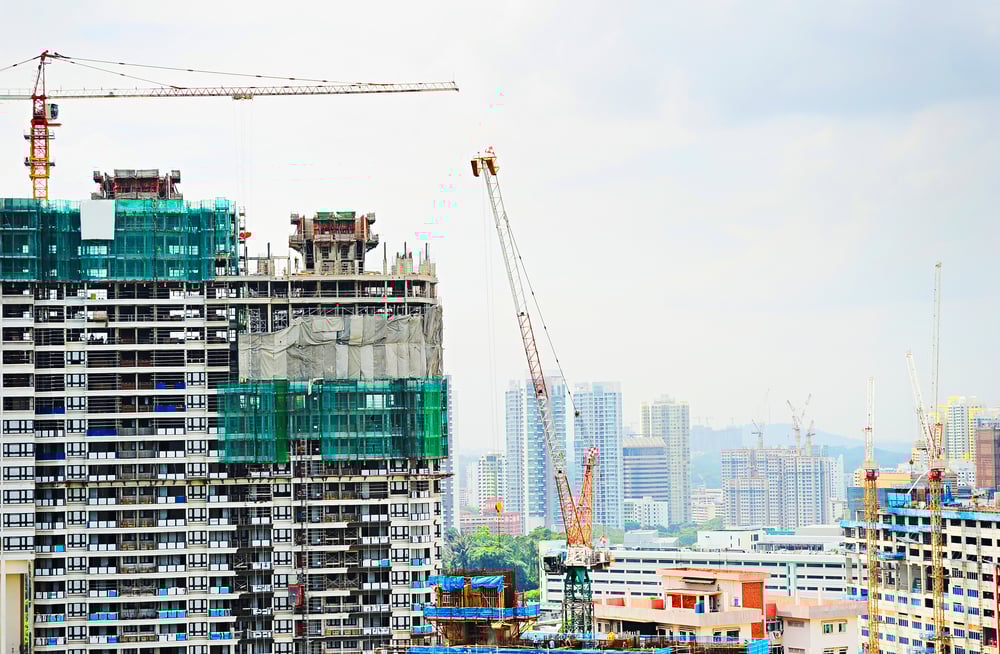
With this in mind, it is recommended to buy first and sell later for new launches to ensure you will have a place to live while you wait for your condo to be completed.
Resale units
Shorter waiting time. Perhaps the best thing about resale units is that once the transaction is completed, you can move in as soon as the renovation is completed.
This means if your renovation lasts for 3 months, and you are only selling your flat later, you do not have to find an interim accommodation in the meantime. This also saves you the hassle of moving (since you are only going to move once).
Possible wear and tear. While new launch ECs and condos are brand new and come with a one-year defect liability period, resale units are older and thus exposed to wear and tear. This means you are more likely to have issues such as water leakage, faulty air-con units, cracked tiles, etc., that you need to factor into your renovation budget.
The amenities and condo facade may also not be as well maintained and look dated.
Choosing between EC or condo, whether it is a new launch or resale unit, pares down to you and your family’s personal housing needs and financial standing. Hopefully, this article helps clear up any doubts you may have about the nitty-gritty details of upgrading.
Impact of market conditions on buying and selling
The property market’s condition can significantly affect both the selling of your HDB flat and the purchasing of a condo. Factors such as current interest rates, the economic climate, and property market trends can affect property prices and the ease of transactions. It’s beneficial to stay informed about the property market’s current state and future predictions.
This knowledge can help in deciding the right time to sell your HDB flat and buy a condo. Timing your transactions to align with favourable market conditions could save you thousands of dollars and make your property investment more profitable.
Which would you upgrade to, EC or condo? Let us know in the comments section below.
If you found this article helpful, check out 5 fatal mistakes Singaporeans make when upgrading to a condo and 6 things every recently MOPed / post-SSD seller must avoid when selling their home.

About Jamie Wong


Looking to sell your property?
Whether your HDB apartment is reaching the end of its Minimum Occupation Period (MOP) or your condo has crossed its Seller Stamp Duty (SSD) window, it is always good to know how much you can potentially gain if you were to list and sell your property. Not only that, you’ll also need to know whether your gains would allow you to right-size to the dream home in the neighbourhood you and your family have been eyeing.
One easy way is to send us a request for a credible and trusted property consultant to reach out to you.
Alternatively, you can jump onto 99.co’s Property Value Tool to get an estimate for free.
If you’re looking for your dream home, be it as a first-time or seasoned homebuyer or seller – say, to upgrade or right-size – you will find it on Singapore’s fastest-growing property portal 99.co.
Meanwhile, if you have an interesting property-related story to share with us, drop us a message here — and we’ll review it and get back to you.
Join our social media communities!
Facebook | Instagram | TikTok | Telegram | YouTube | Twitter



Leave a comment