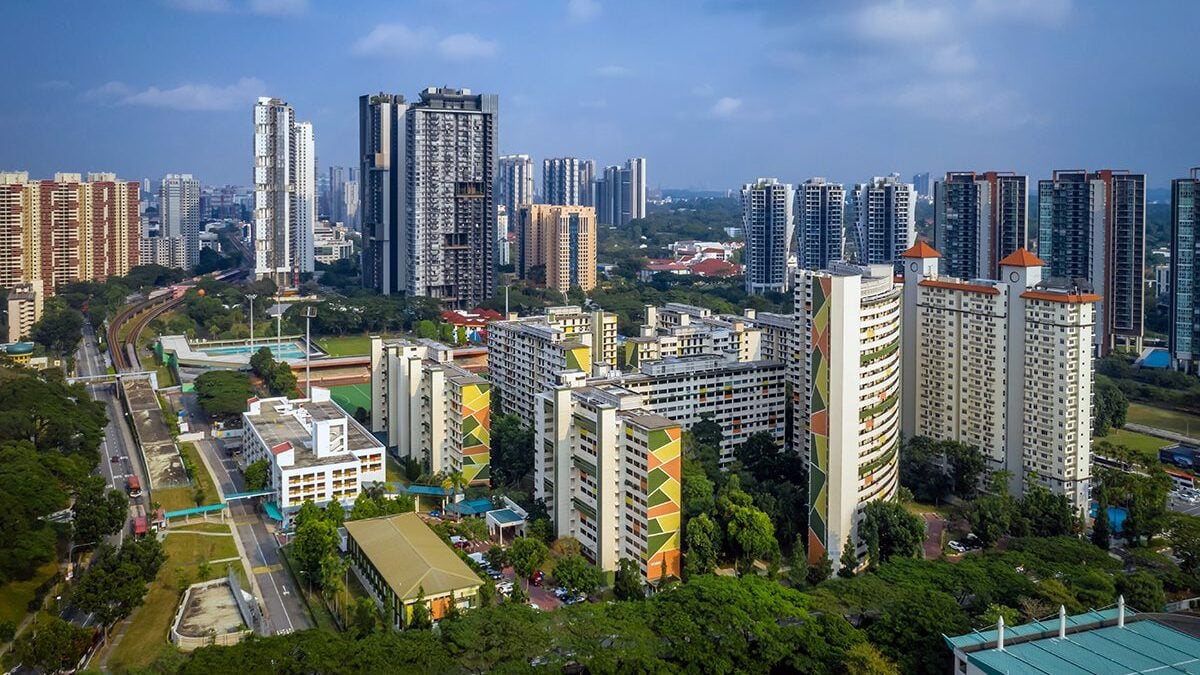
Last week, the Straits Times pointed out that HDB has launched none 5-room Built-to-Order (BTO) flats in the central region of Singapore since 2015, except in Bidadari estate (within Toa Payoh town).
In fact, HDB has launched 9,273 4-room BTO flats within the central region since 2015, compared to just 642 5-room flats in the same period. The 642 5-room flats were launched across three BTO projects, namely Alkaff Vista (in November 2015), Alkaff Oasis (February 2016) and Woodleigh Hillside (May 2017).
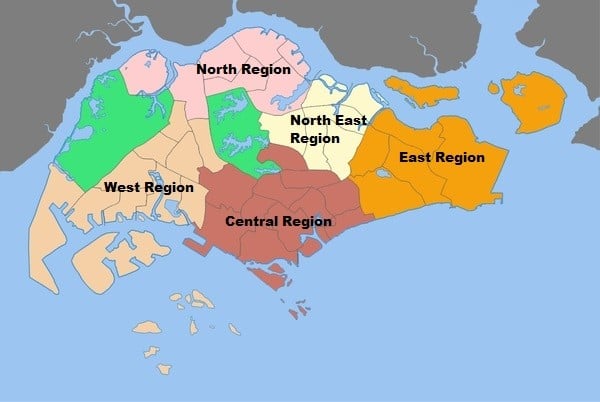
Since the May 2017 BTO exercise, no 5-room flats have been launched in Central Region, which is outlined by the map below:
HDB’s official reason for not building 5-room BTO flats in the central region
The central region of Singapore encompasses eight HDB mature towns and estates: Central Area, Bishan, Bukit Merah, Bukit Timah, Geylang, Kallang-Whampoa, Marine Parade and Queenstown.
Out of all existing HDB sold flats in Singapore’s central region (about 210,000 out of 1,000,000 total sold flats), about 18% (about 38,000) are 5-room flats, and 36% (about 75,000) are 4-room units).
Compare this to the percentage of BTO flats launched in the central region since 2015. Out of 14,387 flats launched, the 642 5-room flats make up a mere 4.5%. 4-room flats make up over 64% of the units built.
Now here is HDB’s official reason for the limited supply of 5-room BTO flats in the central region: space constraints.
“While flats in mature towns and estates are popular with flat buyers, land for new housing in these areas is limited. Hence, more 4-room and smaller BTO flats are provided to allow more families to live closer to the city,” the HDB told The Straits Times.
HDB additionally stated that around 500 5-room flats in the central region were offered in the Sale of Balance flat exercise and the now defunct Re-Offer of Balance flat exercises since 2015.
Why HDB’s “space constraints” argument for not building 5-room flats in the central region does not make sense
HDB’s argument against building 5-room BTO flats, which was limited land in the central region, doesn’t really hold water.
First, in the last five years, HDB had launched a couple of projects with large land areas within the central region (not including land in Bidadari). These big projects all do not have 5-room units among them:
- Macpherson Spring (Geylang, Feb 2015 launch) – 750 units
- Dakota Breeze (Geylang, May 2017 launch) – 954 units
- Eunos Court (Geylang, Nov 2017 launch) – 742 units
- Ubi Grove (Geylang, Feb 2018 launch) – 1,193 units
- Toa Payoh Ridge (Toa Payoh, Feb 2020 launch) – 920 units
It must be said again that these five projects each have large site areas of above 22,500 square metres (larger than three football fields put together), so you cannot really argue that they are constrained by space. Yet, HDB did not assign any 5-room units among these projects.
In contrast, these are the non-central region BTO projects with smaller site areas than the projects above. Even though the sites are smaller, HDB assigned a good proportion of 5-room units for each:
- Clementi Crest – 385 units, 156 5-room units
- Hougang Rivercourt – 285 units, 85 5-room units
- Tampines GreenBloom – 319 units, 111 5-room units
- Tampines GreenFlora – 319 units, 125 5-room units
- Northshore Edge – 388 units, 196 5-room units
- Fernvale Acres – 330 units, 132 5-room units
- Kebun Baru Edge – 380 units, 140 5-room units
Clearly, space is not the issue for building 5-room units!
A second reason HDB’s “space constraints” argument makes little sense: The size of a piece of land is unrelated to the unit mix with property development.
What this means is that, as long as a maximum built-up area (known as Gross Floor Area) is kept to, developers are free to plan and build any unit types on a piece of land. So, space constraints are not a limiting factor to 5-room units not being built.
Take, for example, the Toa Payoh Ridge BTO project. Instead of building 165 2-room flats, 102 3-room flats and 653 4-room flats, HDB could have specified a unit mix of 150 2-room flats, 90 3-room flats, 550 4-room flats and 130 5-room flats. Both would’ve yielded the same 920 total units with the same Gross Floor Area.
So, there have to be other reasons for HDB shying away from 5-room flats, other than space constraints.
The REAL reasons HDB is not building new 5-room BTO flats in central areas
Reason #1: HDB knows Singaporeans just want to hoard space
Face it: 5-room BTO flats are 4-room BTO flats with bigger kitchen and living areas. The latter can be sectioned off as a study but is not big enough to form another bedroom. Both have three bedrooms and two bathrooms.
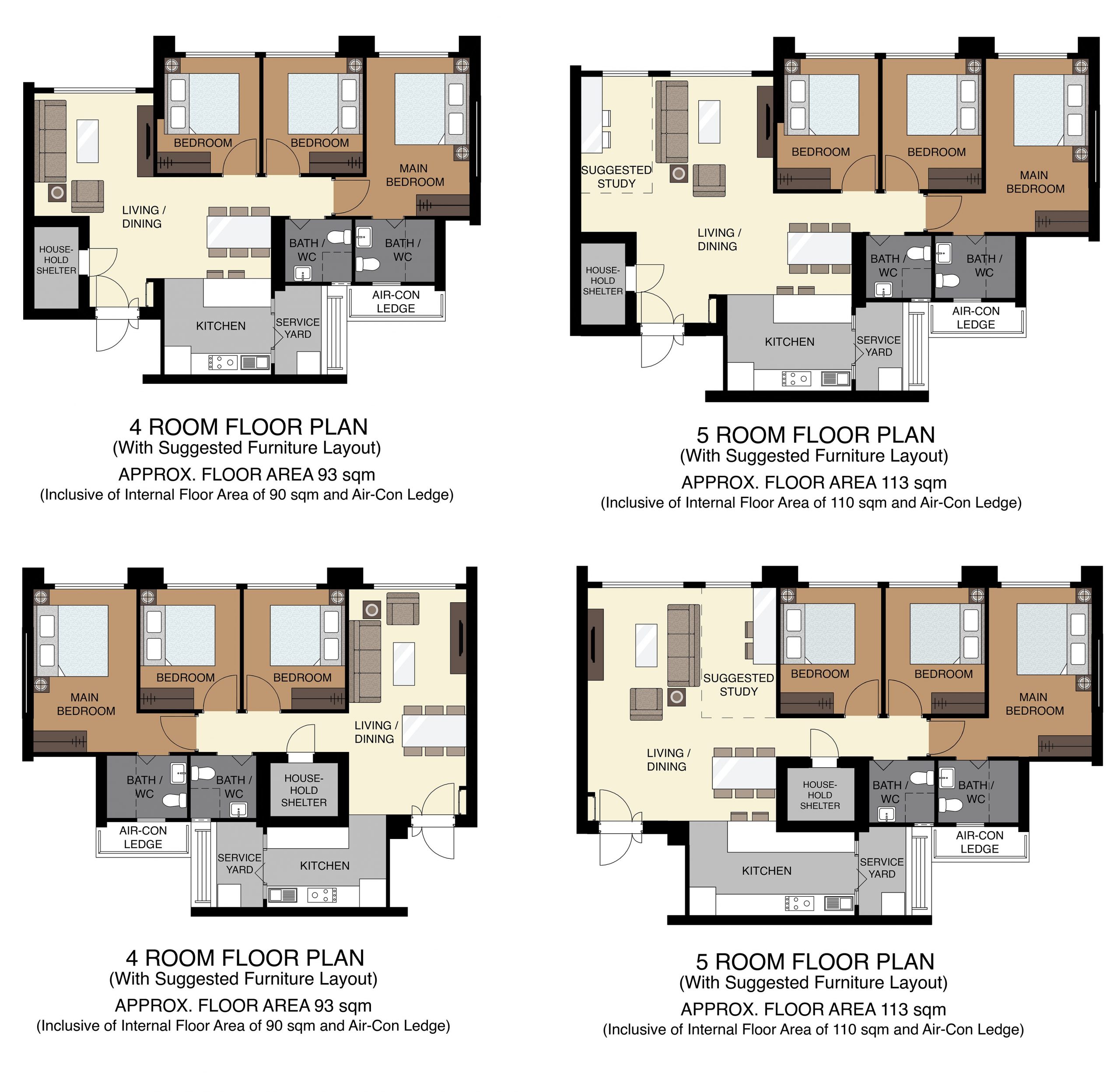
If you’re a young Singaporean couple with no children, which is what most BTO applicants are, whatever you can do in a 5-room flat, you can also conceivably do in a 4-room flat, including working from home.
In fact, many Singaporeans who crave 5-room flats are not couples with four kids and counting. Rather, it’s more that first-time 5-room BTO applicants are millennials with fancy dreams to use any extra space for stuff like a meditation corner, a video-gaming room or a walk-in wardrobe or makeup studio.
Well, fancy dreams are fine, but that is not what BTOs are for. Subsidised housing are to meet basic needs.
With a focus on basic housing needs, HDB respects the constraints of land on a wider context, and the principle that the nearer a land parcel is to the city, the more scarce and valuable that land becomes as a resource. It regards building 5-room BTO flats in central areas to be veering on the side of flagrant excess, especially considering that those who truly need 5-room flats (because of household size) won’t have the budget for a central region BTO.
Hence, aside from Bidadari*, 5-room flats are now only built in non-central region HDB towns and estates. These suburban areas are where there is an actual need for 5-room BTO flats, and also where HDB can ‘close one eye’ of excess and space hoarding.
*HDB built 5-room flats at Bidadari because it was a brand-new estate, where 5-room flats were needed along with other flat types to maximise diversity in a new community.
Reason #2: Price points of central 5-room BTO flats could cause a tremendous uproar
Look, Singaporeans are already complaining about how expensive BTO flats are. Here’s what five-room flats at Kebun Baru Edge, located just outside the central region, are priced at:

So, we can see that HDB priced 5-room flats at Kebun Baru Edge at about 30 to 35% above 4-room prices. Now, let’s extrapolate what a five-room BTO flat at Geylang’s Dakota One were to cost if it were built. 4-room flats at Dakota One ranged from S$523,000 to S$617,000. Applying the same percentage difference, 5-room BTO flats at a prime location like Dakota One would cost a whopping S$706,000 to S$978,000.
In short, 5-room BTO flats, if built in a prime area, become a luxury good (relatively speaking) that defeats the purpose of affordable public housing.
And just imagine the uproar that a BTO flat price close to S$1 million would whip up. Even though such a flat would be fairly priced from an objective point of view, in people’s minds it will just cement the impression that HDB is no longer serving the interests of ordinary Singaporeans.
Of course, HDB is not that daft to build 5-room flats in central regions. And it is not because they do not want to get flamed. HDB knows that BTO flats are primarily meant for low and middle income Singaporeans. Yes, they would rake in a lot of money building prime location five-room BTO flats, but doing so would go against their own solid principles.
Reason #3: Demand for 5-room BTO flats in central areas will be squeezed by the income ceiling
Another important point: Centrally located 5-room flats would serve only a tiny segment of the demographic, because according to Mortgage Servicing Ratio (MSR) guidelines only those who earn above S$11,330 in monthly household income can afford to pay the S$3,399 instalment each month for a flat costing S$706k, assuming a 2.6% interest rate, 10% down payment and a maximum tenure of 20 years.
And then there is the BTO income ceiling of S$14,000. So if HDB builds 5-room BTO flats in the central region, they will be left with those who earn between S$11,300 and S$14,000 that can afford them and be eligible to buy them.
Considering that Singapore’s median household income is S$9,293, HDB really has no business building 5-room HDB flats in the central region, especially since they are also earning $$$ from this other product…
Reason #4: The existence of Executive Condominiums
The last but no less significant reason HDB does not build 5-room BTO flats is because Executive Condominiums (ECs) are homes that serve households of the same income level.
For ECs, land is sold by HDB to private developers to build condominiums. The difference between new launch condos and ECs is that the latter is subsidised for Singaporeans; depending on their income level, buyers can take CPF grants of up to S$30,000 to offset the purchase price.
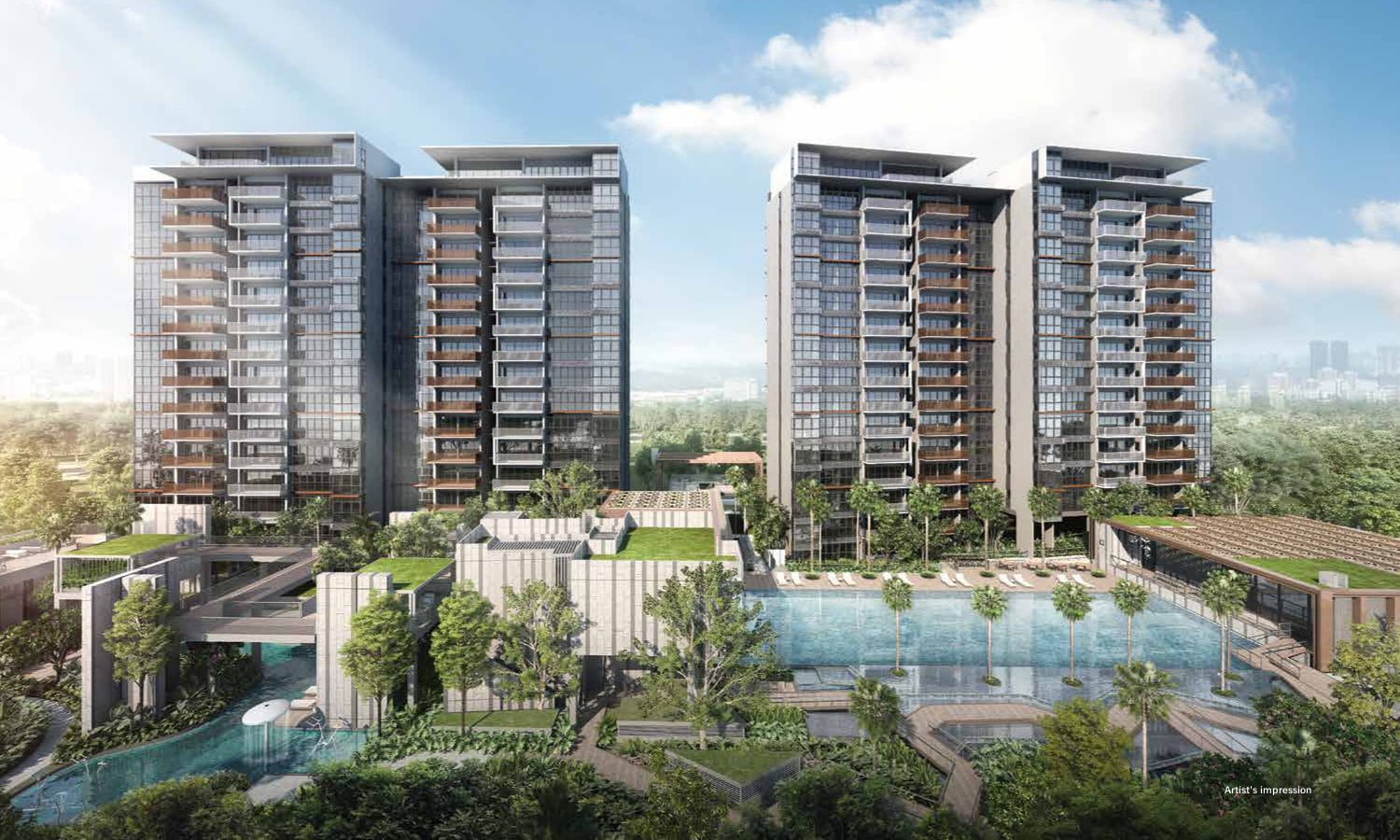
We have spoken to many EC buyers over the years and learned something about them: offer them a condo lifestyle, and they would not mind a smaller unit.
For under S$900,000, buyers of ECs today can get a 2-bedroom unit that with a generously sized living area and a total floor area that’s 10-15% larger than the typical 3-room HDB flat with two bedrooms. While this is a step down in space from a 1,180 sq ft five-room flat, we have come across many buyers (not only young couples) who have gladly accepted one fewer bedroom for a condo lifestyle.
So here’s the thing: With the incentive of full condo facilities, ECs are successfully convincing buyers they need less space than they think they do. This also goes to show that, for such buyers, the space of a 5-room flat is a want and not a need, which further justifies HDB’s decision of not building new 5-room flats in central areas.
Singaporeans are also surprisingly undemanding about the location of an EC, which is located far away from the central region to justify a lower price tag. Like the size of the home, many Singaporeans actually will trade location for condo status + facilities. After all, you cannot buy condo facilities, but you can sure buy a car or take Singapore’s excellent public transport to get to wherever you want to go.
Suburban towns like Sengkang, Canberra, and Punggol, where the latest ECs are located, also boast ample amenities that make them attractive to live in.
Also, like BTO flats, ECs also typically experience capital appreciation for completing their five-year Minimum Occupation Period (MOP). ECs also have further capital appreciation after ten years, when the development achieves full private status and can be sold to foreigners.
So, while perhaps HDB does not build 5-room BTO flats in the central region to make people buy ECs, it is more of the case that ECs are a better choice, even if a BTO project with 5-room flats somehow pops up on Shenton Way.
Best of all, there is no such thing as EC units being oversubscribed in a ballot exercise, unlike BTO flats. Because, even if HDB built 5-room BTO flats in prime areas, it’s far more you will strike TOTO or 4D before getting a queue number!
Do you agree with our analysis? Share your thoughts in the comments below.
If you liked this article, 99.co recommends MP’s proposal to remove BTO income ceiling is anti-Singaporean. and Paying $1.1 million for a 43-year-old Tiong Bahru HDB flat is a genius move. Here’s why
About Kyle Leung

Content Marketing Manager @ 99.co

Looking to sell your property?
Whether your HDB apartment is reaching the end of its Minimum Occupation Period (MOP) or your condo has crossed its Seller Stamp Duty (SSD) window, it is always good to know how much you can potentially gain if you were to list and sell your property. Not only that, you’ll also need to know whether your gains would allow you to right-size to the dream home in the neighbourhood you and your family have been eyeing.
One easy way is to send us a request for a credible and trusted property consultant to reach out to you.
Alternatively, you can jump onto 99.co’s Property Value Tool to get an estimate for free.
If you’re looking for your dream home, be it as a first-time or seasoned homebuyer or seller – say, to upgrade or right-size – you will find it on Singapore’s fastest-growing property portal 99.co.
Meanwhile, if you have an interesting property-related story to share with us, drop us a message here — and we’ll review it and get back to you.
Join our social media communities!
Facebook | Instagram | TikTok | Telegram | YouTube | Twitter



If I am not wrong, EC also has MSR.
Our public housing has failed because it has failed to keep hdb flats affordable for Singaporeans. The ripple effect is million dollar resale flats because owners have to pay for cpf principal plus interest and new rich foreign citizens and PRs can afford to pay.
It is a sad state of affairs when housing, education and health care costs are not kept affordable for citizens. Escalating costs and then give grants is nonsensical.
Actually, urban planning must be at the CBD area then when the project ready to T.O.P, slowly spread out town councils so that when election it’s hard for people to say always unfair.
Let’s say we build the town council in each district, this is for the MP and the voters to build their area in their own district. If AMK, Jurong, Bedok is a bigger town compared to Simei, we everywhere also have ERP gantry. But just the payment mode different. So overall the gantry collection can even spread out.
So that small towns like Simei can have more amenities. Like a walk in the park, and free from e scooters horning. Because Simei will be the new CBD area, but even if town council at AMK, the maintaince fee need to adjust.
In the brochure I saw the masterplan, and I think the for Simei can make more parks and swimming complex or LRT connected to Changi business park.
I think this is also mentioned during the election got a East Coast plan, so I think Simei will be the focus. But need to see if URA can stamp duty the application.
Without URA, the East Coast design can change, this is the urban planner says one.
NEA now doing the landscape and planting trees and garden so after URA confirm, I think the contractor can do the garden link for the connector pavement for people to walk along.
Still have LRT from Simei to Changi business park, that will also follow suit. I think Simei Melville Park or Eastpoint the price will shoot up, so the hdb around will also up.
Your reason no. 2 is the most likely reason. Additionally, i would like to add that upon hitting the 5-year MOP, only a small proportion of the 4 room units will command resale values of $1mil and so there will be less uproar among the public. In contrast, over the past few years, there is quite a lot of media attention and some uproar among the public about the obvious trend of more 5 room units being re-sold at $1mil or above. This has given rise to complaints among the lottery effect.
Yes, I have been wondering why I cannot get a 5-room flat in a BTO at a fairly premium location in Singapore. Your explanations offer very good insight, thanks.
Urban planning & total population are contacting each other. On one hand government wishes to increase Singapore population and on the they reduce the BTO space. I don’t think we would have face this issue during 70’s or 80’s where our Singaporean population only 3.7 millions as compared to current 5.9 millions population. Something is just don’t add up to the overall planning strategy.